
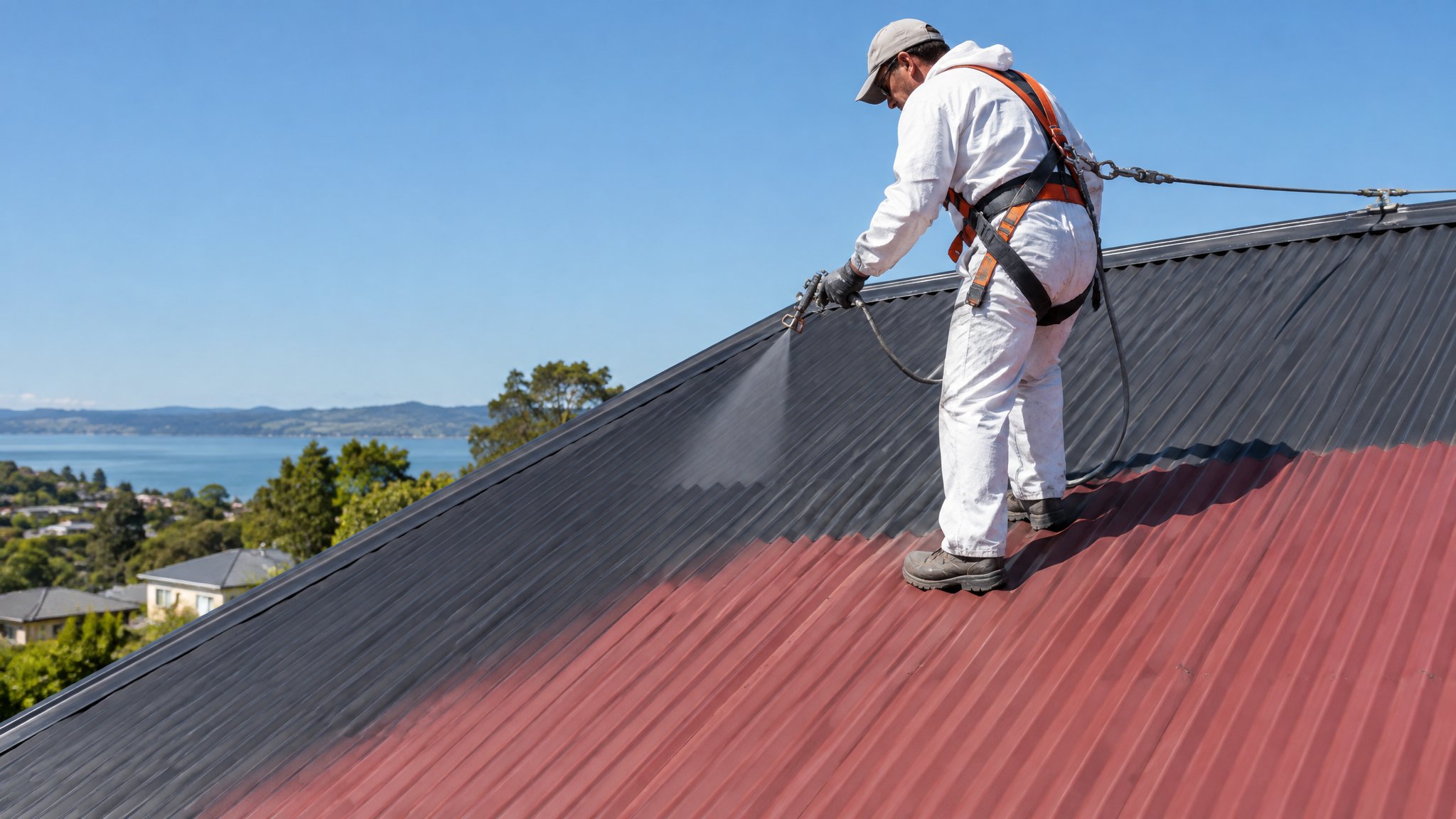
Yes — a professional roof painter should leave your property tidy once the work is finished. That normally includes removing masking materials, collecting paint-related debris, and checking for overspray on nearby surfaces.
In Auckland, where homes often have paved courtyards, landscaped gardens and tight boundary lines, good cleanup matters just as much as the paint job itself. If you are hiring for roof painting, it is worth knowing what should be included before the first drop sheet goes down.
What a proper roof painting cleanup should include
A tidy roof painting job should not end with tins, tape and plastic left behind. A careful painter will remove all masking, clear loose debris from gutters, decks and paths, and sweep or vacuum any dust created during prep work.
Overspray should also be checked and dealt with straight away. On a roof job, that can include specks on windows, fascia boards, garage doors, fences, paving, spouting or nearby plants. If the painter has protected the area properly, overspray should be minimal — but if it does happen, it should be cleaned as part of the job.
The cleanup usually covers:
- removing drop sheets, masking tape and plastic
- collecting sanding dust, paint flakes and offcuts
- checking gutters, downpipes and spouting for debris
- wiping or washing nearby surfaces if overspray has landed
- disposing of waste safely and neatly
Why cleanup matters on Auckland homes
Roof painting often involves surface prep, pressure washing, sanding, sealing and spraying or rolling. Even with careful setup, that work can create dust, wash residue and small bits of old coating that need to be contained and removed.
For premium homes in suburbs like Remuera, Ponsonby, Parnell or St Marys Bay, cleanup is especially important because roof work can affect driveway finishes, timber screens, painted trims and outdoor living areas. Good painters protect these areas before starting, but they should also inspect them at the end of the job.
A thorough cleanup also helps you spot any issues early. If overspray has landed somewhere unexpected, or if debris has blocked a gutter, it is much easier to sort it out while the painter is still on site.
What to check before the crew leaves
Before signing off the job, walk around the property with the painter and look at the roof line, walls, windows, paving, decks and garden edges. Check that all masking has been removed and that no tools, lids or waste have been left behind.
It is also worth asking whether gutters have been cleared of paint chips and whether any wash water has been managed properly. If the roof was spray-painted, ask them to point out how they protected surrounding surfaces and what they did if overspray occurred.
A professional painter should be happy to talk you through the cleanup and make good anything that was missed.
When to call Steve
If you want a roof painting job where the cleanup is handled properly from start to finish, contact Steve, a Kiwi and a trade-qualified painter. He can explain how the area will be protected, what cleanup is included, and what to expect once the roof is finished.
Steve works with Auckland homeowners and property managers who want a careful, tidy result, not just a fresh coat of paint. Whether you are in Herne Bay, Epsom, Mission Bay or anywhere across greater Auckland, he can give practical advice before work begins and make sure the site is left in good order.
Frequently Asked Questions
Should a roof painter remove paint overspray from windows and walls?
Yes. If overspray has landed on windows, walls, trim or other surfaces, a professional roof painter should address it as part of the cleanup. In some cases that means wiping or washing it off immediately, depending on the surface and paint type.
Will roof painting leave a mess in my gutters and on the ground?
It should not be left that way. Some dust or debris can fall during prep work, but a good painter will clean gutters, paths, decks and nearby surfaces before finishing the job.
How can I avoid overspray and cleanup problems?
Choose a painter who uses proper masking, drop sheets and careful application methods, and ask what cleanup is included. If you are unsure, contact Steve, a Kiwi and a trade-qualified painter, for straightforward advice before the job starts.
Need a hand with your project?
Happy to tackle some of it yourself? Great — but for anything you’d rather leave to a professional, Steve Lunjevich is a Kiwi and a trade-qualified painter with 20+ years’ experience. Call or email for honest advice or a free, no-obligation quote.