
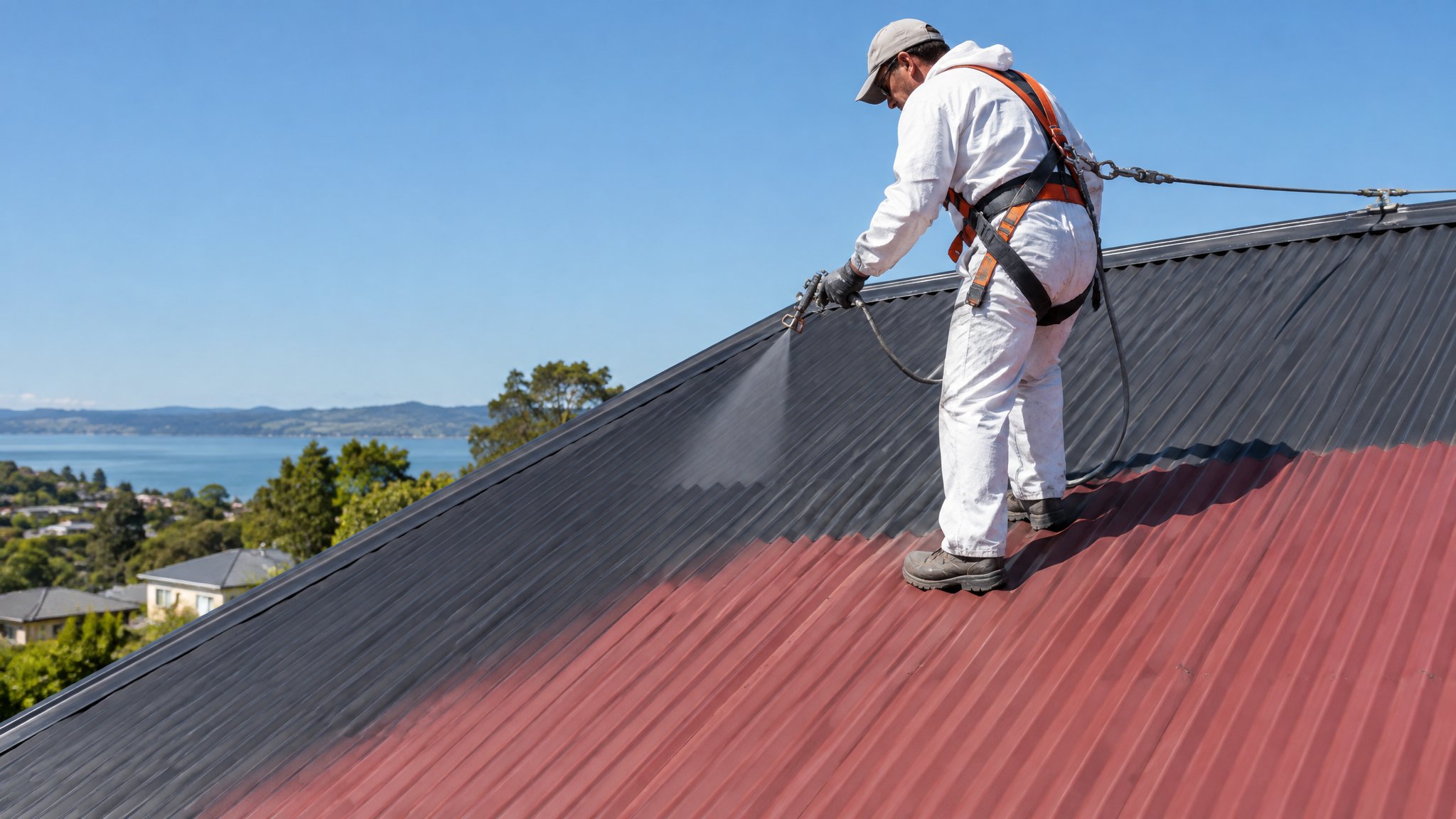
If you are applying a waterproofing membrane on a roof, the primer matters just as much as the membrane itself. It helps the coating bond properly, improves durability, and reduces the risk of early failure.
The right primer depends on the roof material, the membrane system, and how the surface has weathered. For Auckland homes, where roofs deal with moisture, salt air and strong UV, good preparation is essential.
Start with the substrate, not the membrane
There is no single primer that suits every roof. The first step is identifying what you are coating. A metal roof, concrete roof, fibre cement, existing membrane, or a previously painted surface all need different preparation and often different primers.
For many roof waterproofing systems, the primer is chosen to suit the substrate and the membrane chemistry. Some membranes require a solvent-based or water-based primer from the same manufacturer. Others may need a specialist adhesion primer for difficult surfaces such as aged coatings, chalky paint, or slightly porous concrete.
If the roof has rust, moss, loose coating, or a powdery surface, no primer will fix poor prep on its own. The surface must be cleaned, stable and dry before anything goes on.
- Metal roofs often need a primer designed for metal adhesion and corrosion resistance.
- Concrete or masonry roofs may need a penetrating or sealing primer.
- Existing coatings can require a bonding primer or compatibility test.
- Some membrane systems only work with their own matching primer.
Why the wrong primer causes problems
Using the wrong primer can lead to peeling, bubbling, poor cure, or premature cracking. In some cases, the membrane may look fine at first but fail once the roof starts moving with heat and weather.
A common mistake is treating every roof like a standard paint job. Waterproofing membranes are performance coatings, so the prep and primer need to be matched carefully. If there is any doubt about compatibility, test a small area first or follow the membrane manufacturer’s system exactly.
On Auckland roofs, moisture is another factor. If the surface is damp, the primer may not penetrate correctly or the membrane may not bond properly. Timing the job for the right weather window is part of getting a lasting result.
Practical checks before you prime
Before priming, make sure the roof is clean, sound and dry. Check for flaking paint, loose sealant, rust, ponding water, greasy residue and any previous waterproofing products that may react with the new system.
A good rule is to read the technical data sheet for both the primer and membrane before starting. That tells you whether the system needs a key coat, etch primer, sealer, or no primer at all on certain substrates.
If the roof has been painted before, it is worth checking adhesion. A simple tape test can show whether the existing coating is stable enough to keep, or whether it should be removed or treated before priming.
- Clean off dirt, mould and loose material.
- Repair rust, cracks and failed sealants first.
- Allow enough dry time after washing.
- Follow the membrane manufacturer’s prep instructions.
When to call Steve
If you are not sure what primer your roof needs, it is worth getting advice before you start. Steve is a Kiwi and a trade-qualified painter, and he can assess the roof condition, check compatibility, and recommend the right prep system for the membrane you plan to use. That can save you from costly failures and rework, especially on premium Auckland homes where a neat, durable finish matters.
If you want the roof done properly the first time, contact Steve for practical advice or a quote. He can help with roof painting, roof membrane preparation, and the full coating system from cleaning through to topcoat.
Frequently Asked Questions
Can I apply waterproofing membrane without primer?
Sometimes, but only if the membrane manufacturer specifically says the surface does not need one. In most cases, priming improves adhesion and helps the system last longer.
Is the same primer used on metal and concrete roofs?
Usually not. Metal and concrete behave differently, so they often need different primers or prep products. Always match the primer to the substrate and membrane system.
How do I know if my existing roof paint is compatible?
Check the membrane technical data sheet and test a small area if needed. If the coating is chalky, peeling or unknown, get it assessed before applying the membrane.
Need a hand with your project?
Happy to tackle some of it yourself? Great — but for anything you’d rather leave to a professional, Steve Lunjevich is a Kiwi and a trade-qualified painter with 20+ years’ experience. Call or email for honest advice or a free, no-obligation quote.