
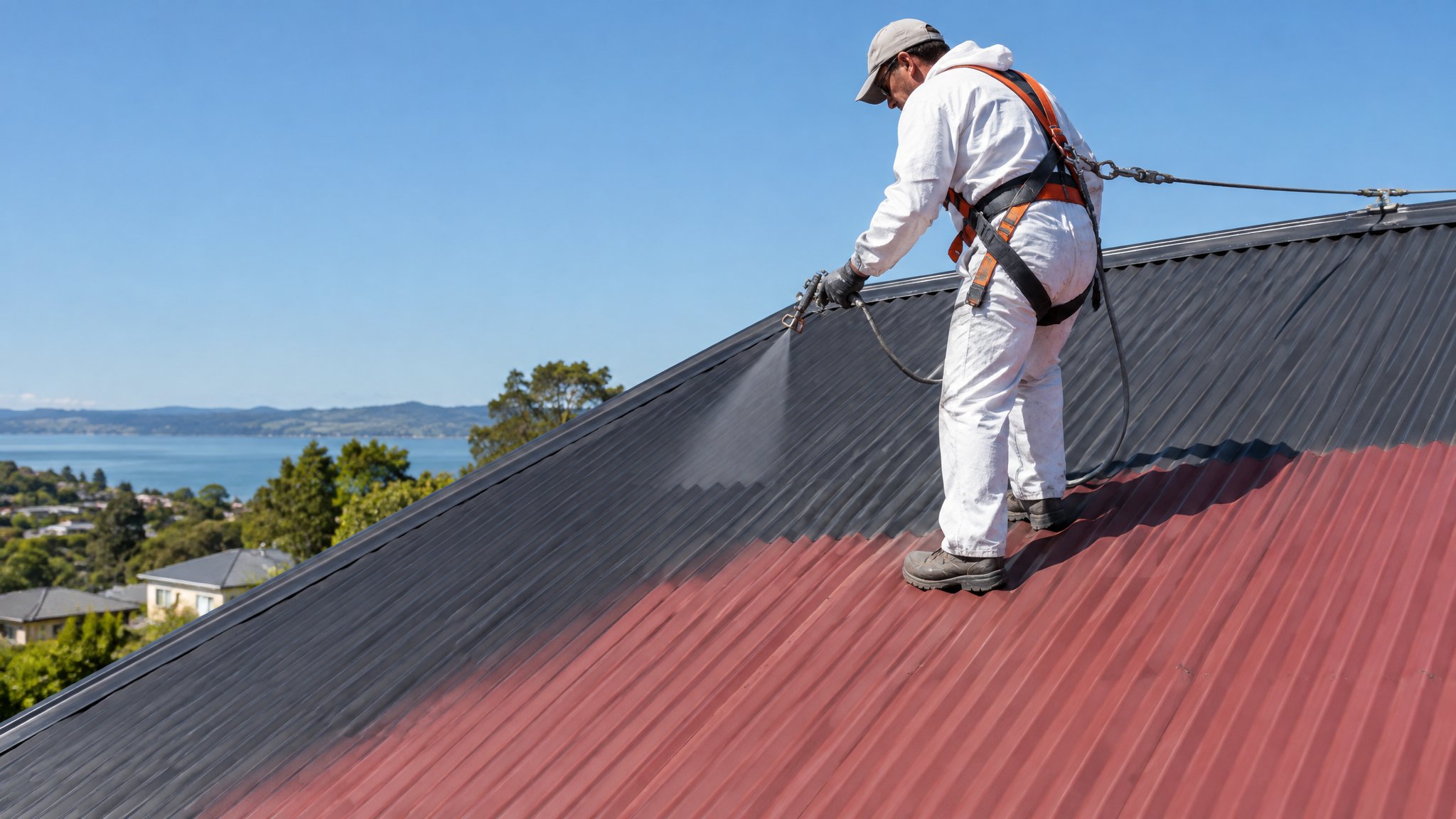
If you are planning roof painting, a bit of preparation goes a long way. A tidy, safe site helps the work run smoothly and protects your home, landscaping and belongings while the roof is being cleaned, repaired and painted.
For Auckland homes, good prep also matters because access can be tight, weather can change quickly, and many properties have delicate gardens, decks or paved areas close to the house. Here is how to get your place ready before the roof painter arrives.
Clear the area around the house
Start by making space around the exterior of your home. Roof painters need safe access for ladders, wash-down equipment, paint gear and drying space. Move outdoor furniture, pots, bikes, toys and any fragile items away from the house where possible.
If you have vehicles parked close to the house, move them well away from the work zone. Paint overspray is not usually an issue on a properly set-up job, but it is always best to keep cars clear of the area.
Inside, it is sensible to close windows and skylights, especially if the roof will be washed first. If you have attic or ceiling access points, let the painter know where they are so they can take extra care.
- Move outdoor furniture, planters and decorations
- Park cars away from the work area
- Close windows and skylights
- Keep pets inside or away from the site
Check gutters, trims and roof access
Before the job starts, look at your gutters and downpipes. If they are overflowing, badly blocked or already damaged, tell the painter in advance. Roof cleaning can shift debris, so it helps to know what condition the drainage system is in before work begins.
Trim back any branches that hang over the roof or block access around the house. This gives the painter better footing and helps reduce leaf fall onto freshly cleaned or painted areas.
If you have a steep roof, multiple levels or fragile roof materials, make sure the painter knows this early. Good preparation is not just about tidiness — it is also about making the site safe and allowing the right method to be used.
Take care of repairs and practical details first
A roof should not be painted over problems that need fixing. Loose flashing, cracked tiles, rusted screws, lifting ridge capping and leaking areas should be identified before painting begins. If these issues are ignored, the finish may not last as long as it should.
It also helps to talk through practical details such as where the water supply is, where power access is available if needed, and whether there are any sensitive areas like solar panels, skylights or ventilation units.
If you are the homeowner, gather any notes about previous roof work, leaks or maintenance. That information can save time and help the painter choose the right preparation method and coatings.
When to call Steve
If you are unsure what needs moving, trimming or repairing before roof painting, contact Steve, a Kiwi and a trade-qualified painter. He can assess the roof, explain what prep is needed and let you know whether any repairs should be done before painting starts.
That is especially useful for Auckland homes with tricky access, weathered roofs or detailed exterior finishes. A quick site visit or phone chat can help prevent delays and make the whole job safer and more efficient.
Steve can also advise on the best timing for the work, how to protect nearby surfaces, and what to expect during the preparation stage. Getting the prep right sets the whole project up for a better result.
Frequently Asked Questions
Do I need to wash the roof before the painter arrives?
Usually no. Roof painters normally handle washing, moss removal and surface preparation themselves as part of the job. What you can do is make sure access is clear and tell the painter about any known leaks or loose materials.
Should I trim trees before roof painting?
Yes, if branches are touching the roof or blocking access. Light trimming helps the painter work safely and keeps leaves and debris from landing on freshly prepared surfaces.
Do I need to be home during the roof painting job?
Not always, but it helps at the start so you can point out access points, gates, pets, water taps and any problem areas. After that, many jobs can proceed with minimal disruption if everything is arranged well.
Need a hand with your project?
Happy to tackle some of it yourself? Great — but for anything you’d rather leave to a professional, Steve Lunjevich is a Kiwi and a trade-qualified painter with 20+ years’ experience. Call or email for honest advice or a free, no-obligation quote.