
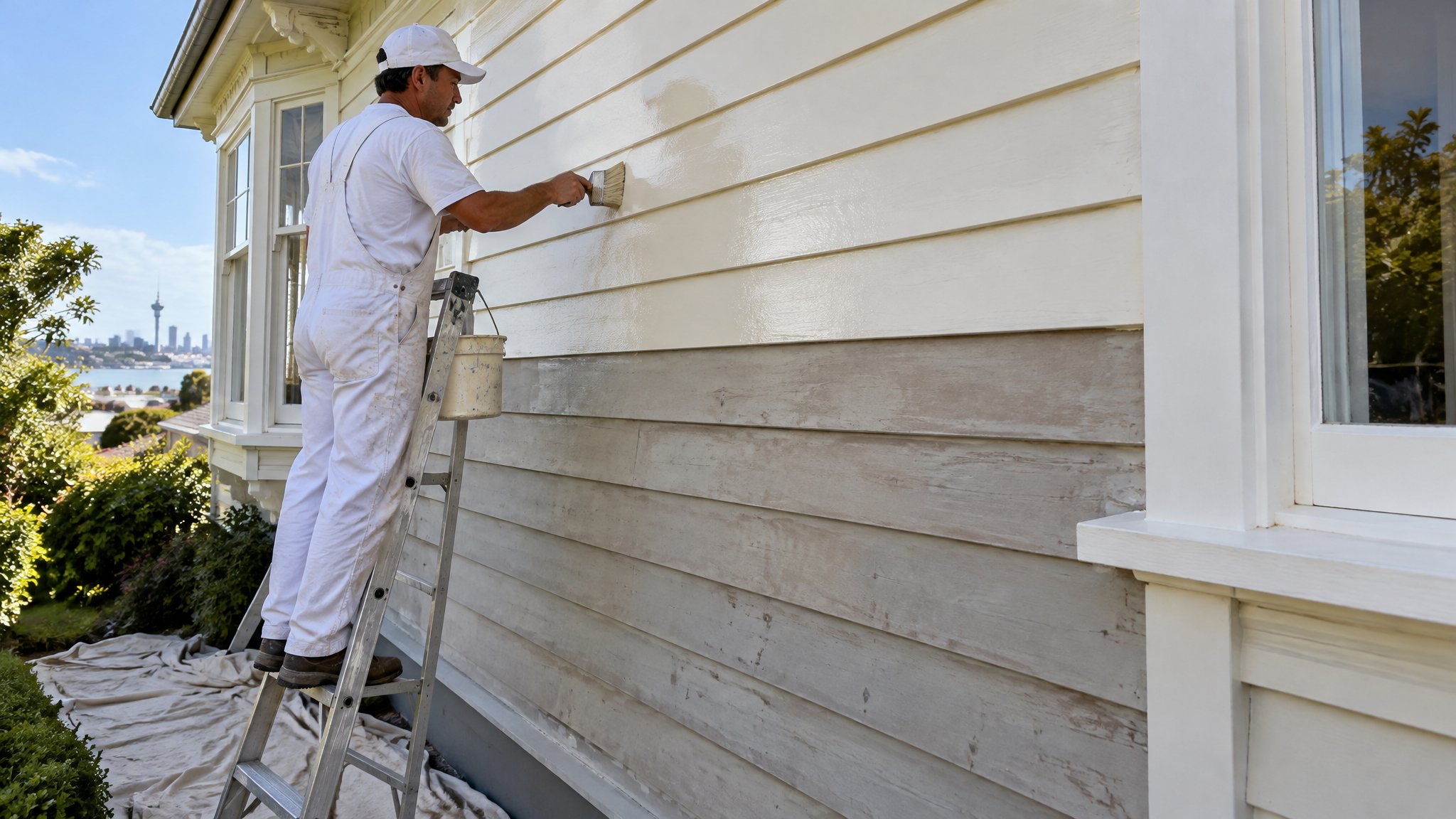
Peeling paint is frustrating, whether it’s lifting on a weatherboard villa, bubbling in a bathroom, or flaking off a sun-exposed exterior wall. In New Zealand homes, the cause is often a mix of moisture, weather, age, and poor surface preparation.
The good news is that peeling paint usually tells you something useful: there’s an underlying problem that can be fixed properly. If you understand the cause first, you can stop the issue coming back and protect your home for the long term.
Common reasons paint peels in New Zealand homes
The most common cause is moisture. Water getting behind the paint film breaks the bond between the coating and the surface. That can happen through roof leaks, blocked gutters, failed sealant around windows, rising damp, or high humidity in bathrooms, laundries and kitchens.
Poor surface preparation is another big one. If the old paint wasn’t cleaned, sanded, primed or deglossed properly, the new coating may only stick for a short time before it starts to lift. This is especially common over chalky old paint, grease, or damaged timber.
NZ weather can also be tough on paint. Strong UV, driving rain, salty coastal air and repeated temperature changes all wear coatings down. South-facing walls, soffits, trims and places with limited airflow often show damage first.
- Water ingress from leaks, gutters or flashing
- Humidity in wet areas like bathrooms and laundries
- Old, chalky or dirty surfaces
- Failed sealant around joinery and trim
- UV and coastal exposure on exterior surfaces
How to tell what kind of peeling you’re dealing with
The pattern of peeling can help identify the problem. If paint is bubbling or blistering, moisture is often trapped underneath. If it flakes off in sheets, the surface may not have been prepared well, or the previous coating may be failing as it ages.
If the paint is peeling around windows, doors or corners, check for gaps in sealant or signs of water entry. If it’s mainly in a bathroom ceiling or around a shower, the issue is often condensation combined with poor ventilation.
On exterior walls, look for cracked filler, open joints, rotten timber, rust on fixings or soft spots in the substrate. If the surface underneath is damaged, simply repainting over the top will only hide the issue for a short time.
What you can do before repainting
Before any repainting, the loose paint needs to be fully removed back to a sound edge. The area should then be cleaned, allowed to dry properly, repaired, and primed with the right product for the surface. That might mean a stain-blocking sealer, masonry primer, timber primer, or rust treatment depending on the job.
It’s also worth fixing the source of moisture first. Clear gutters, repair leaks, improve ventilation, and replace damaged sealant or rotten timber before new paint goes on. If those underlying issues stay in place, peeling will usually return.
For Auckland homes, timing matters too. Painting over damp surfaces, or painting in poor weather, can cause adhesion problems even if the prep looks neat on the day.
When to call Steve
If the peeling is widespread, keeps returning, or you’re not sure whether it’s moisture, prep, or substrate damage, it’s worth getting proper advice before you start scraping and repainting. Steve is a Kiwi and a trade-qualified painter, and he can assess the cause, recommend the right repair method, and make sure the surface is ready for a lasting finish.
That’s especially important for premium Auckland homes where weatherboards, plaster, timber trims, and detailed joinery all need the right system and a careful hand. A quick patch may look fine briefly, but the right diagnosis saves time, money, and frustration later.
Frequently Asked Questions
Can I paint over peeling paint?
Not if you want it to last. Loose paint needs to be removed first, then the surface cleaned, repaired and primed. Painting over peeling areas usually means the new coat will fail as well.
Why is my bathroom paint peeling?
Bathroom paint often peels because of steam, condensation and poor ventilation. It can also happen if the wrong paint was used, or if moisture has gotten into the ceiling or wall behind the finish.
Is peeling paint a sign of water damage?
Sometimes yes, but not always. Water damage is a common cause, especially if the peeling is bubbling, localised, or near joins and openings. Poor prep, age and weather exposure can also be responsible.
Need a hand with your project?
Happy to tackle some of it yourself? Great — but for anything you’d rather leave to a professional, Steve Lunjevich is a Kiwi and a trade-qualified painter with 20+ years’ experience. Call or email for honest advice or a free, no-obligation quote.