
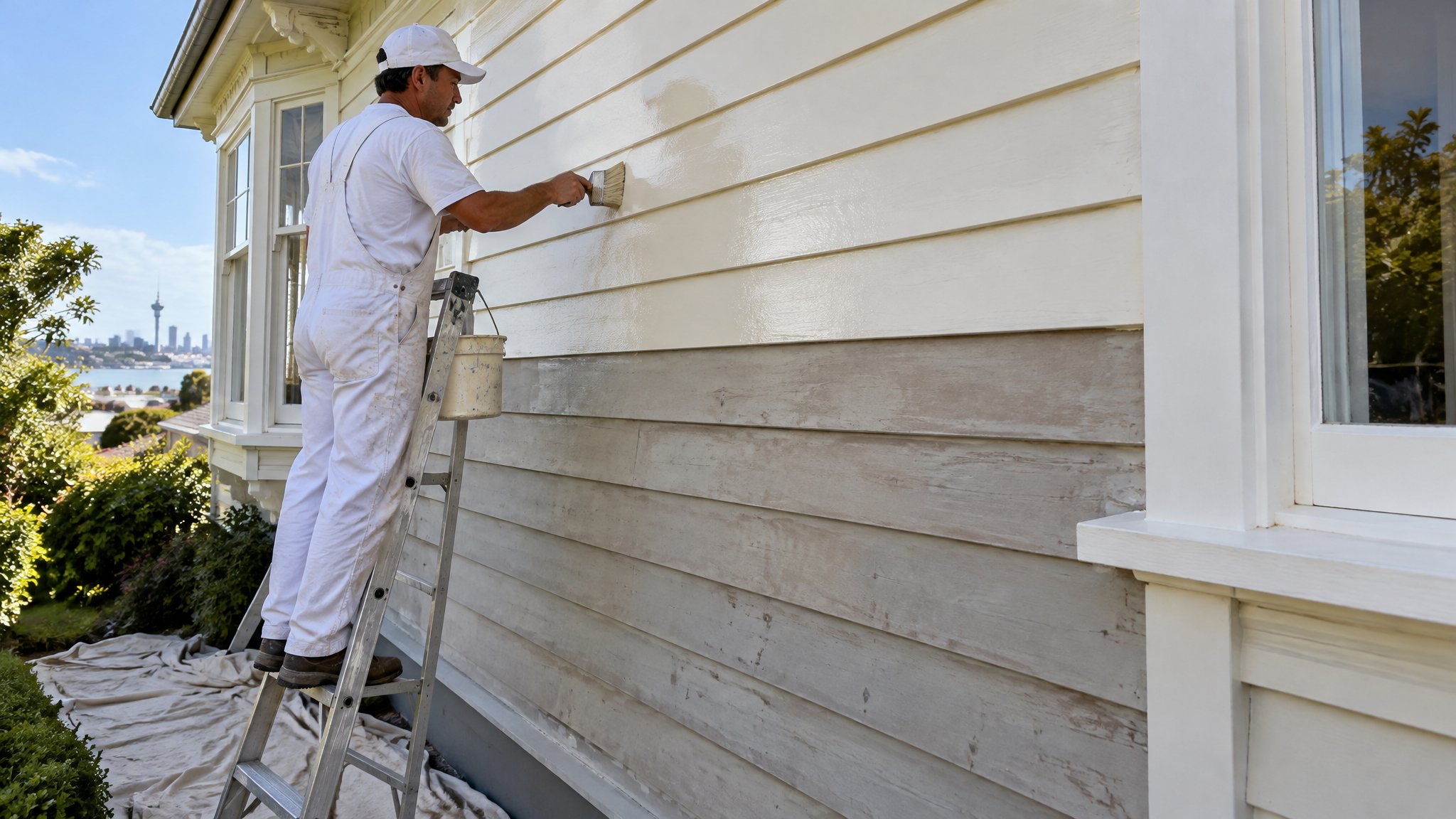
If you are comparing paint products for a home in Auckland, the term “one coat” can be misleading. It sounds simple, but in practice it depends on the surface, the colour change, the product quality, and how well the wall has been prepared.
Standard paint is the more common professional approach. It usually means a proper system of preparation, undercoat where needed, and two finish coats to achieve the right colour, coverage, and durability.
What one coat paint usually means
One coat paint is marketed as a product that may cover in a single finish coat, provided the surface is already in very good condition and the existing colour is close to the new colour. In ideal conditions, it can save time on simple jobs.
In real homes, especially older Auckland properties, one coat often still needs careful prep, patching, sanding, spot priming, and sometimes a second coat to look even. It is not a shortcut for poor prep.
A true one coat result depends on things like:
paint colour and contrast
surface porosity
previous paint condition
light exposure and sheen level
- Best suited to repainting similar colours
- Less reliable over stains, patched areas, or dark-to-light colour changes
- May still need spot priming for bare timber or filler
What standard paint means in practice
Standard paint generally refers to the normal professional painting method rather than a special product label. In most cases, that means preparing the surface properly, using primer or undercoat where required, then applying two top coats for a consistent finish.
This approach is more dependable because the first coat helps seal and build coverage, while the second coat evens out the colour and sheen. It is especially important on new gib, repaired walls, timber trim, and areas that get a lot of wear.
For Auckland homes, standard painting is often the better choice when you want a finish that looks sharp in natural light and lasts well through everyday use.
- Usually gives better colour depth and evenness
- Performs better on mixed surfaces and patch repairs
- Helps the finish last longer in busy rooms
How to choose between the two
The right choice comes down to the condition of the surface and the result you want. If you are refreshing a room with similar colours and the walls are in excellent condition, one coat paint may be suitable for some areas.
If the job involves staining, repairs, a strong colour change, new plasterboard, weathered timber, or you simply want a premium finish, standard paint is usually the safer and better-looking option.
A few questions to ask are:
Is the existing paint sound and clean?
Are you changing from dark to light, or light to dark?
Are there patched areas, water marks, or surface defects?
Does the room get a lot of handling or moisture?
- Bedrooms and low-wear spaces may be easier to repaint
- Kitchens, bathrooms, hallways, and trims usually need a more robust system
- Older villas and bungalows often need more prep than expected
When to call Steve
If you are not sure whether one coat will work on your walls, it is worth getting advice before you buy paint. Steve is a Kiwi and a trade-qualified painter, and he can assess the surface, explain whether one coat is realistic, and recommend the right system for your Auckland home.
He can also help you avoid common mistakes like under-preparing patched areas, choosing the wrong sheen, or expecting a one coat product to fix a tired surface. For a result that looks professional and holds up properly, it is often better to use the right method from the start.
Frequently Asked Questions
Is one coat paint really one coat?
Sometimes, but only on suitable surfaces and with the right colour change. In many homes, you may still need prep, spot priming, or a second coat for an even finish.
Does standard paint always mean two coats?
In professional painting, standard practice usually means two finish coats after the right preparation. That gives better coverage, depth, and durability than relying on one coat alone.
Which is better for an Auckland house?
Standard paint is often the better choice because Auckland homes can have varied surfaces, patch repairs, and changing light. One coat may suit only simple repaint situations.
Need a hand with your project?
Happy to tackle some of it yourself? Great — but for anything you’d rather leave to a professional, Steve Lunjevich is a Kiwi and a trade-qualified painter with 20+ years’ experience. Call or email for honest advice or a free, no-obligation quote.