
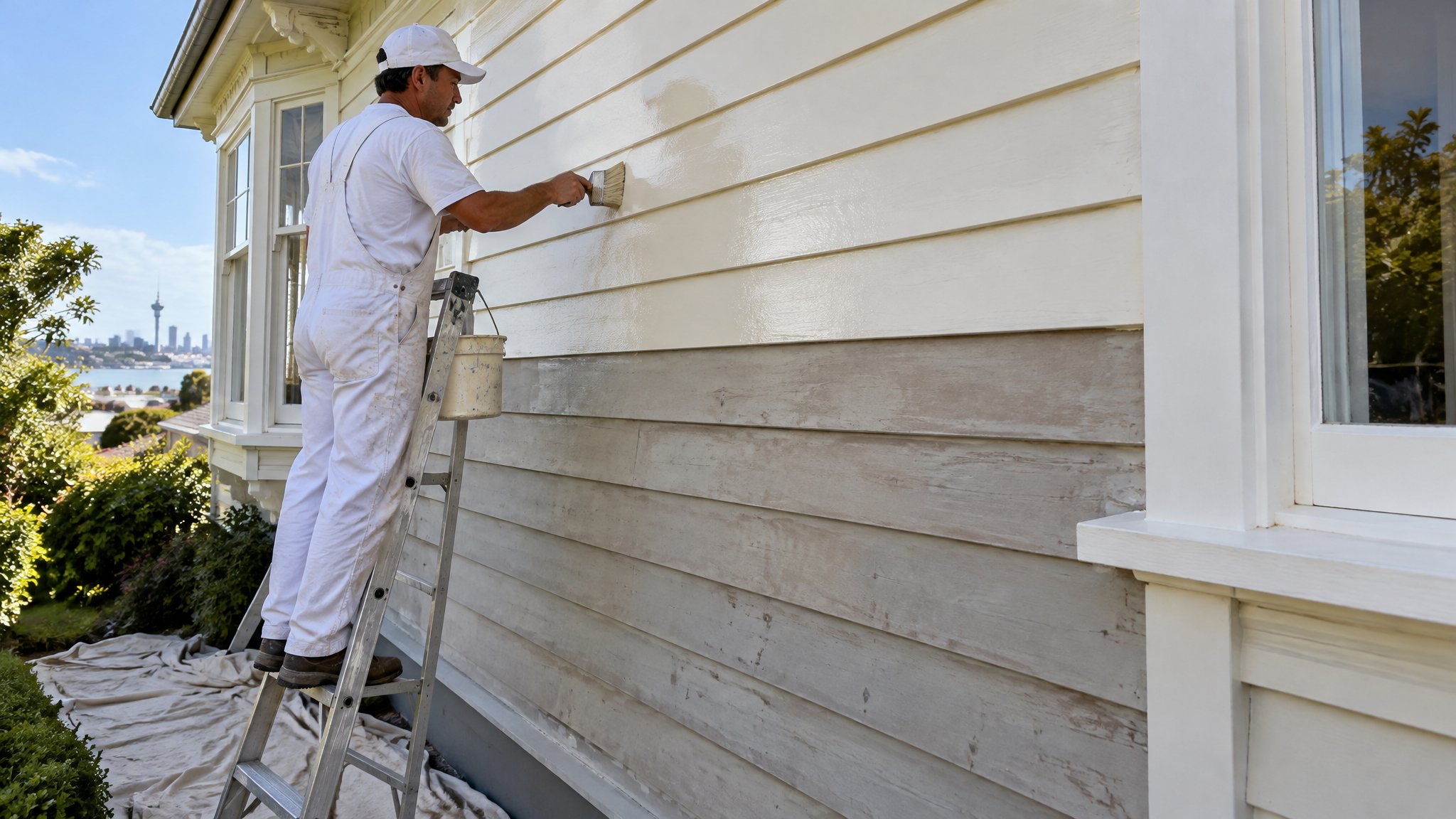
If your walls still look patchy after the second coat has dried, you are not alone. It is a common issue in Auckland homes, especially when lighting, surface prep, or paint application are not quite right.
The good news is that patchy paint is often fixable. The key is to work out whether you are dealing with roller marks, poor coverage, flashing, or a surface problem before you put on any more paint.
Why paint can still look patchy after two coats
A second coat does not always guarantee a perfect finish. Patchiness can show up if the first coat soaked into the surface unevenly, if the paint was spread too thinly, or if the wall was not properly sealed beforehand.
It can also happen when the sheen level is inconsistent. For example, touch-ups on a flat wall can stand out under natural light, especially in north-facing rooms or near large windows.
Other common causes include old filler showing through, poor sanding, using the wrong roller nap, or painting over dust, grease, or damp patches.
- uneven absorption in plasterboard or repaired areas
- roller marks from inconsistent pressure
- cheap or under-mixed paint
- missed spots around edges and corners
- gloss differences caused by touch-ups
How to fix patchy paint the right way
Start by letting the paint cure properly. Fresh paint can look uneven while it is still drying, so check it in good daylight once it has fully dried. If the patchiness is only slight, a third coat may be all that is needed.
Before recoating, lightly sand the affected areas with fine sandpaper to smooth out edges, roller lines, and rough filler spots. Wipe away the dust with a clean damp cloth or microfibre cloth.
If the wall has obvious patchiness, spot-prime any repaired or absorbent areas first. This helps the final coat go on evenly instead of sinking into the patch and leaving a dull mark.
When applying the next coat, cut in carefully, then roll in a consistent pattern with even pressure. Keep a wet edge and avoid going back over paint that is already starting to dry.
Use the same paint product, sheen, and tint batch where possible. Mixing different tins or switching brands can make the finish look inconsistent.
- wait for the paint to fully dry before deciding on the fix
- sand lightly to remove roller texture and raised edges
- prime patched or porous areas
- apply a full, even coat rather than small random touch-ups
- paint in good light so you can see misses as you go
How to stop the patchiness coming back
If you only fix the visible spots without correcting the cause, the problem can return. Surface prep matters just as much as the paint itself, especially in older villas, weatherboard homes, and modern interiors with patched plaster.
Make sure the wall is clean, dry, and properly sanded before painting. If you are painting over a big repair, use a quality sealer or primer suited to the substrate.
Also check your lighting. Side-light from windows or downlights can reveal every roller mark and patch, so it helps to view the wall from different angles before calling the job done.
When to call Steve
If the patchiness is widespread, the wall keeps flashing, or you are not sure whether the issue is paint, prep, or the surface beneath, it is worth getting professional advice. Steve is a Kiwi and a trade-qualified painter, and he can assess what is causing the finish problem before more time and paint are wasted.
For homeowners and property managers across Auckland, especially in homes where the standard of finish matters, a proper inspection can save a lot of frustration. Steve can help you work out whether the wall needs spot priming, a full recoat, better sanding, or a more thorough surface repair.
Frequently Asked Questions
Can I just paint over patchy areas again?
Sometimes yes, but only after you have fixed the cause. If the wall is dusty, porous, or unevenly primed, another coat may still look patchy.
Why does the paint look patchy only in certain light?
That is usually flashing or sheen variation. Side light from windows, lamps, or downlights can highlight uneven absorption, touch-ups, or roller marks.
Do I need to sand between coats?
Light sanding between coats is often a good idea if there are nibs, rough edges, or roller texture. It helps the next coat lay down more evenly.
Need a hand with your project?
Happy to tackle some of it yourself? Great — but for anything you’d rather leave to a professional, Steve Lunjevich is a Kiwi and a trade-qualified painter with 20+ years’ experience. Call or email for honest advice or a free, no-obligation quote.