
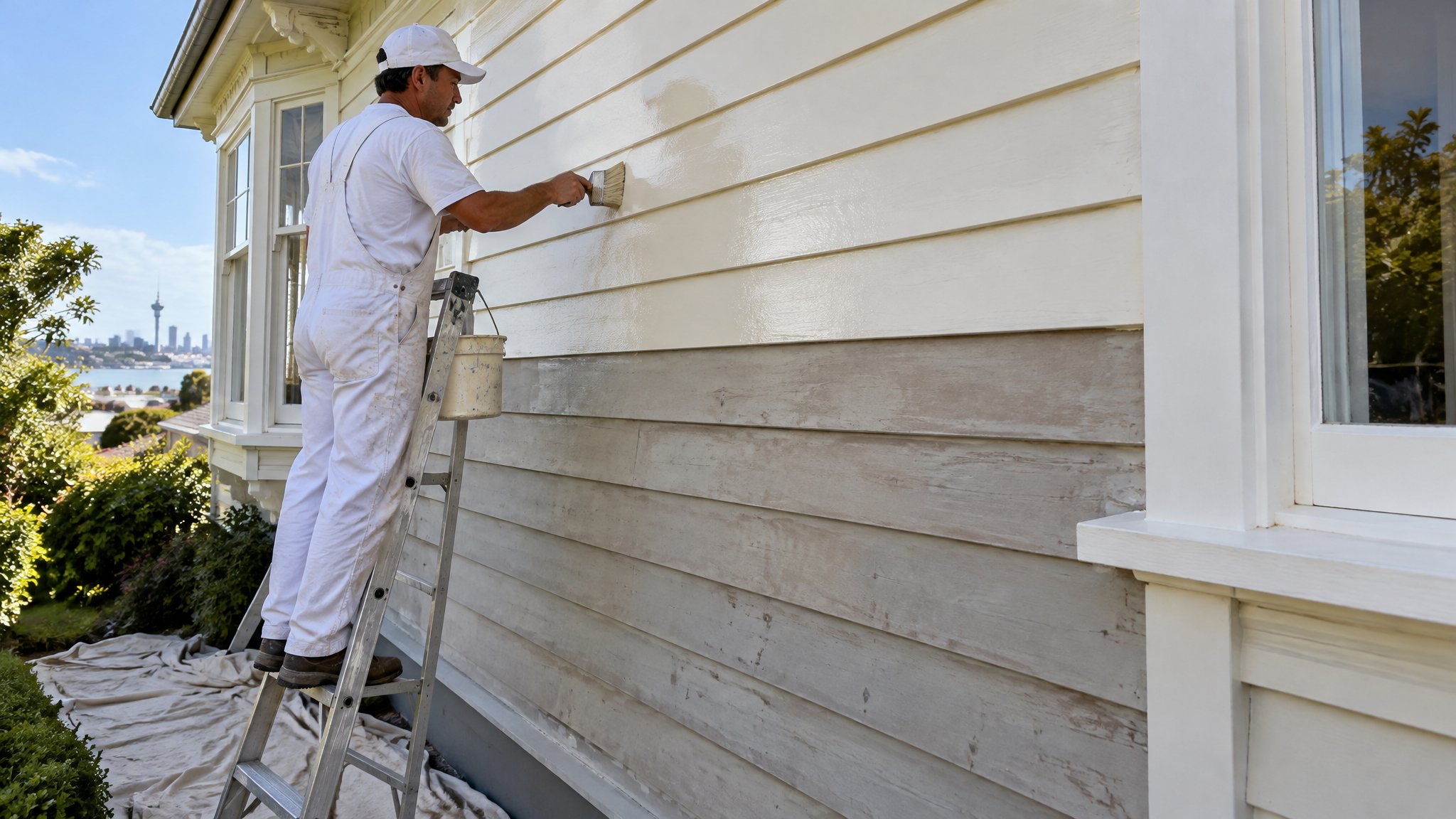
Peeling and flaking paint is one of the most common problems we see in Auckland homes, especially in moisture-prone spots like bathrooms, kitchens, weatherboards, eaves and window frames. It usually means the paint system has failed for a reason, not just that the topcoat is old.
The good news is that once you identify the cause, you can often fix it properly and stop it coming back. The key is not to paint over the problem too quickly.
Why paint peels and flakes
Paint usually starts to peel when it can no longer bond to the surface underneath. In Auckland, the most common causes are moisture getting behind the paint, poor surface preparation, painting over chalky or dirty surfaces, and using the wrong paint for the job.
Moisture is the biggest culprit. If water gets into timber, plaster, stop filler or behind a previous coat, the paint loses grip and lifts away. This often shows up around leaky windows, bathrooms with poor ventilation, external joinery, and areas exposed to driving rain.
It can also happen when old gloss paint hasn’t been sanded properly, bare timber wasn’t primed, or new paint was applied over dust, grease, mould or flaking edges.
- water ingress or high humidity
- poor prep or no sanding
- painting over dust, grease or mould
- incorrect primer or topcoat
- timber movement, ageing or sun damage
How to fix peeling paint properly
Start by working out whether the peeling is isolated or widespread. If it is only a small area, you may be able to repair it yourself. If the paint is failing in several places, the underlying issue needs to be found first or the problem will return.
Scrape back all loose and lifting paint until you reach sound edges. Sand the transition smooth so there is no hard edge. Wash off dust and any chalky residue, then check the surface for mould, rot, cracks or stains. If there is soft timber or recurring dampness, that must be dealt with before painting.
Use the correct primer for the surface. Bare timber needs a suitable primer-sealer, plaster may need patch priming, and problem areas may need an adhesion primer. Once the base is sound and dry, apply quality finish coats and allow proper drying time between coats.
For external areas, it is worth checking the guttering, sealant around windows and any gaps where water may be entering. On interior walls, look for bathroom steam, roof leaks or plumbing issues.
- scrape back all loose paint
- feather sand the edges
- clean and dry the surface
- repair damage or moisture issues
- prime correctly before recoating
How to stop it happening again
Prevention is mostly about preparation and moisture control. Keep bathrooms and laundries well ventilated, repair leaks quickly, and make sure exterior paintwork is maintained before it breaks down. Regular washing of exterior surfaces helps remove salt, grime and mould that can shorten the life of paint.
When repainting, choose products that suit the surface and the environment. Auckland’s coastal air, sun exposure and changing weather can be tough on paint systems, so the right prep and product selection matter just as much as colour choice.
If an area keeps peeling after multiple repairs, there is usually a deeper issue such as hidden damp, failing sealant or incompatible old coatings.
When to call Steve
If the peeling is widespread, keeps returning, or is happening around windows, ceilings or external timber, it is worth getting professional advice before you spend time and money on a temporary patch. Steve is a Kiwi and a trade-qualified painter, and he can help identify whether the issue is poor prep, moisture damage or a coating failure.
For Auckland homes, especially in older villas, weatherboards and renovated properties, a proper assessment can save you from repainting the same problem twice. Steve can also advise on the best repair method, primers and finish coats so the result lasts and looks right.
Frequently Asked Questions
Can I just paint over peeling paint?
No. New paint will usually fail if it goes over loose or flaking paint. You need to remove all unstable material, fix the cause, then prime and repaint properly.
Does peeling paint mean there is a leak?
Not always, but moisture is a very common cause. If the peeling is near windows, bathrooms, ceilings or exterior joinery, check carefully for leaks, condensation or failed sealant.
What is the best way to repair small flaky patches?
Scrape back to sound paint, sand smooth, clean the area, apply the right primer, then repaint with quality finish coats. If the patch keeps returning, get Steve involved.
Need a hand with your project?
Happy to tackle some of it yourself? Great — but for anything you’d rather leave to a professional, Steve Lunjevich is a Kiwi and a trade-qualified painter with 20+ years’ experience. Call or email for honest advice or a free, no-obligation quote.