
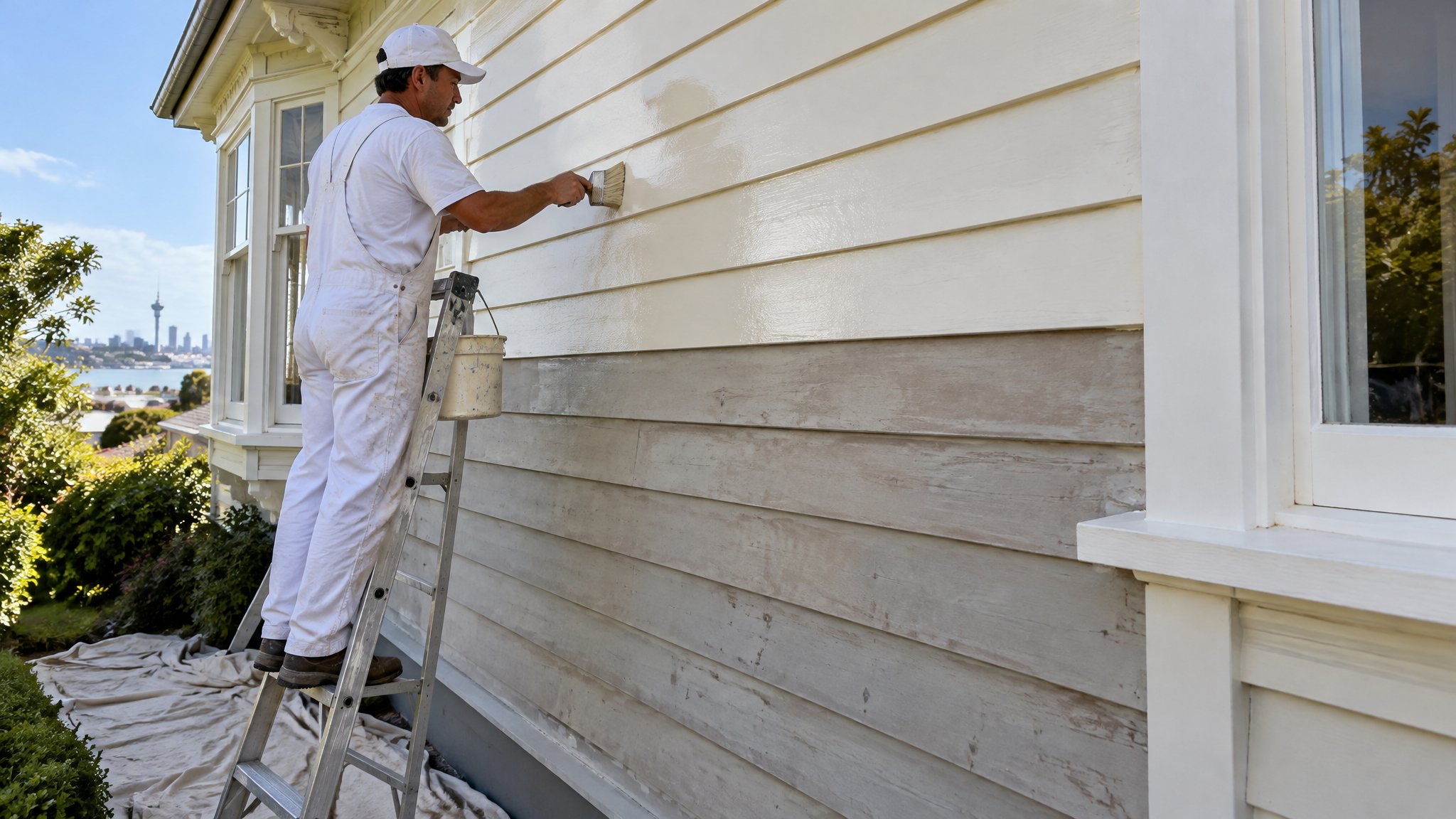
If you’re having your home painted, the paint itself matters just as much as the workmanship. Good prep and a steady hand count for a lot, but quality paint is what helps the finish look better for longer, especially in Auckland’s damp, salty and sunny conditions.
The tricky part is that most homeowners can’t tell the difference just by looking at a tin or a freshly painted wall. The best way to judge is to know what to ask, what to look for, and what should be included in a proper painting quote.
Ask exactly what products are being used
A quality painter should be able to tell you the paint brand, product line, sheen level and where each product will be used. For example, exterior cladding, weatherboards, fascias, trim and wet areas indoors all need different coatings.
If the answer is vague, that’s a warning sign. You want clear product names, not just “good paint” or “top quality”. A reputable painter should explain why a particular primer, undercoat or topcoat has been chosen for your home.
It’s also sensible to ask whether the quote includes one branded system throughout, or whether cheaper alternatives might be used for parts of the job. Consistency matters, especially for premium homes in places like Ponsonby, Remuera or Devonport.
- What brand and product range are you using?
- Is the primer matched to the surface?
- How many coats are included?
- Will the same paint system be used throughout?
Check the quote and the prep process
A quality paint job is never just about the topcoat. If the quote spends no time on preparation, it may be hiding lower-grade materials or shortcuts. Good paint sticks and performs better when surfaces are properly washed, sanded, patched, sealed and primed.
Look for detail in the quote. It should spell out surface prep, repairs, masking, primers, undercoats and the number of finish coats. If a painter is using premium paint, they will usually be happy to explain how that paint fits into the full system.
Cheap paint can sometimes look fine at first, but it may show brush marks, fade faster, struggle to cover properly or wear early on high-traffic areas. On exteriors, lower-grade products can break down sooner under UV, wind and moisture.
- Does the quote list prep in detail?
- Are primers and undercoats specified?
- Is the number of coats clearly stated?
- Are surface repairs included?
Look for practical signs during the job
You can learn a lot by watching how the job is handled. Quality paint is usually stored and mixed properly, applied to clean surfaces, and used in the right conditions. A professional painter won’t rush painting over damp surfaces or ignore manufacturer instructions just to get the job done quickly.
You should also expect clean cut lines, even coverage and no patchy absorption after the first coat. If a surface still looks thin or blotchy after the agreed number of coats, that can suggest the paint choice, prep or application method isn’t up to standard.
On premium homes, quality finishes often rely on small details: correct sealing around joinery, sharp edge work, and the right sheen for the room or surface. These are all signs that the painter cares about the long-term result, not just the quick finish.
When to call Steve
If you’re unsure whether a quote includes genuine quality paint, or you want a second opinion before work starts, contact Steve. He’s a Kiwi and a trade-qualified painter, and he can talk you through product choices, prep standards and what a proper system should look like for your home.
Whether you’re in Auckland Central, Herne Bay, Epsom, Mission Bay or elsewhere across the city, Steve can help you make sense of the quote and avoid paying for a finish that won’t last. If you’d like clear advice and a premium result, getting Steve involved early is a smart move.
Frequently Asked Questions
Can I tell if a painter is using cheap paint just by looking at the finish?
Not always. Some low-cost paints can look decent at first, but the real difference often shows later through fading, poor washability, patchiness or early wear.
Should the paint brand and product be listed in the quote?
Yes, ideally. A proper quote should name the products or at least the system being used, including primer, undercoat and topcoat.
What matters more: premium paint or good prep?
Both matter. Good prep is essential, but quality paint helps the finish last longer and perform better, especially in Auckland conditions.
Need a hand with your project?
Happy to tackle some of it yourself? Great — but for anything you’d rather leave to a professional, Steve Lunjevich is a Kiwi and a trade-qualified painter with 20+ years’ experience. Call or email for honest advice or a free, no-obligation quote.