The right sandpaper grit makes a big difference to how paint looks and lasts. Too coarse, and you can leave scratches that show through the finish. Too fine, and you may not create enough key for the paint to bond properly.
For most painting jobs in Auckland homes, the answer depends on what you’re sanding: painted walls, plaster, timber, doors, trims or a glossy surface. Here’s a practical guide to help you choose the right grit before you start painting.
The short answer: what grit to use
As a general rule, start with medium grit for most prep work and finish with a finer grit for a smooth surface. For painted walls and plaster repairs, 120 to 180 grit is usually a good range. For timber, 100 to 150 grit often works well. If you’re sanding between coats of paint, finer grits such as 180 to 240 are usually best.
If the surface is in poor condition, you may need to begin with a coarser grit and then work your way finer. The aim is not to strip everything back unless that’s required, but to flatten imperfections, remove loose material and help the new paint adhere.
- 100–120 grit: heavier sanding on timber or rough areas
- 120–180 grit: most walls, patching, and general prep
- 180–240 grit: between coats or on smoother finish work
Choose grit based on the surface
Walls and ceilings: If you’ve filled dents, patched cracks or skimmed an area, sand the patch first with 120 to 150 grit, then blend it out with 180 grit if needed. On previously painted walls, a light sand with 150 to 180 grit is usually enough to de-gloss and remove minor imperfections.
Timber doors, skirting and trim: Timber often needs a bit more attention because it can show sanding marks. Start around 120 grit for shape correction or old paint edges, then finish with 180 to 240 grit for a smoother result. For stained or lacquered surfaces, you may need to sand thoroughly enough to remove the sheen.
Glossy or enamel surfaces: These usually need a light but even sand to break the shine. Often 180 grit is suitable, followed by a thorough clean before priming. The goal is to dull the surface, not gouge it.
How to sand without making extra work
Always sand in a controlled, even way. Don’t lean too hard on one spot or you can create dips that become visible once painted. On plasterboard and stopping compound, use a sanding block or pole sander for flatter results. On timber, follow the grain where possible to reduce scratch marks.
Once sanding is done, remove all dust before painting. Vacuum first, then wipe down with a clean damp cloth or a suitable dust remover. If dust stays on the surface, it can ruin adhesion and leave a rough finish.
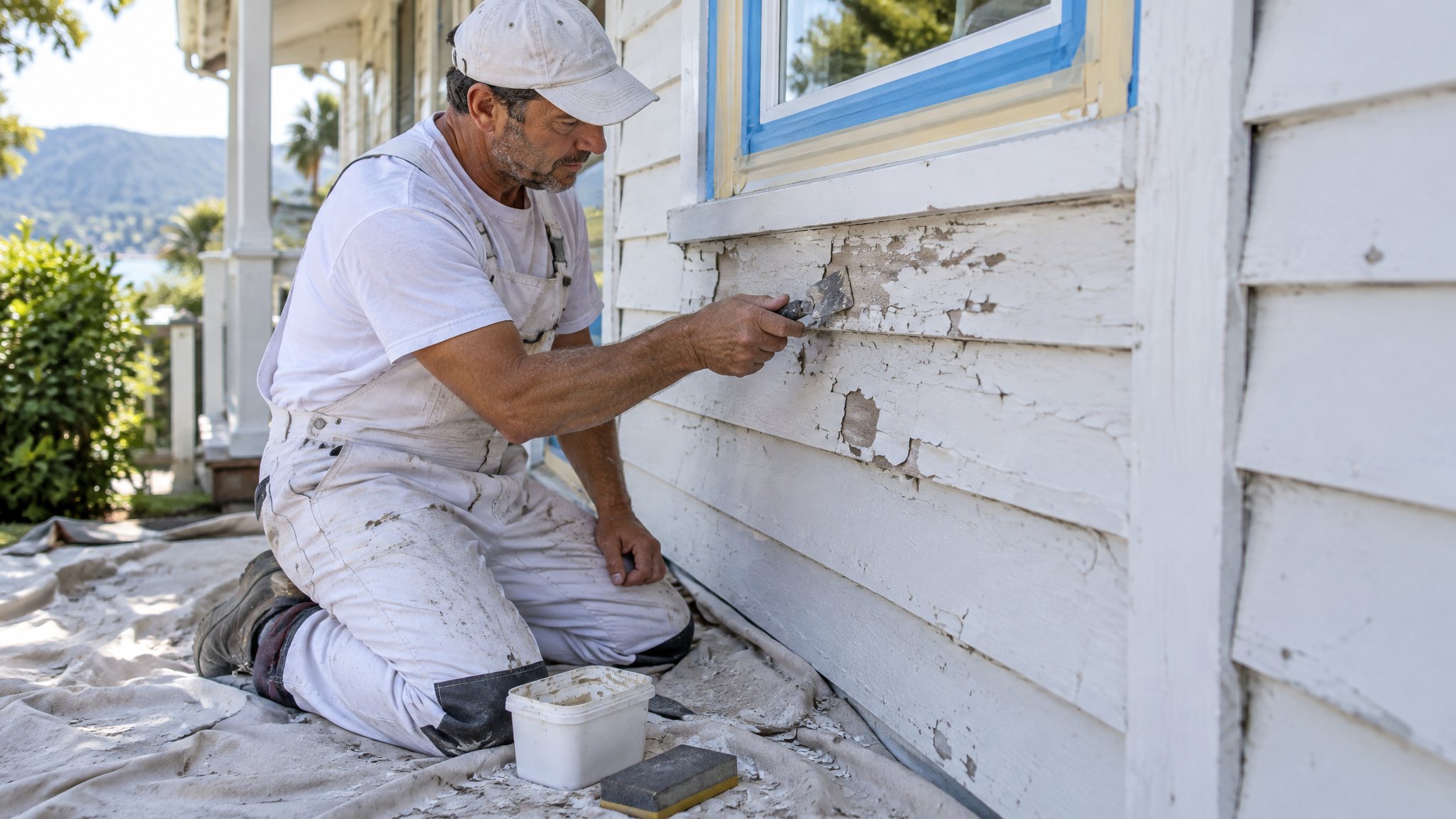
Also remember that sanding alone is not enough if the surface is chalky, stained, greasy or flaking. In those cases, cleaning, sealing or priming may be needed before paint goes on.
- Use a sanding block for flat areas
- Don’t press too hard
- Clean dust off thoroughly before priming or painting
- Check for flaking paint, grease or chalky residue
When to call Steve
If you’re unsure what grit to use, or the surface has lots of damage, peeling paint, water marks or old glossy coatings, it’s worth getting advice before you start. A poor sanding choice can leave visible scratches, patch marks or adhesion problems that are harder to fix later.
Steve is a Kiwi and a trade-qualified painter, and he can assess the surface properly and recommend the right prep for your home or property. If you want a clean, durable finish without guesswork, contact Steve for advice or to handle the job from prep through to painting.
Frequently Asked Questions
What grit sandpaper should I use before painting walls?
For most walls, 120 to 180 grit is a good range. Use a finer grit if you only need light sanding, or a slightly coarser grit if you’re smoothing repairs.
Do I need to sand before repainting?
Usually yes, even if only lightly. Sanding helps remove gloss, smooth out small defects and give the new paint something to grip onto.
Can I use very fine sandpaper before painting?
You can, but very fine grit alone may not create enough key for paint to bond properly. It’s often better as a final sand after a medium grit, not as the only step.
Need a hand with your project?
Happy to tackle some of it yourself? Great — but for anything you’d rather leave to a professional, Steve Lunjevich is a Kiwi and a trade-qualified painter with 20+ years’ experience. Call or email for honest advice or a free, no-obligation quote.