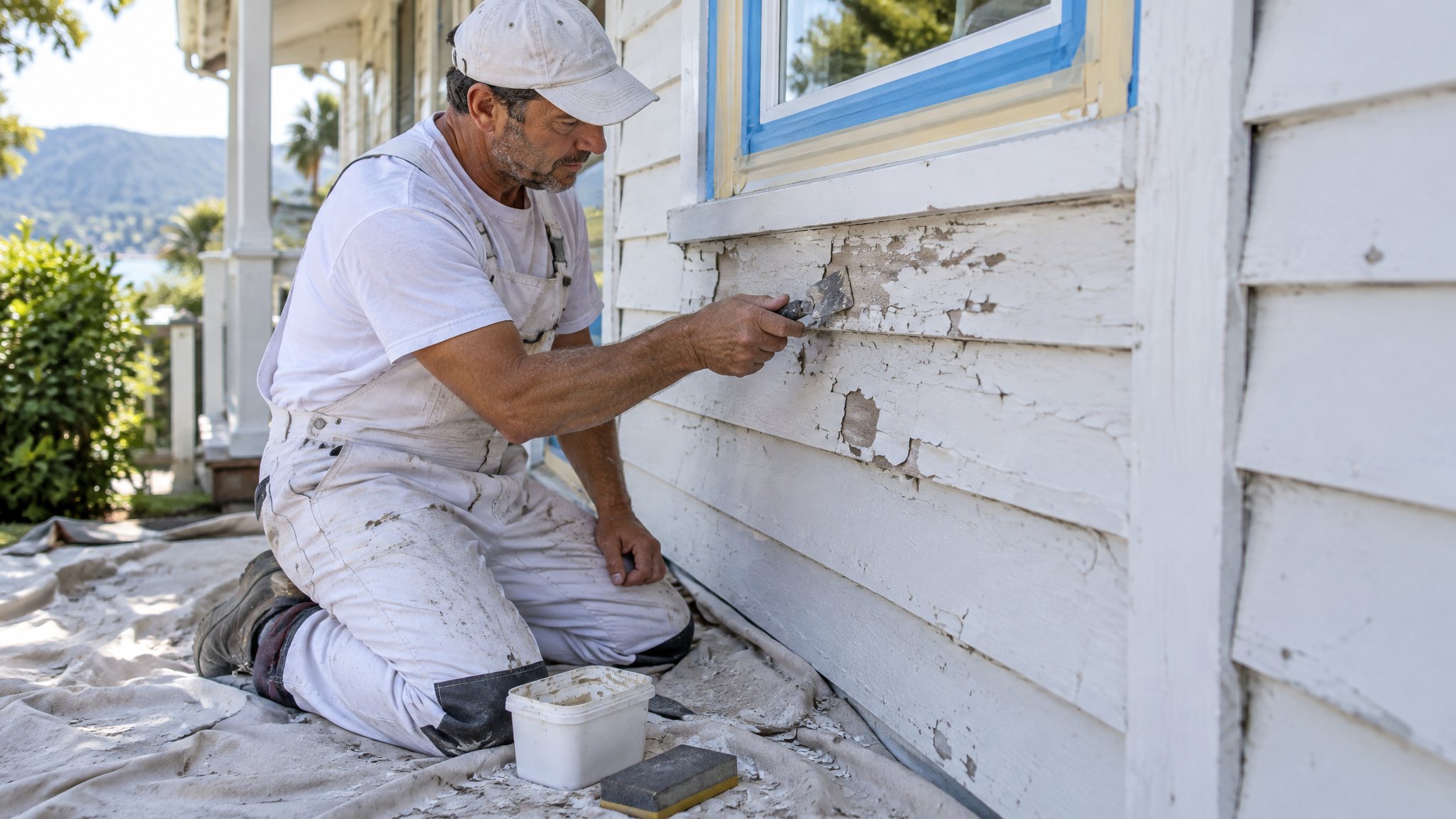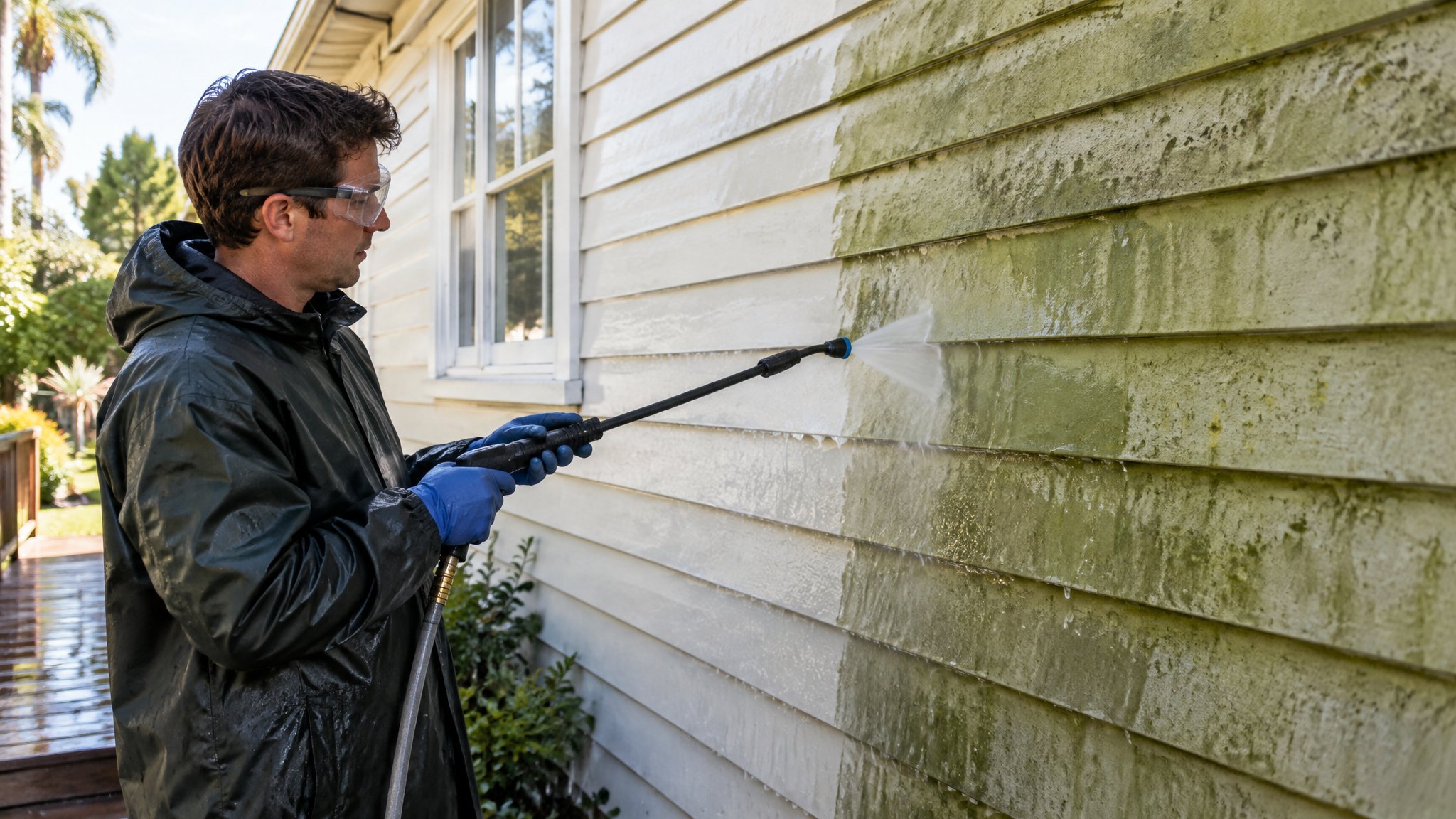
Black mould stains on a timber deck are common in Auckland, especially in shady, damp spots that do not get much sun or airflow. The good news is that you can usually remove them with the right clean, a bit of patience, and care not to damage the timber.
If you are planning to oil, stain, or repaint the deck, cleaning the mould properly is an important first step. A surface that still holds mould, dirt, or grease will not hold coatings well, so proper preparation matters.
Why black mould shows up on timber decks
Black mould loves moisture, shade, and organic material. Timber decks in Auckland suburbs like Remuera, Ponsonby, Herne Bay, and Devonport often get it where the deck stays damp after rain or where plants and fences block airflow.
It is not always just mould sitting on the surface. Sometimes the staining has penetrated the timber grain, especially if the deck has been neglected or not cleaned regularly. That means you may need more than a quick hose-down.
- Shady areas dry slowly and grow mould faster
- Leaf litter and dirt feed mould growth
- Poor drainage or blocked gaps between boards can keep timber wet
- Old coating failure can trap moisture and staining
How to clean black mould stains safely
Start by sweeping the deck and removing leaves, dirt, and loose debris. Then wet the timber with water so the cleaner does not dry too fast and mark the surface unevenly.
Use a timber-safe exterior cleaner or a mould wash suitable for decks. Apply it as directed, let it dwell for the recommended time, then scrub with a soft to medium deck brush along the grain. Rinse thoroughly with clean water.
For stubborn staining, a second application may help. In some cases, a diluted bleach solution is used for killing mould, but it must be handled carefully because it can damage surrounding plants, affect metal fixtures, and lighten timber unevenly. Always test a small hidden area first.
Avoid using a very aggressive waterblaster tip close to the timber, as it can raise the grain and leave permanent marks. If you do use a waterblaster, keep the pressure moderate and the nozzle moving.
- Work on a dry day with mild conditions
- Protect nearby plants and rinse them before and after cleaning
- Wear gloves and eye protection
- Do not mix cleaning products
After the stain is gone, prepare the deck properly
Once the deck is clean, let it dry fully before you sand, stain, oil, or paint it. Timber that still holds moisture can cause peeling, patchiness, or poor adhesion later on.
Light sanding may be needed to remove raised grain, old coating edges, or stubborn dark marks. Vacuum or dust off the timber after sanding so the surface is clean and ready for the next coating.
If the mould has caused soft spots, cupping, or ongoing wetness, it is worth checking whether there is a drainage or ventilation issue underneath. Otherwise, the stain can return quickly even after a good clean.
When to call Steve
If the mould keeps coming back, the deck is heavily stained, or you are not sure which cleaner is safe for your timber, contact Steve, a Kiwi and a trade-qualified painter. He can assess the condition of the deck, recommend the right preparation method, and help you avoid damaging the timber before coating.
Steve can also advise whether the deck is ready for oiling, staining, or painting, and whether any sanding, repairs, or moisture-related issues need attention first. For premium Auckland homes, getting the prep right can make all the difference to how long the finish lasts.
Frequently Asked Questions
Can I use bleach to remove black mould from a timber deck?
Sometimes, but only with care. Bleach may lighten stains and kill mould, yet it can also affect plants, nearby metal, and the timber finish. A timber-safe exterior cleaner is often the better first choice.
Will pressure washing remove black mould stains?
It can help, but too much pressure can damage timber and leave marks. Use a moderate setting, keep the nozzle moving, and follow up with proper cleaning and rinsing rather than relying on pressure alone.
Do I need to sand the deck after cleaning mould?
Not always, but sanding is often useful if the grain has lifted, the coating has failed, or the stain remains patchy. Let the timber dry fully before sanding or recoating.
Need a hand with your project?
Happy to tackle some of it yourself? Great — but for anything you’d rather leave to a professional, Steve Lunjevich is a Kiwi and a trade-qualified painter with 20+ years’ experience. Call or email for honest advice or a free, no-obligation quote.