
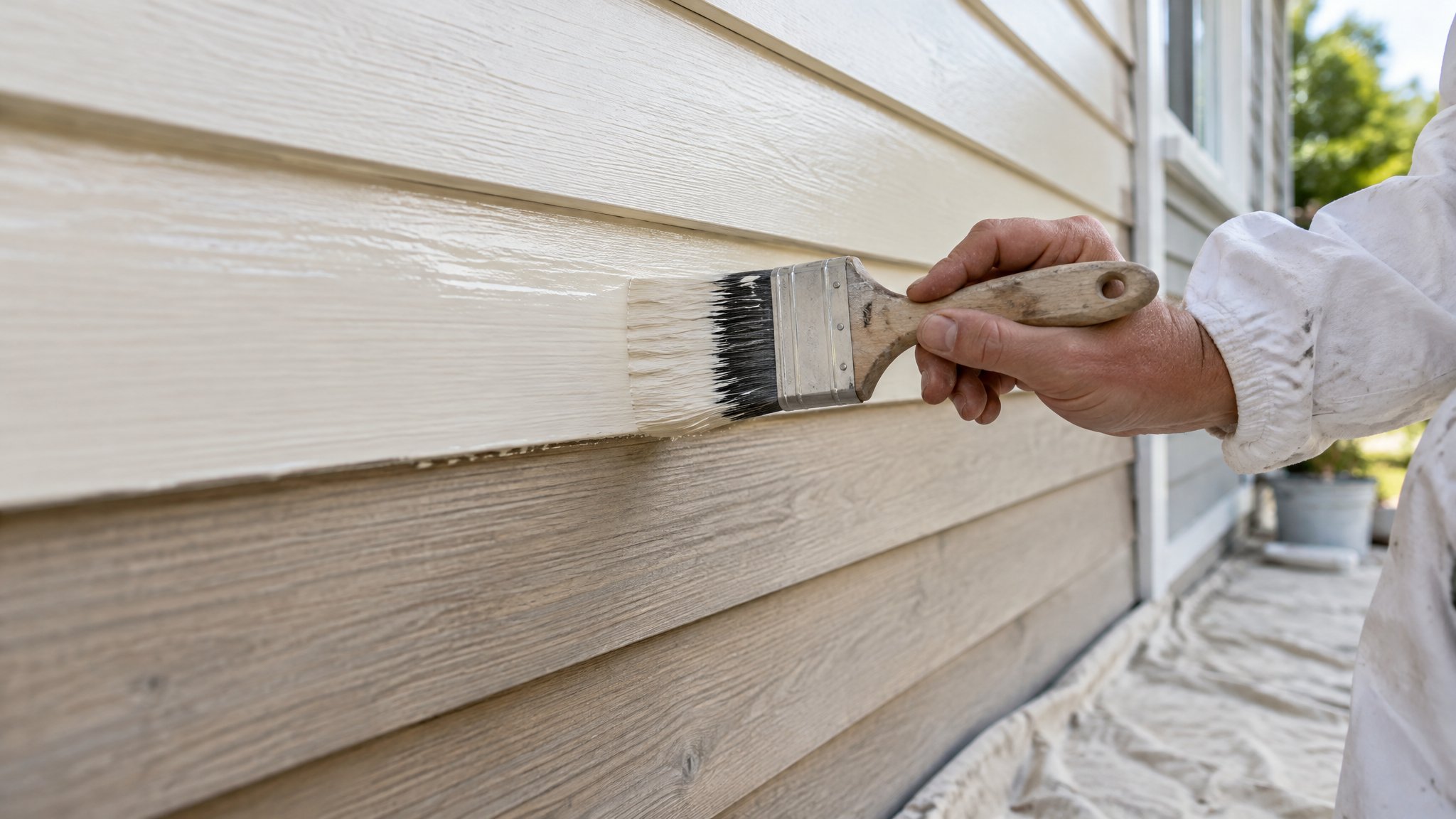
If you’re repainting weatherboards on an Auckland home, the best paint is one that suits the timber, the existing coating, and our local weather. Sea air, sun, wind and moisture all affect how long the finish will last.
For most exterior weatherboards in New Zealand, a high-quality exterior acrylic paint system is the go-to choice, but the right primer and surface prep matter just as much as the topcoat.
The best paint type for weatherboards
For most timber weatherboards, use a premium exterior acrylic paint. It’s flexible, breathable, and holds up well as timber expands and contracts with the seasons. That flexibility helps reduce cracking and peeling over time.
Acrylic paints are generally the safest modern choice for repaints because they clean up with water, resist fading better than older coatings, and are suitable for many Auckland homes, including villas, bungalows and more modern timber houses.
If your weatherboards were previously painted with an old oil-based finish, you may still be able to repaint with a quality acrylic system after proper preparation. The key is making sure the existing coating is sound and compatible.
- Choose a premium exterior 100% acrylic topcoat
- Use a timber primer/sealer where bare wood is exposed
- Match the paint system to the existing coating condition
- Choose low sheen or satin for a traditional weatherboard look
Why primer and prep matter more than the label
The best paint will still fail if the surface isn’t prepared properly. Weatherboards often have flaking paint, chalky residue, gaps, nail pops, open joins and areas of timber weathering. Those issues need sorting before you paint.
Bare timber should always be primed with a suitable exterior timber primer or sealer. This helps the topcoat bond properly and reduces the chance of uneven absorption, staining or premature breakdown.
Older weatherboards may also need sanding, scraping, filling and, in some cases, gap sealing or minor repairs. In damp or shaded Auckland locations, checking for mould, moss and moisture-related damage is especially important before painting.
Choosing the right sheen and colour
Low sheen or satin finishes are commonly used on weatherboards because they look smart and help hide minor surface imperfections. They also tend to suit heritage and character homes around Auckland suburbs like Ponsonby, Parnell and Devonport.
Gloss finishes are not usually the first choice for exterior weatherboards because they can highlight defects and show wear more obviously. Very flat finishes are less common outside because they may not shed dirt as well.
Lighter colours can reduce heat build-up and help the coating last longer, while darker colours may look striking but can put more stress on the paint film. If you want a dark colour, it’s worth checking that the system and substrate are suitable.
When to call Steve
If you’re unsure what paint should go on your exterior weatherboards, it’s worth getting advice before you start. The right product depends on the timber condition, the existing coating, and whether there are any repairs needed first. Steve is a Kiwi and a trade-qualified painter, and he can assess your weatherboards, recommend the best paint system, and carry out the prep properly so the finish lasts.
For Auckland homeowners and property managers, that can save a lot of time and help avoid costly repainting too soon. If you’d like practical advice or a professional exterior repaint, contact Steve, a Kiwi and a trade-qualified painter.
Frequently Asked Questions
Can I use interior paint on exterior weatherboards?
No. Interior paint isn’t designed for UV, rain or temperature changes. Exterior weatherboards need a proper exterior acrylic system.
Do I need to prime all weatherboards before painting?
Not always. Sound existing paint may not need full priming, but any bare timber, repairs or patched areas should be primed with the right exterior product.
What finish is best for weatherboards?
Low sheen or satin is usually the best balance of appearance, durability and ease of maintenance for timber weatherboards.
Need a hand with your project?
Happy to tackle some of it yourself? Great — but for anything you’d rather leave to a professional, Steve Lunjevich is a Kiwi and a trade-qualified painter with 20+ years’ experience. Call or email for honest advice or a free, no-obligation quote.