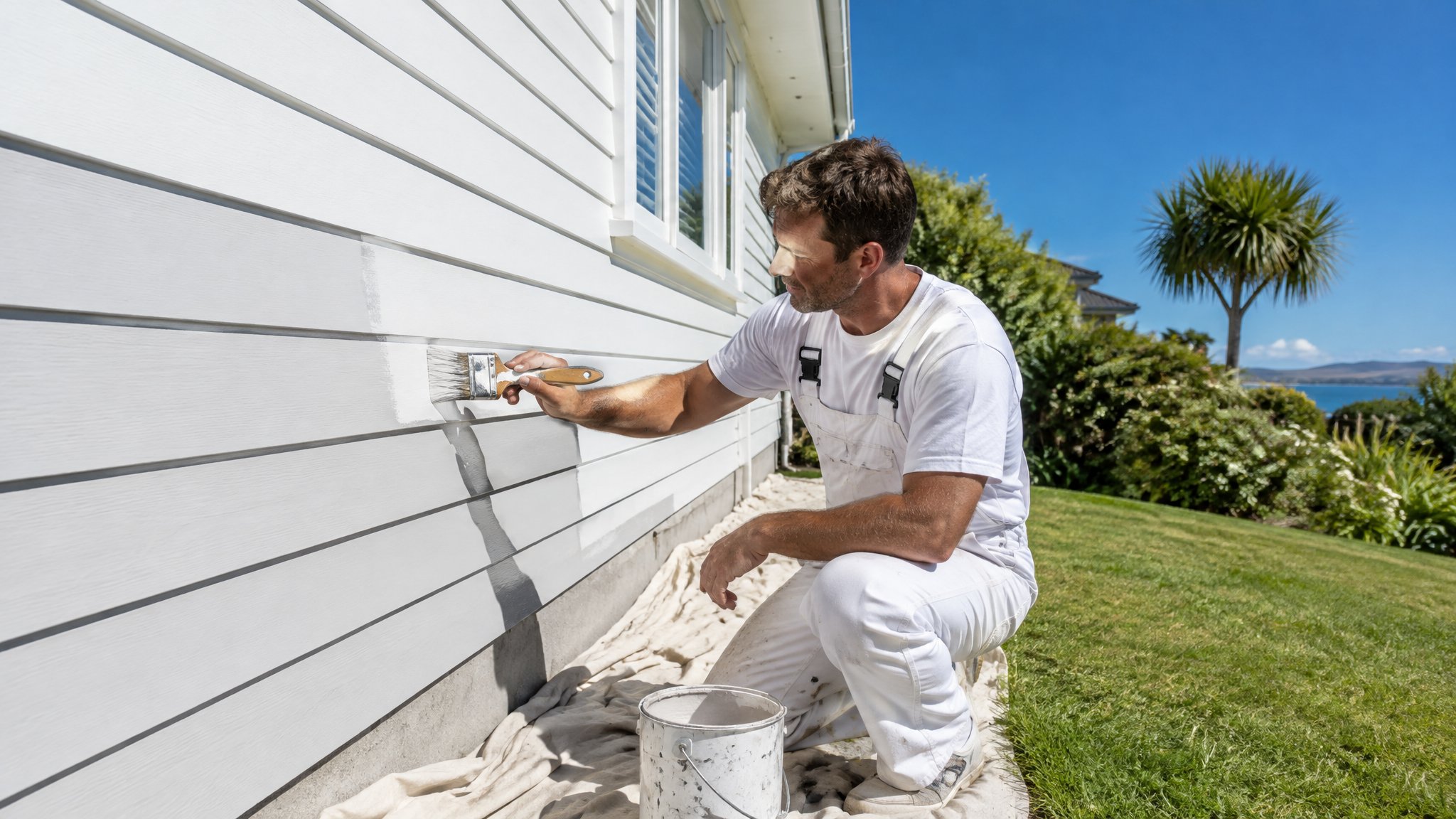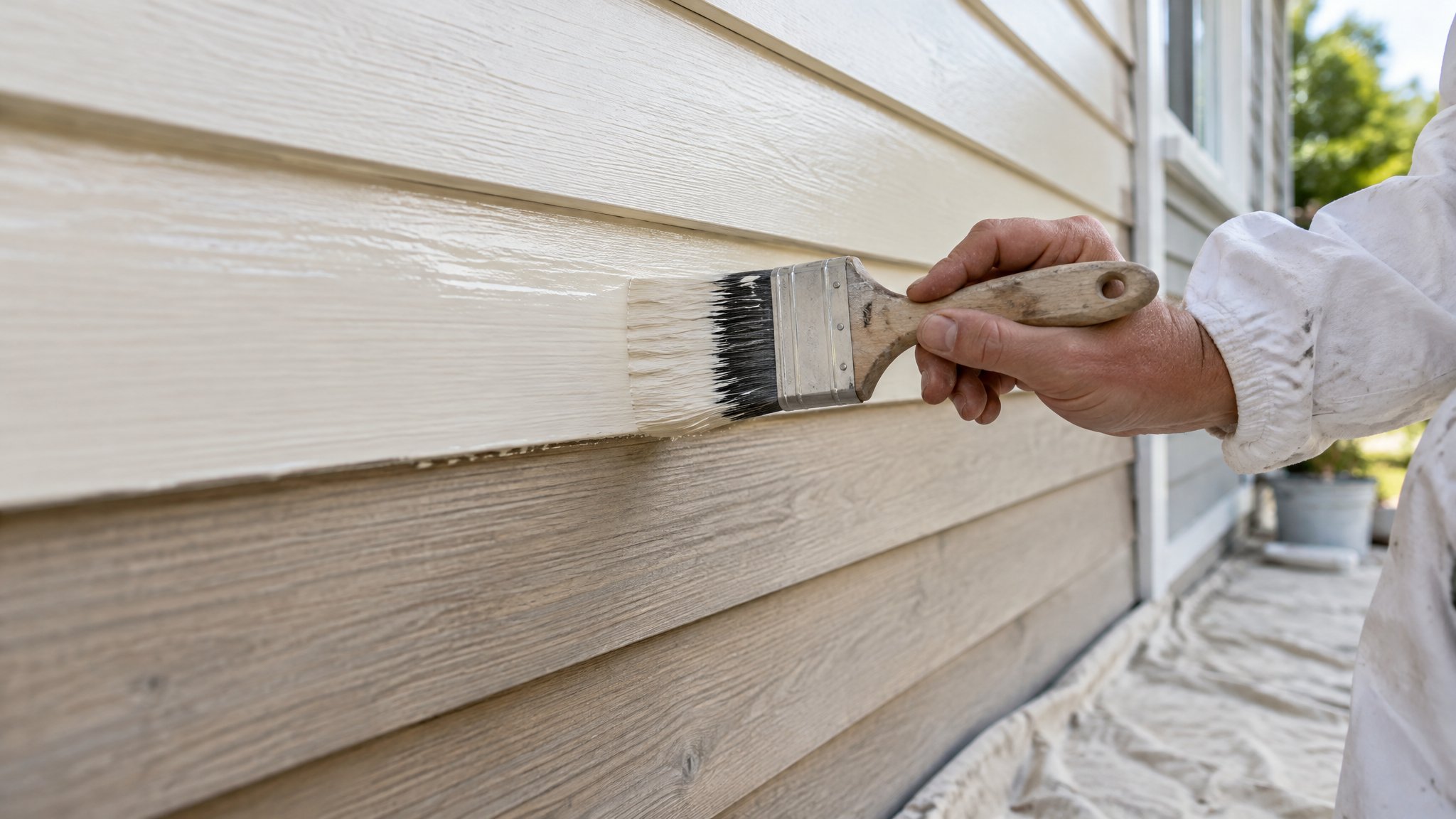
Tying scaffolding to a weatherboard house can be done safely, but it needs care. Weatherboards are more forgiving than some cladding systems, yet they can still be dented, split, or marked if scaffold ties are placed badly or tightened too hard.
For exterior painting in Auckland, the aim is to support the scaffold properly without compromising the timber or fibre cement below. The exact fixing method depends on the board profile, the condition of the wall, and where the scaffold needs to sit.
Start with the wall, not the scaffold
Before any tie goes in, inspect the weatherboards closely. Check for soft timber, loose paint, previous nail holes, cracked boards, and areas where water may have already caused damage. A sound fixing point is essential because a tie is only as good as the substrate behind it.
On older Auckland villas and bungalows, the wall structure may be uneven, and the boards themselves may be more brittle than they look. It is also common to find trim, stop ends, or decorative mouldings that should never be used as anchor points.
- Avoid tying into rotten, split, or loose boards
- Do not fix into decorative trim or weak corners
- Check that the tie will land on a solid framing member where possible
- Allow for paint thickness, board movement, and irregular wall lines
Use the right tie method for weatherboards
The safest scaffold tie system is one that transfers load into a proper structural fixing, not just the board face. In many cases, that means locating a stud or framing member and using the correct tie hardware with a protective packer or spacer so the pressure is spread evenly.
Where the scaffold is close to painted timber, the tie should not rub directly on the surface. Even small movements in wind can wear through fresh paint or leave shiny pressure marks. A soft separator, sleeve, or packing piece can help reduce contact damage.
Never overtighten the tie. The goal is firm support, not compression. If a tie is cranked down too hard, it can distort the board profile, crack old filler, or leave a permanent dent once the scaffold is removed.
Protect the finish while the scaffold is up
Scaffold damage is often caused during installation and removal rather than while the scaffold is standing. That is why protection matters at every stage. If the house is freshly painted, mask vulnerable edges, use clean materials, and make sure any timber packers are smooth and free from grit.
Good access planning also helps. Sometimes the scaffold can be positioned so fewer ties are needed, or ties can be placed in less visible areas that will later be touched up. On premium homes in suburbs like Remuera, Ponsonby, or Devonport, this kind of planning is often the difference between a neat result and a lot of patch-up work.
Once the job is finished, the tie holes should be carefully sealed and made good using the right exterior filler and paint system. Leaving even small penetrations open can let water into the wall.
When to call Steve
If you are unsure where to fix scaffold ties on a weatherboard house, it is worth getting advice before anything is drilled or tightened. A Kiwi and a trade-qualified painter like Steve can help assess the condition of the boards, plan tie locations, and reduce the chance of damage to the exterior finish.
This is especially important on older Auckland homes, where hidden rot, uneven framing, or delicate heritage details can make a simple scaffold setup more complicated than it first appears. Steve can also advise on the safest approach for exterior painting so the scaffold supports the job without harming the house.
Frequently Asked Questions
Can scaffolding be tied directly to weatherboards?
Sometimes, but only with the right fixing point and hardware. The tie should not rely on the weatherboard alone. It should transfer load into the structure behind the cladding and be protected so it does not rub or crush the timber.
Will scaffold ties leave holes in my weatherboard house?
Yes, in most cases there will be small fixing holes that need to be sealed afterwards. The key is using the smallest practical fixing, placing it carefully, and making good the repair properly once the scaffold comes down.
How do I stop scaffold ties damaging fresh paint?
Use clean protective packers, avoid direct metal-on-paint contact, and make sure the tie is not overtightened. Careful installation and removal are just as important as the tie itself.
Need a hand with your project?
Happy to tackle some of it yourself? Great — but for anything you’d rather leave to a professional, Steve Lunjevich is a Kiwi and a trade-qualified painter with 20+ years’ experience. Call or email for honest advice or a free, no-obligation quote.