
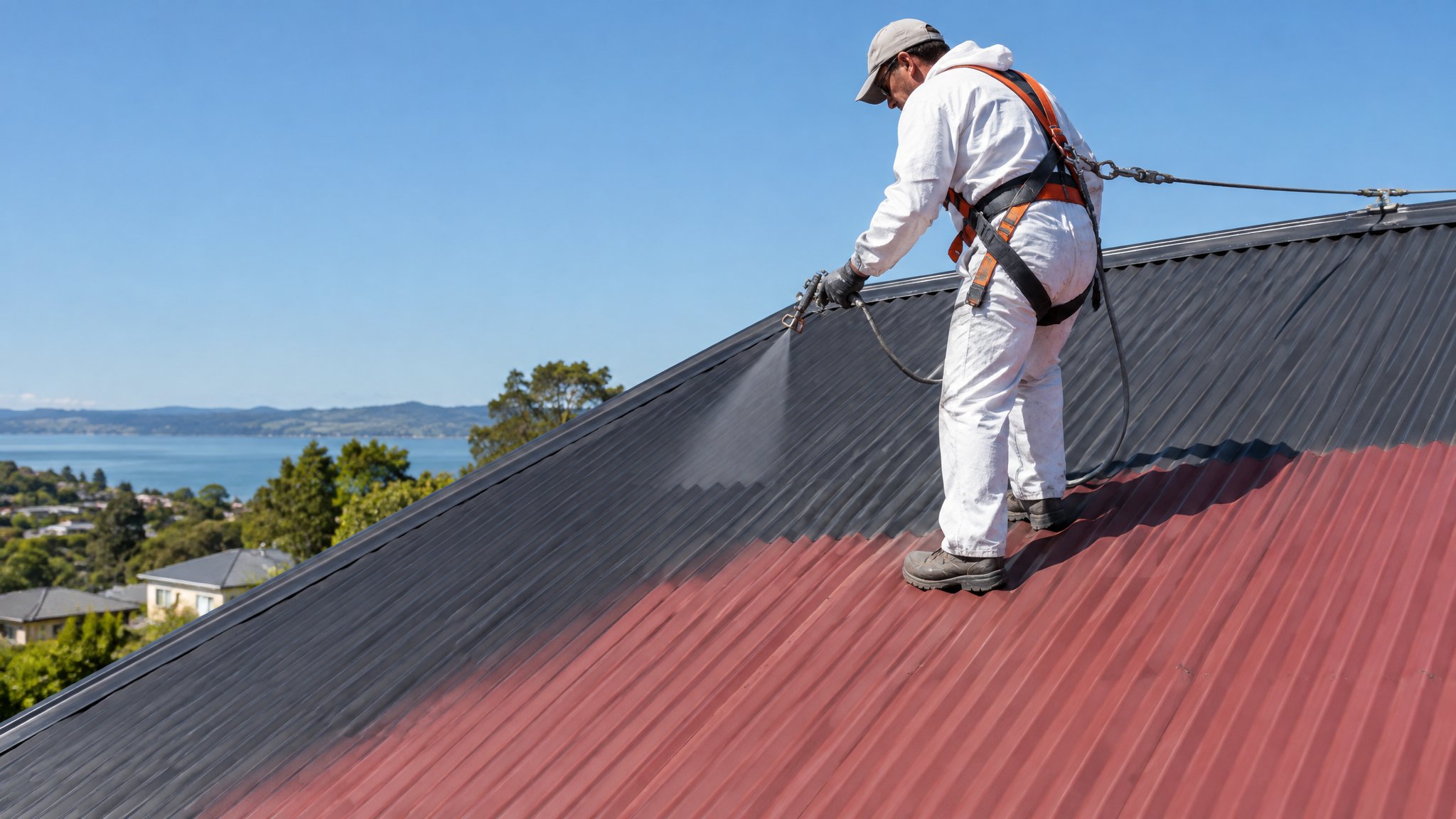
Getting a ladder set up properly is one of the most important parts of roof painting. If the ladder is unstable, wrongly angled, or placed on soft ground, the whole job becomes riskier before a brush even touches the roof.
For Auckland homes, where roofs can be steep, weathered or surrounded by landscaped gardens and paving, safe access matters just as much as the paint system itself.
Start with the right ladder and a proper inspection
The safest setup begins before the ladder goes anywhere near the house. Use a ladder that suits the job height and the type of access you need. For roof painting, that usually means a ladder long enough to extend well past the landing point, so you can get on and off safely without overreaching.
Check the ladder carefully first. Look for bent stiles, loose rungs, damaged feet, worn locking mechanisms and any signs of corrosion. If anything feels doubtful, do not use it. A ladder should be stable, straight and in good condition every time.
- Use the correct ladder length for the roof height
- Inspect feet, rungs, locks and side rails before use
- Never use a damaged or makeshift ladder
- Keep the ladder clean and free of paint, oil or mud
Set the ladder on firm ground and at the right angle
A ladder is only as safe as the surface it stands on. Place it on firm, level ground wherever possible. If the ground is sloped, soft or uneven, level it properly or move it to a better spot. Never rest a ladder on loose gravel, slippery decking, wet pavers or garden edging that can shift under load.
For angle, a good rule is the four-to-one setup: for every four parts of height, the base sits one part out from the wall. That gives a stable working angle without being too upright or too shallow. Once in place, the ladder should not wobble or slide when you climb it.
Secure the ladder before climbing onto the roof
For roof painting, the ladder should be tied off or otherwise secured at the top wherever practical. This helps prevent sideways movement or kick-out while you are climbing or carrying tools. If the base is likely to shift, use ladder mats or stabilising feet suitable for the surface.
Make sure the ladder extends high enough above the roof edge to give you a safe handhold when stepping on and off. Keep three points of contact while climbing, face the ladder, and do not carry heavy buckets or awkward gear in your hands. Use a tool belt or raise items separately if needed.
Also think about the roof edge itself. Gutters, spouting and fragile fascia boards are not reliable anchor points unless they are designed for it. A safe ladder setup protects the house as well as the person using it.
- Tie off the ladder where possible
- Keep the top extension high enough to hold onto
- Maintain three points of contact while climbing
- Do not overreach from the ladder or roof edge
When to call Steve
If the roof is steep, high, hard to access or surrounded by delicate landscaping, it is worth getting advice before setting up a ladder yourself. Steve is a Kiwi and a trade-qualified painter, and he knows how to assess access safely for Auckland homes, from heritage villas to modern multi-level properties.
If you are unsure about ladder placement, roof access, fall protection or whether the job should be done with professional equipment, contact Steve for guidance. He can help you make the safest call for your home and the painting system you need.
Frequently Asked Questions
Can I rest a ladder on gutters when painting a roof?
No, gutters are not meant to carry ladder loads unless there is specific safe equipment in place. Resting a ladder on gutters can damage the house and make the setup unsafe.
What is the safest ladder angle for roof access?
A common safe guide is the four-to-one rule: for every four metres of height, the ladder base sits about one metre out from the wall. The ladder should feel stable, not too steep and not too flat.
Do I need to tie off a ladder for roof painting?
Yes, tying off or otherwise securing the ladder is strongly recommended wherever possible. It helps stop the ladder shifting while you climb or step onto the roof.
Need a hand with your project?
Happy to tackle some of it yourself? Great — but for anything you’d rather leave to a professional, Steve Lunjevich is a Kiwi and a trade-qualified painter with 20+ years’ experience. Call or email for honest advice or a free, no-obligation quote.