
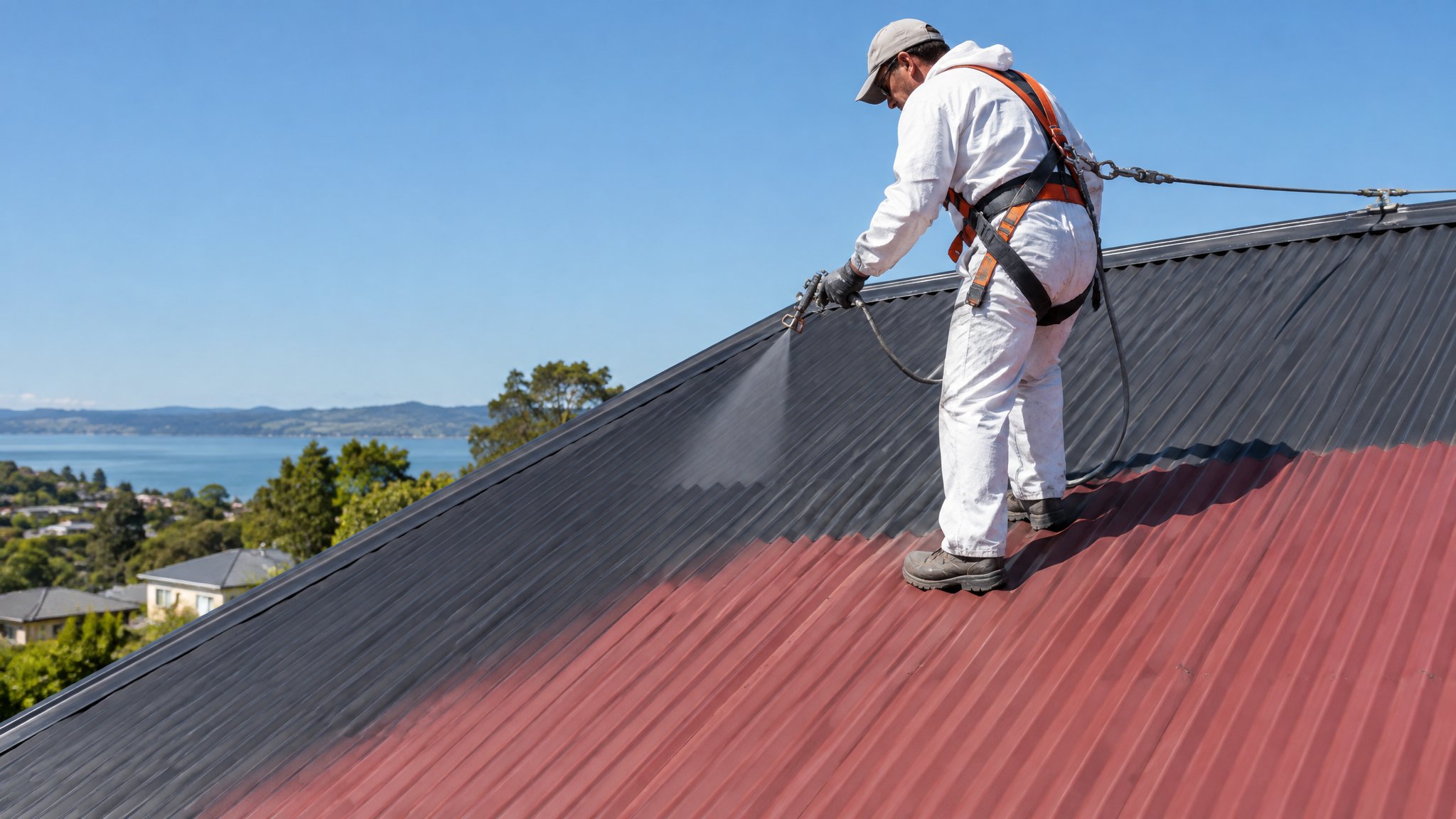
Short answer: sometimes, but not always. A pressure washer can help remove dirt, moss and loose debris before roof painting, but if it is used too hard or in the wrong way it can damage the roof and create bigger problems.
For Auckland homes, the safest approach depends on the roof material, its age and condition, and how much existing coating is left. Good preparation matters just as much as the paint itself.
Is pressure washing safe on every roof?
No. A pressure washer can be too aggressive for some roofs, especially older concrete tiles, weathered metal roofing, brittle pointing, and roofs with lifting edges or previous repairs. High pressure can force water under overlaps, dislodge mortar, strip loose coatings too deeply, and even break tiles.
On a sound roof, a controlled wash may be part of the preparation process, but it should be done carefully and with the right nozzle, pressure and angle. The aim is to clean the surface, not blast it back to bare material unless that is specifically required by the coating system.
If your roof has cracks, rust, loose flashings, moss build-up, or you are not sure of its condition, it is best not to assume a pressure washer is the answer. In many cases, a softer wash and hand cleaning are more suitable.
What is the right way to clean a roof before painting?
A proper roof prep job usually starts with inspection, then removal of moss, lichen, dirt and loose material. Depending on the roof, that might involve soft washing, low-pressure rinsing, scraping, brushing, and treating biological growth before painting begins.
For metal roofs, cleaning also needs to remove chalking, salt residue and contaminants so the coating can bond properly. For tiled roofs, extra care is needed around ridges, hips, valleys and any fragile mortar or pointing.
A sensible preparation process often includes:
Use the lowest effective pressure, not maximum pressure.
Work from the safest access points and avoid forcing water uphill under laps.
Treat moss and lichen before painting so regrowth does not push through the new coating.
Allow the roof to dry thoroughly before priming or painting.
Check for leaks, rust, loose fixings and damaged flashings while the roof is being cleaned.
What can go wrong if you use too much pressure?
Using too much pressure can create hidden damage that only shows up later, after the roof has been painted. Water can be driven into laps, under ridge caps or into ceiling cavities, and that can lead to dampness, staining or mould issues inside the home.
It can also roughen the surface unevenly, strip out weakened coating, or leave the roof in a patchy condition that affects the finish. On concrete tiles, aggressive washing can open the surface and make the roof absorb more moisture. On metal roofs, it can highlight corrosion or damage protective coatings.
If the roof is already in poor condition, pressure washing may make things worse rather than better. In those cases, repairs and a different cleaning method should come first.
When to call Steve
If you are thinking about roof painting and are not sure whether pressure washing is safe, contact Steve. He is a Kiwi and a trade-qualified painter, and he can assess the roof, recommend the right preparation method, and make sure the surface is ready for paint without unnecessary damage.
That is especially important for Auckland homes with older tiled roofs, salt exposure near the coast, or weathered metal roofing. A proper check before cleaning can save you from leaks, wasted paint and premature coating failure. If you want clear advice on roof prep, Steve can help you choose the safest approach for your roof and its condition.
Frequently Asked Questions
Can I pressure wash a roof myself before painting?
You can, but only if you are confident the roof is sound and you know how to use the equipment safely. In many cases, a softer wash is better. For roof painting, it is often safer to have Steve, a Kiwi and a trade-qualified painter, assess it first.
Should a roof be completely clean before painting?
Yes. The roof should be free of dirt, moss, lichen, loose paint, dust and contaminants so the new coating can bond properly. It also needs to be fully dry before painting starts.
Will pressure washing remove old paint from my roof?
It can remove loose or failing paint, but it is not a controlled way to strip a roof. If the coating is badly worn, a proper preparation and recoating plan is usually better than relying on pressure alone.
Need a hand with your project?
Happy to tackle some of it yourself? Great — but for anything you’d rather leave to a professional, Steve Lunjevich is a Kiwi and a trade-qualified painter with 20+ years’ experience. Call or email for honest advice or a free, no-obligation quote.