
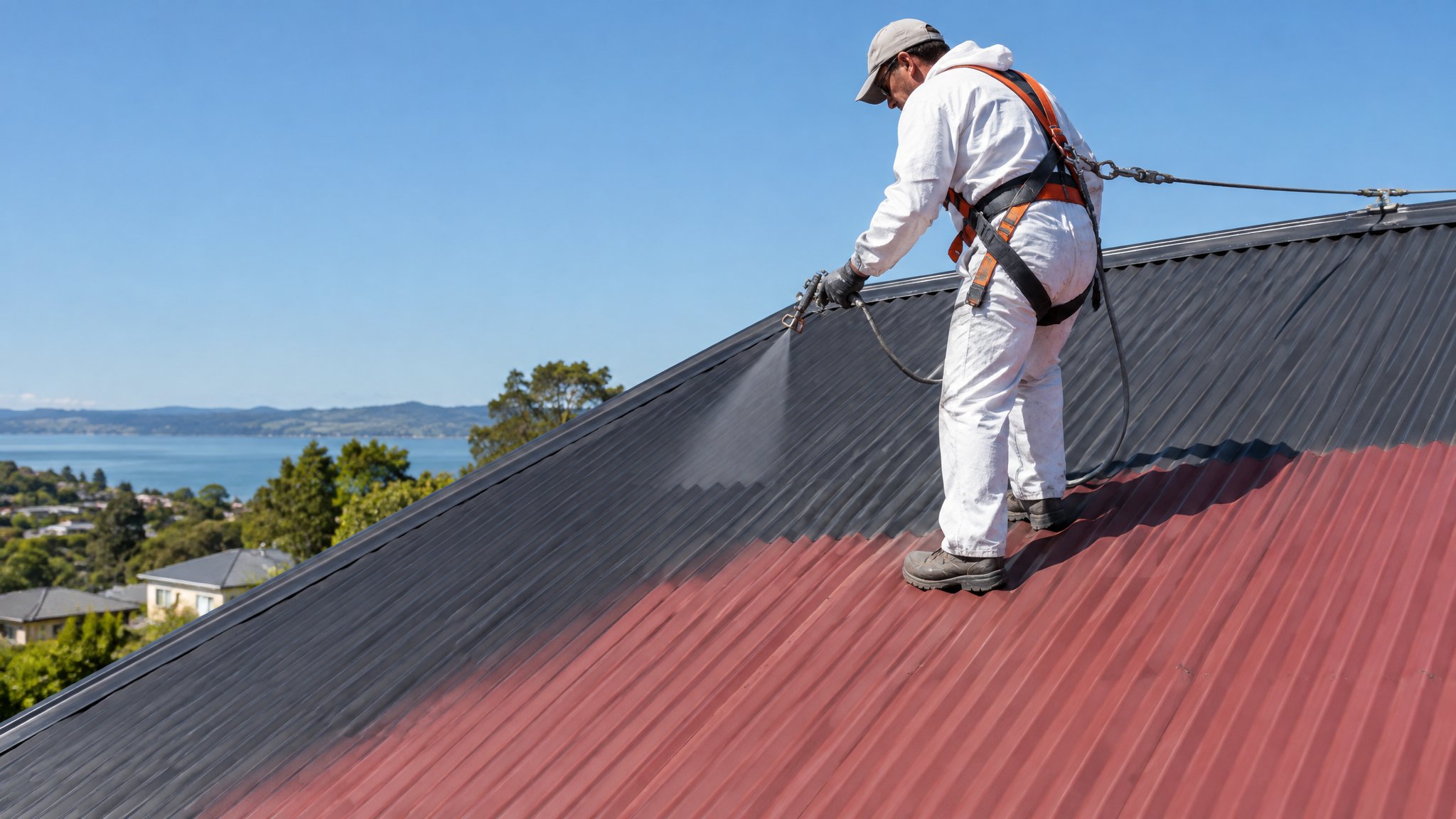
Yes, a paint-on membrane can be used to waterproof a laundry floor, but only if the product is designed for that purpose and the floor is properly prepared. In a laundry, the main job is to stop moisture getting through the floor and into the structure below.
It is important to understand that a paint-on membrane is not just ordinary paint. It is a specialist waterproofing system, and in many cases it needs to be applied to a correctly prepared substrate and finished with the right compatible top coating or floor finish.
What a paint-on membrane does in a laundry
A paint-on membrane forms a flexible waterproof barrier over the floor surface. In a laundry, that helps protect against spills from washing machines, overflows, detergent water, and everyday dampness.
It is commonly used on concrete floors and some suitable sheet substrates, but the product must match the surface and the area’s exposure to moisture. A laundry floor also needs practical slip resistance and a finish that can handle cleaning products and regular foot traffic.
- Check that the membrane is approved for interior wet areas
- Make sure the floor is dry, clean, sound, and free from contaminants
- Use the correct primer and detail reinforcement at corners and joints
- Follow the manufacturer’s drying and curing times before using the room
What can go wrong if the floor is not prepared properly
The most common problem is poor adhesion. If there is dust, old glue, grease, laitance on concrete, or moisture in the substrate, the membrane may not bond properly and can peel or blister.
Another issue is movement. Hairline cracks, loose sheets, or poorly sealed junctions can telegraph through the coating and compromise the waterproofing. In a laundry, water often finds the weak points first, especially around the perimeter, floor waste, and under appliances.
If you are planning to paint a laundry floor as well as waterproof it, you need to be careful with product compatibility. Not every floor paint is suitable over a membrane, and not every membrane can be left as the final wearing surface.
Best practice for a durable laundry floor
For a reliable result, start with a proper inspection of the floor condition and substrate type. Then use the membrane system recommended for that exact surface, following the data sheet closely.
A good laundry floor waterproofing job usually includes preparation, priming, membrane coats, attention to corners and penetrations, and then the correct final finish if one is required. Good ventilation during curing also helps the coating perform as it should.
If the laundry is on an upper floor, or there are signs of water damage, it is especially important to confirm that the waterproofing system suits the risk level and the building construction.
When to call Steve
If you are not sure whether your laundry floor is concrete, fibre-cement, particleboard, or already coated, it is worth getting advice before you start. The wrong product can lead to peeling, leaks, or a finish that wears out too quickly.
Steve is a Kiwi and a trade-qualified painter, and he can help you work out whether a paint-on membrane is suitable, what preparation is needed, and whether your laundry needs a waterproofing system, a floor coating, or both. If you are in Auckland, especially in homes where the finish needs to look sharp as well as perform well, getting the right advice first can save a lot of trouble later.
Frequently Asked Questions
Is a paint-on membrane the same as floor paint?
No. A paint-on membrane is a waterproofing product designed to stop moisture getting through, while floor paint is mainly a decorative and protective coating. Some systems combine both, but they are not the same thing.
Can I use a paint-on membrane over an existing laundry floor?
Sometimes, yes, but only if the existing surface is sound, clean, dry, and compatible with the membrane system. Old coatings, moisture, and movement can all affect the result.
Do I need professional help for a laundry floor membrane?
It is often wise to get professional advice, especially if the floor has cracks, previous water damage, or you are unsure about the substrate. Steve is a Kiwi and a trade-qualified painter, and he can advise on the best approach for your home.
Need a hand with your project?
Happy to tackle some of it yourself? Great — but for anything you’d rather leave to a professional, Steve Lunjevich is a Kiwi and a trade-qualified painter with 20+ years’ experience. Call or email for honest advice or a free, no-obligation quote.