
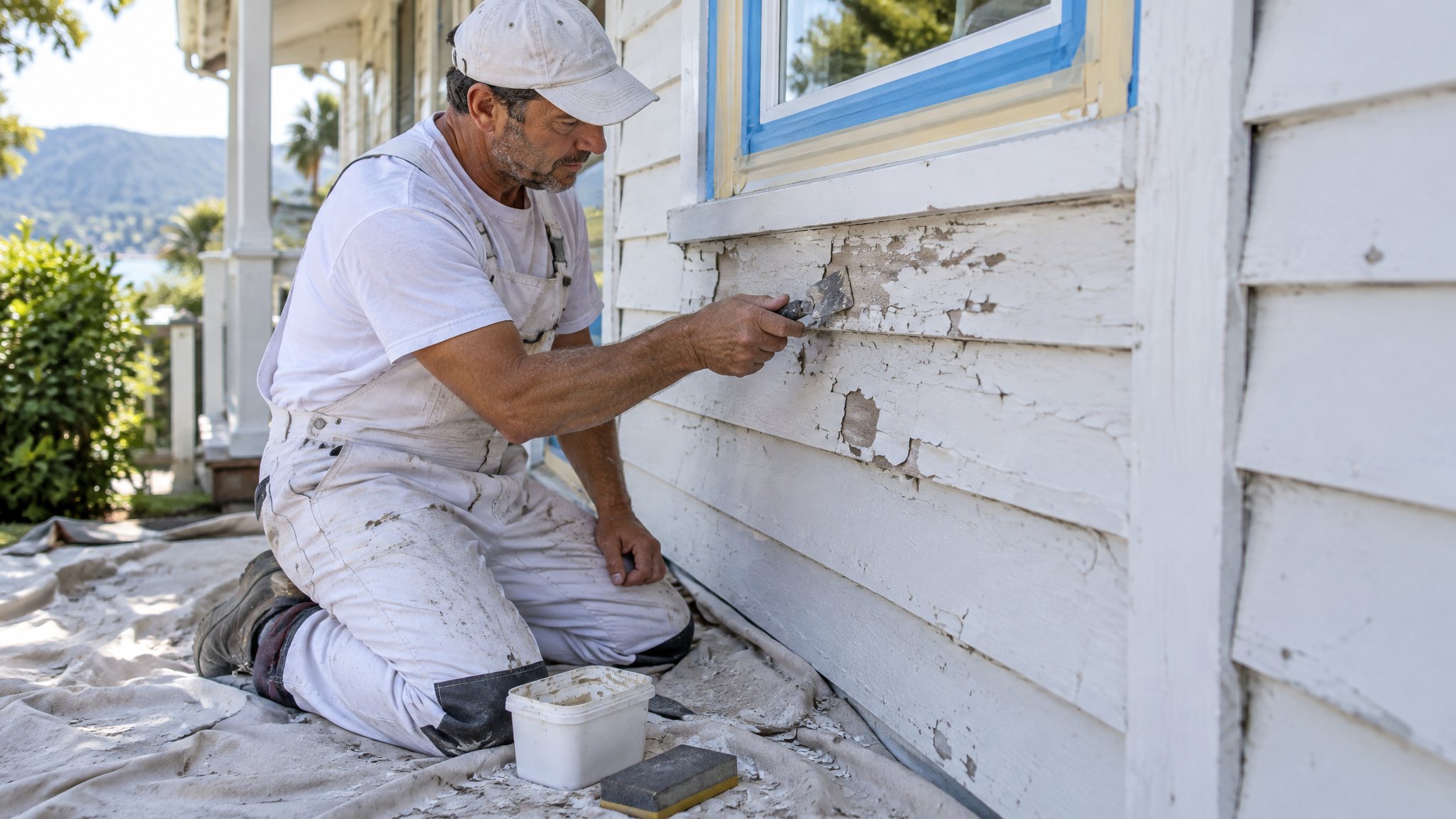
Good exterior painting starts long before the first brush hits the wall. For Auckland homes, proper preparation is what helps paint adhere well, look sharp, and last through our mix of sun, salt air, and rain.
Whether you live in Remuera, Herne Bay, Devonport, or elsewhere across Auckland, a careful prep process can make the difference between a finish that holds up and one that starts failing too soon.
1. Inspect the exterior before you start
Walk around the whole property and look closely at every painted surface. Check weatherboards, trims, fascia, soffits, windows, doors, balustrades, and eaves for peeling paint, cracks, water staining, rust, mould, rot, or loose joinery.
Pay extra attention to south-facing walls and shaded areas, as these often hold moisture longer and can show mould or paint breakdown first. If you spot rotten timber, failed sealant, or recurring damp patches, deal with the cause before painting.
2. Clean, wash, and remove loose material
A clean surface is essential. Dirt, chalky residue, mould, cobwebs, and grease can all stop paint from bonding properly. In many cases, a thorough wash with a suitable exterior cleaner is the best first step, followed by rinsing and allowing the surface to dry fully.
Scrape off any loose or flaking paint, then sand the edges smooth so the new coating blends in properly. On older homes, you may also need to feather-sand glossy surfaces so the next coat can grip. If there is mould growth, treat it properly rather than painting over it.
Useful prep tasks often include:
- washing walls, trims, and soffits
- scraping loose or peeling paint
- sanding rough edges and glossy areas
- treating mould and mildew
- removing dirt from corners, ledges, and gutters
3. Repair, fill, sand, and protect
Once the surface is sound and clean, fill holes, dents, nail pops, and small cracks with the right exterior filler or flexible sealant. Any gaps around windows, doors, and trim should be checked carefully, because failed joints can let water in and cause future damage.
Sand repairs flush, then dust off thoroughly. Mask windows, hardware, paths, plants, and outdoor furniture so the job stays neat and safe. Good masking also saves time during the finish coats and helps protect detailing around premium homes where the result needs to look crisp.
Before painting, make sure the surface is dry and stable, and use the correct primer where required, especially on bare timber, repaired areas, rust spots, or weathered surfaces. Primer is not optional when you want a durable finish; it helps the topcoat bond and gives a more even appearance.
When to call Steve
If your exterior needs more than a simple wash and repaint, it is worth getting expert advice before you begin. Steep roofs, upper-storey access, weathered timber, flaky old coatings, and hidden moisture issues can quickly turn a straightforward project into a bigger one.
Steve is a Kiwi and a trade-qualified painter, and he can assess the condition of your exterior, recommend the right prep method, and make sure the surface is ready for a quality finish. If you want your Auckland home properly prepared for painting, contact Steve for practical advice or to get the job done right.
Frequently Asked Questions
Do I need to wash my house before exterior painting?
Yes. Washing removes dirt, mould, chalky residue, and contaminants that can stop paint from adhering properly. A clean surface is one of the most important prep steps.
Can I paint over peeling exterior paint?
No. Loose and peeling paint should be scraped away first, then sanded smooth. Painting over failing coatings usually leads to poor adhesion and an untidy finish.
What is the most important preparation step for exterior painting?
It depends on the condition of the house, but cleaning, repairing damage, and using the right primer are usually the key steps for a long-lasting result.
Need a hand with your project?
Happy to tackle some of it yourself? Great — but for anything you’d rather leave to a professional, Steve Lunjevich is a Kiwi and a trade-qualified painter with 20+ years’ experience. Call or email for honest advice or a free, no-obligation quote.