A good exterior paint job starts long before the first brush hits the wall. If the surface is dirty, chalky, flaky or damp, the new coating will struggle to bond properly and may fail early.
For Auckland homes, preparation matters even more because of our humidity, sea air and changeable weather. Whether you live in Herne Bay, Remuera, Parnell or out west, the aim is the same: clean the exterior properly, fix defects, and create a sound surface for paint.
Start with a full exterior inspection
Before you wash anything, walk around the house and look closely at every surface. Check weatherboards, plaster, stucco, trim, soffits, fascias, windowsills, fences and any painted metal details. You are looking for peeling paint, open gaps, mould, rust, cracked fillers, swollen timber and areas where water may be getting in.
It is worth noting where old sealant has failed around joinery or where timber has split. If these issues are left untreated, paint will only hide them for a short time.
A careful inspection also helps you decide what needs repair before cleaning begins.
- Look for flaking or chalky paint
- Check for mould, mildew and algae
- Inspect timber for rot, cracks and loose boards
- Note rust on metal and fixings
- Check gaps around windows, doors and trim
Wash the house properly
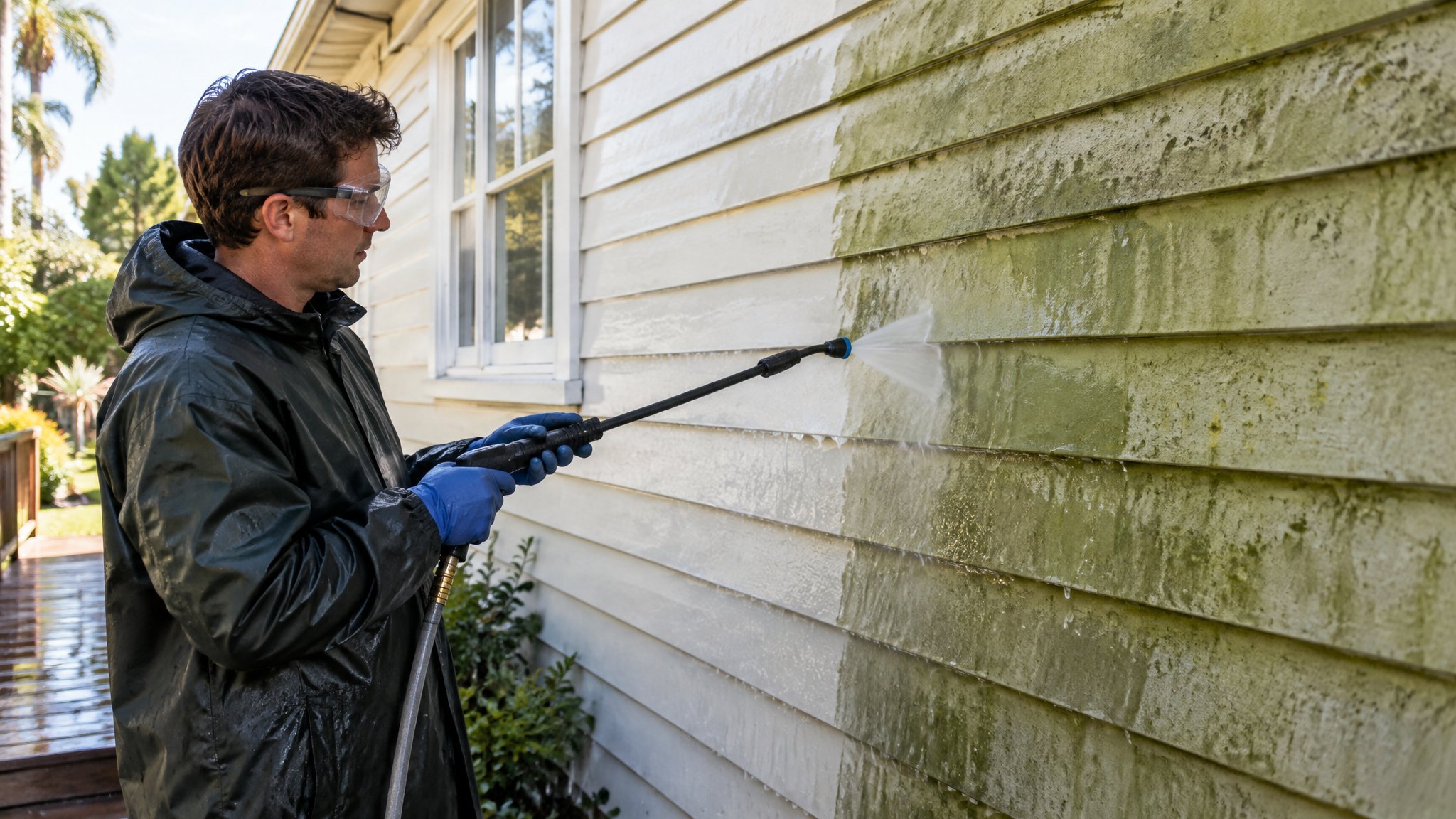
Cleaning is one of the most important steps in exterior preparation. Dirt, cobwebs, salt, mould and airborne grime all stop paint from sticking well. A thorough wash removes the loose contamination that could ruin the finish.
For most homes, a low-pressure wash with a suitable exterior cleaner is safest. High pressure can force water under cladding, damage old paint, or mark softer timber. In Auckland’s coastal suburbs, extra attention is often needed for salt build-up and mildew in shaded areas.
Work from the top down and rinse well. Pay particular attention to north-facing walls, eaves, corners, and areas behind shrubs where moisture can linger.
- Use the right cleaner for mould and mildew
- Avoid blasting water into joints or under boards
- Rinse thoroughly and let the home dry fully
- Trim back plants to improve access and airflow
Repair, sand and mask before painting
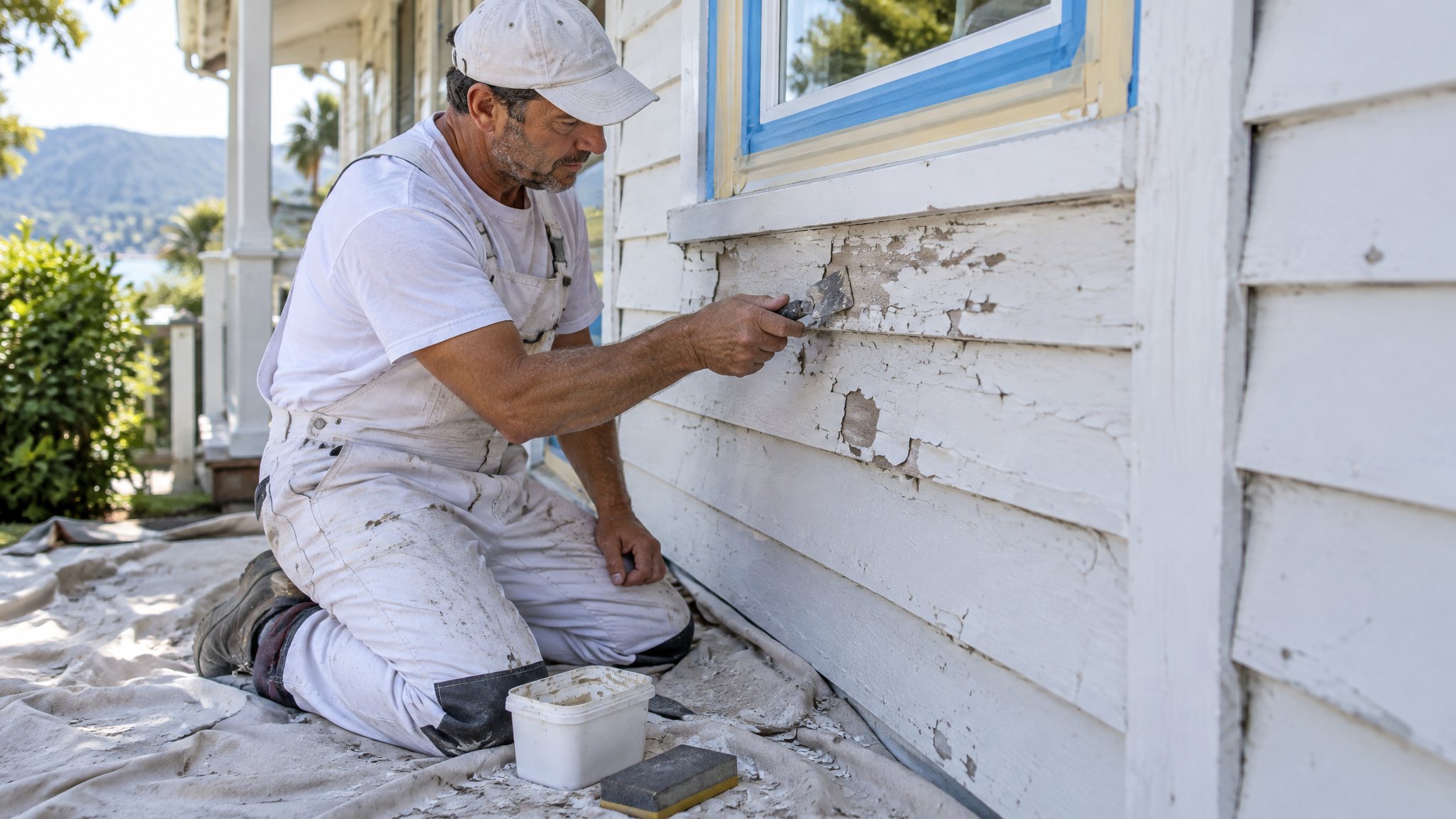
Once the house is clean and dry, deal with surface defects. Scrape off any loose paint back to a firm edge, sand sharp transitions, and feather the surface so the new coating sits smoothly. Where timber is damaged, soft, or rotten, repairs should be completed before painting starts.
Fill nail holes, minor cracks and small gaps with a suitable exterior filler or flexible sealant. On older homes, there may also be lead paint considerations, so extra care is needed when disturbing old coatings.
Finally, protect the parts that should not be painted. Mask windows, hardware, paving, decks, light fittings and any nearby surfaces. Good masking saves time and gives the project a cleaner result.
- Scrape loose and failing paint
- Sand edges for a smooth transition
- Repair damaged timber and failed sealant
- Fill small defects with exterior-grade products
- Mask glass, fittings and hard surfaces
When to call Steve
If you want the preparation done properly, it pays to get advice early. Steve is a Kiwi and a trade-qualified painter who knows how Auckland homes behave in our local climate, from weatherboard villas to modern rendered finishes. He can assess what needs cleaning, what needs repair, and what should be left alone so the paint system performs as it should.
Contact Steve if you are unsure about washing methods, surface repairs, mould treatment or lead-safe preparation. A professional start often makes the difference between a finish that looks good for years and one that starts failing too soon.
Frequently Asked Questions
Do I need to wash my house before exterior painting?
Yes. Washing removes dirt, salt, mould and loose contamination so the paint can bond properly. In Auckland, this step is especially important because of humidity and coastal conditions.
How long should a house dry after washing before painting?
It needs to be fully dry before painting, including in joints, under eaves and around trim. Drying time depends on weather, shade and airflow, so it is best to allow extra time rather than rush.
Can I paint over old peeling paint?
No. Loose paint should be scraped off and the edges sanded back first. If peeling is widespread, a proper assessment is needed to find the cause and prepare the surface correctly.
Need a hand with your project?
Happy to tackle some of it yourself? Great — but for anything you’d rather leave to a professional, Steve Lunjevich is a Kiwi and a trade-qualified painter with 20+ years’ experience. Call or email for honest advice or a free, no-obligation quote.