
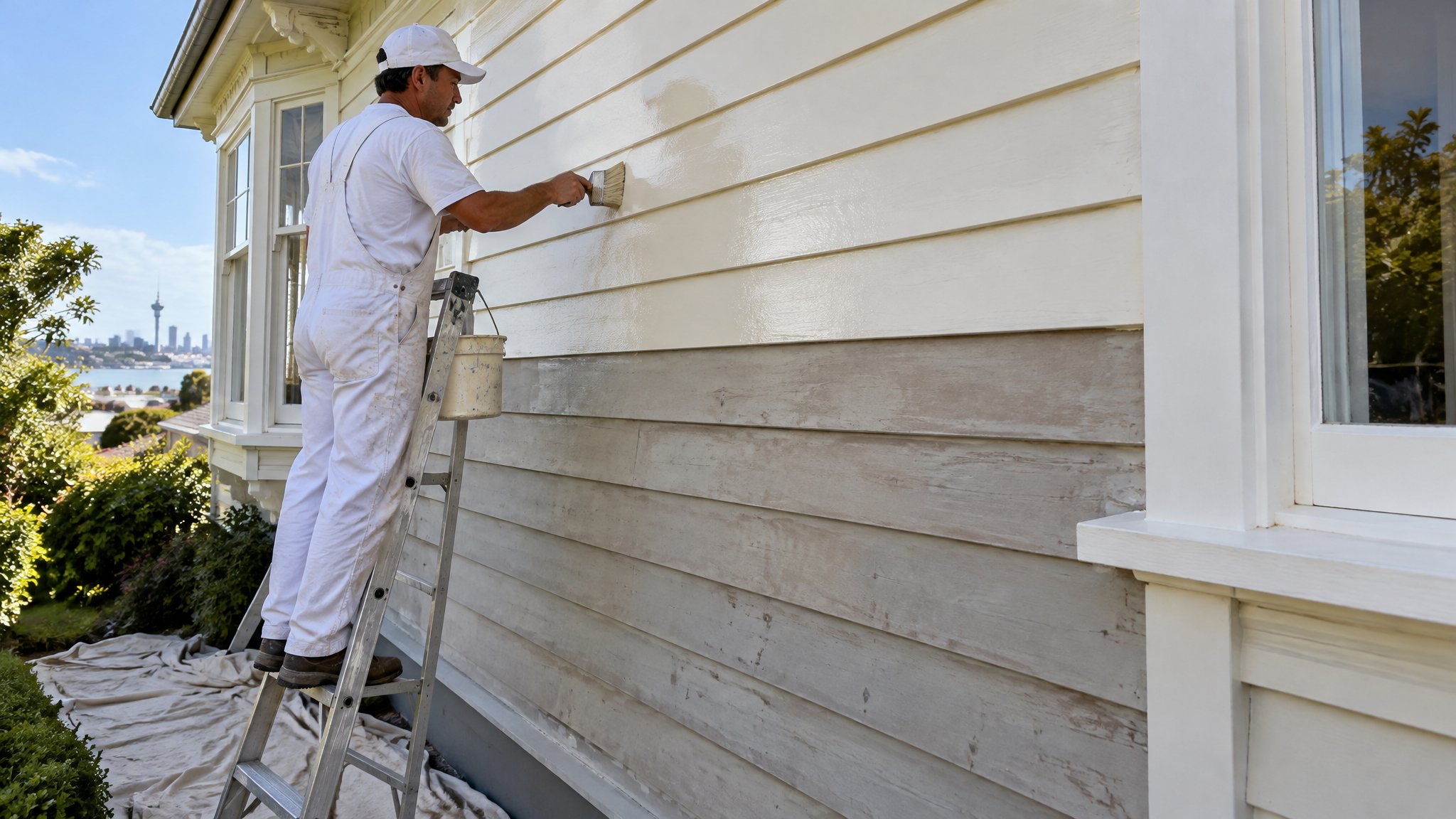
A fresh coat of paint can transform a home, and plenty of Auckland homeowners like to tackle smaller jobs themselves. The trick is knowing where DIY makes sense and where it can turn into a bigger, messier job than expected.
If you are weighing up painter versus DIY, the best approach is to match the task to your time, skill level, and the finish you want. Some jobs are straightforward enough for a careful homeowner. Others are better left to a fully qualified professional.
What you can usually do yourself
If the surface is in good condition and the area is manageable, DIY can work well for straightforward jobs. Small bedrooms, feature walls, ceilings in low-risk spaces, and minor touch-ups are often within reach if you take your time and prep properly.
The key to a decent result is preparation. Even a simple room will look ordinary if the walls are dusty, patchy, or not filled and sanded well. Most DIY paint problems come from rushing the prep, not from the painting itself.
- Repainting a small room with low-risk access
- Touching up scuffs and chips with the right colour and sheen
- Painting low-detail surfaces like flat walls or basic trim
- Using a roller on standard interior walls after proper prep
Jobs better left to a professional painter
Some work is possible DIY, but it is often more difficult than it first appears. High ceilings, stairwells, detailed timberwork, weatherboard exteriors, and areas with water damage or cracking usually need more than a weekend and a paint tin.
Exterior painting in Auckland can be especially demanding because of weather, moisture, and surface wear. Getting the prep right matters just as much as the topcoat. If the substrate is failing, painting over it will only hide the problem for a short time.
You should also be cautious with homes that have older coatings, possible lead paint, or signs of bubbling, rot, mould, or movement cracks. These situations need the right products and repair methods before any paint goes on.
How to decide: DIY or painter?
A good rule is to ask three questions: how good does it need to look, how hard is the access, and how much time do you really have? A simple feature wall is one thing. A full repaint before selling or after renovations is another.
DIY may suit you if the job is small, the surfaces are sound, and you are comfortable with prep, masking, and cleanup. A professional is the better choice when you want a crisp, lasting finish, need colour advice, or are dealing with tricky surfaces and height.
Remember that painting is not just about applying colour. It includes filling, sanding, sealing, protecting nearby surfaces, choosing the right paint system, and getting the sheen level right for the space.
- Choose DIY for small, low-risk, sound surfaces
- Choose a painter for repairs, height, weather exposure, or premium finishes
- Factor in ladders, drop sheets, tools, drying time, and cleanup
- If quality matters, professional prep usually makes the biggest difference
When to call Steve
If you are still unsure, it is worth talking it through before you start. Steve is a Kiwi and a trade-qualified painter, and he can help you work out whether the job is realistic for DIY or better handled professionally. That can save you time, stress, and the cost of fixing a poor finish later.
For Auckland homes, especially in suburbs where presentation matters, a careful paint system and tidy workmanship make a noticeable difference. If you want advice on surfaces, products, or the best way to approach your project, contact Steve, a Kiwi and a trade-qualified painter, for practical guidance or a quote.
Frequently Asked Questions
Can I paint my own house interior in NZ?
Yes, many interior jobs are suitable for DIY if the surfaces are sound and the area is easy to access. Small rooms and simple walls are usually manageable, but preparation is still essential.
What painting jobs are hardest for DIY?
High ceilings, stairwells, exterior weatherboards, detailed trim, damaged walls, and surfaces with mould, rot, or old coatings are usually the toughest jobs for DIY.
Is it worth hiring a painter for a small job?
Often yes, if you want a neat finish, have limited time, or the surface needs proper prep. Small jobs can still be fiddly, especially when colour matching or crisp cutting-in is important.
Need a hand with your project?
Happy to tackle some of it yourself? Great — but for anything you’d rather leave to a professional, Steve Lunjevich is a Kiwi and a trade-qualified painter with 20+ years’ experience. Call or email for honest advice or a free, no-obligation quote.