
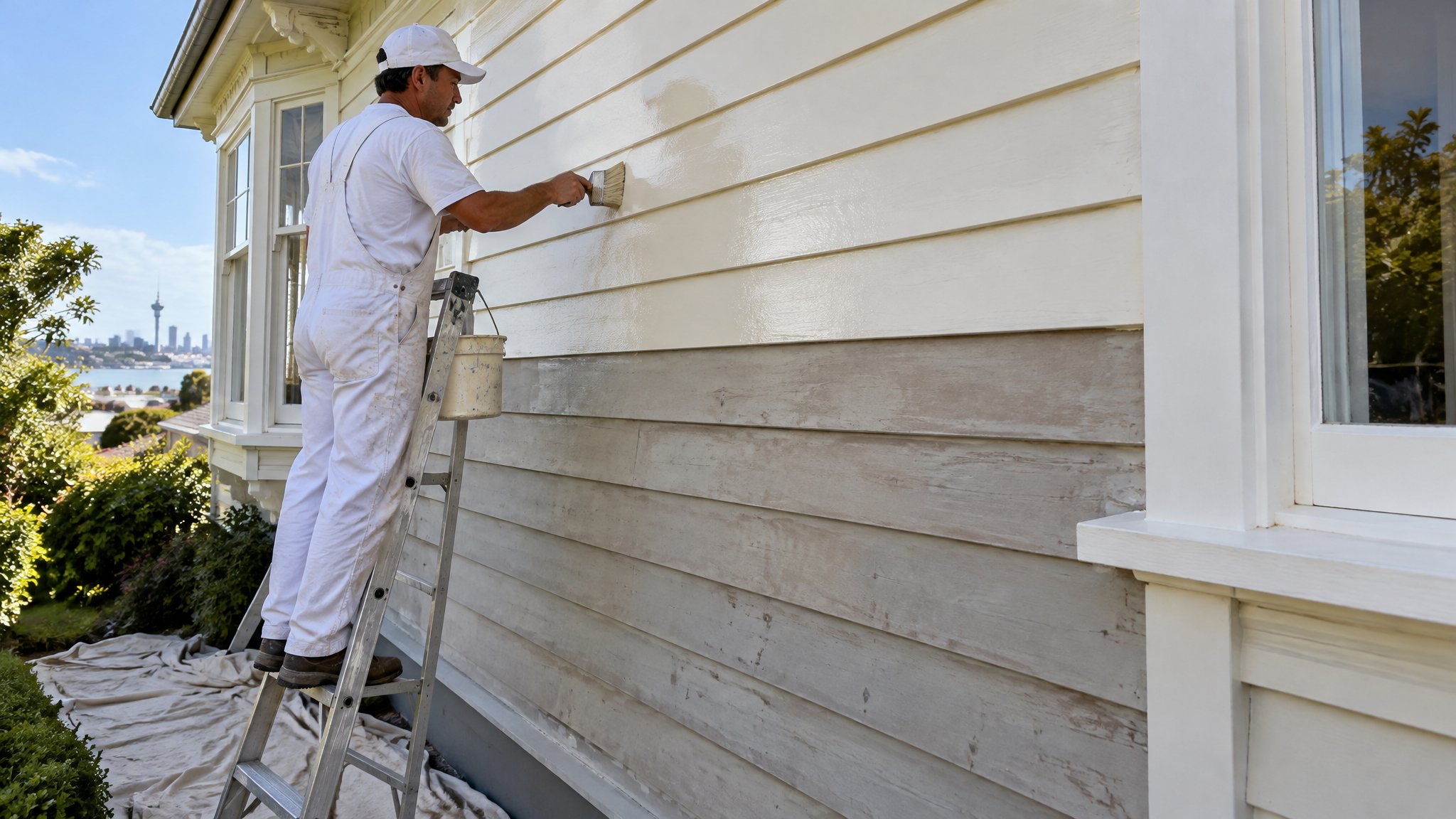
Hidden rot, soft timber, cracked plaster or water damage can show up once sanding and prep begin. It’s more common than many homeowners expect, especially on older Auckland homes or houses with weather exposure around windows, decks, eaves and cladding joints.
A good painter won’t just paint over the problem. They’ll assess the damage, explain what’s going on and recommend the right fix so the new paint system has a sound surface to stick to.
What painters look for when damage appears
Once a painter starts preparing the surface, issues like rotten timber, lifted linings, failed sealant, mould, loose plaster or previous water entry can become obvious. This often happens during scraping, sanding, washing or removing old coatings.
A trade-qualified painter will usually stop and inspect the area before carrying on. The key question is whether the damage is superficial or whether it affects the structure, weather tightness or finish quality.
- Soft or crumbly timber on trims, sills or fascia boards
- Stains, bubbling paint or swollen timber around windows
- Cracks, dents or loose plaster inside the home
- Failed caulking or sealant at joins and penetrations
- Signs of mould, dampness or active leaks
How the repair process usually works
Good painters do not guess. If the damage is minor, they may be able to cut out the affected section, dry the area, fill or patch it, then sand and prime before repainting. If the timber is badly rotten, the painter may recommend carpentry repairs before the painting continues.
The aim is to create a stable, dry and properly sealed surface. Painting over rot usually fails early, because moisture keeps moving through the timber and the coating cannot hold.
Depending on the job, the painter may also use a stain-blocking primer, epoxy repair product, flexible filler or matching patch material. The exact approach depends on the substrate, location and how much of the area is affected.
- Confirm the cause, not just the symptom
- Remove loose or unsound material
- Repair, patch or replace damaged sections
- Prime correctly before topcoats go on
- Check the surrounding area so the problem does not return
Why communication matters on site
Unexpected damage can change the scope of a painting job, so clear communication is essential. A professional painter should tell you what they have found, whether it affects timing, and what options are available.
In some cases, a small repair can be included as part of the prep work. In others, the painter may pause the coating work until a builder, joiner or plasterer has fixed the issue. That is not a delay for the sake of it; it is the right way to protect the finish and your property.
For Auckland homes, especially in exposed coastal areas or older villas and bungalows, this careful approach helps avoid recurring paint failure, peeling and more costly repairs later.
When to call Steve
If you suspect hidden damage, or if your painter has uncovered rot and you are unsure what to do next, talk to Steve. He is a Kiwi and a trade-qualified painter who can assess the situation, explain your options and help you decide whether a repair, replacement or repaint is the best next step.
Steve can also flag problems early during prep, which is especially useful for Auckland homeowners and property managers who want a proper result without surprises. If you want practical advice and a finish that lasts, contact Steve, a Kiwi and a trade-qualified painter.
Frequently Asked Questions
Can painters fix rot themselves?
Sometimes, yes. Minor rot or small damaged sections may be repaired as part of prep, but larger or structural issues usually need a builder or joiner before painting continues.
Will a painter paint over damaged timber?
A professional painter should not paint over active rot or unsound material. The damaged area needs to be repaired, dried and properly primed first, otherwise the new paint is likely to fail.
What happens if damage is found halfway through a job?
The painter should stop, assess the issue and explain the options. The job may continue after a small repair, or it may need another trade to fix the problem before painting resumes.
Need a hand with your project?
Happy to tackle some of it yourself? Great — but for anything you’d rather leave to a professional, Steve Lunjevich is a Kiwi and a trade-qualified painter with 20+ years’ experience. Call or email for honest advice or a free, no-obligation quote.