
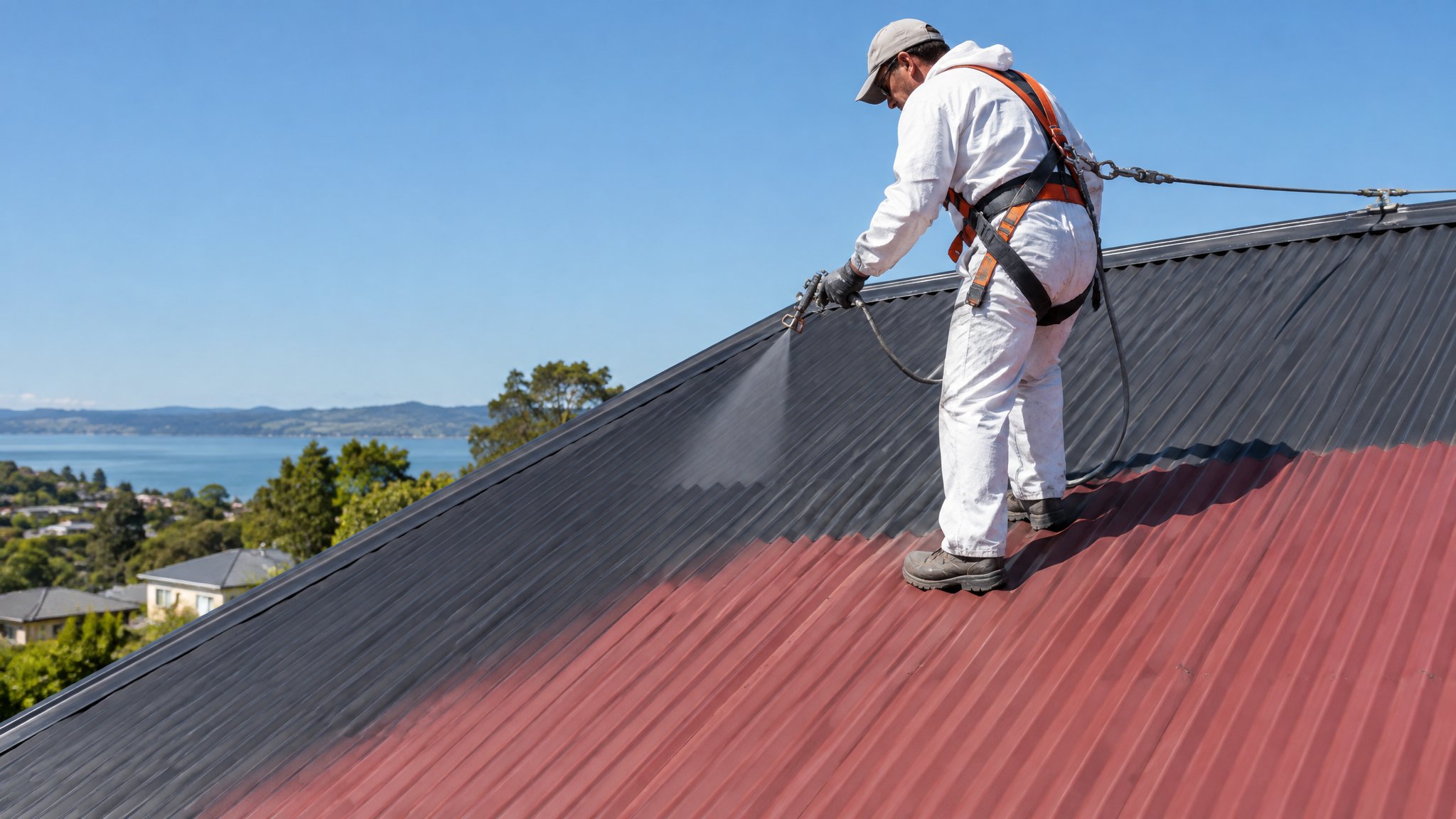
Yes, it can be done in some situations — but it is not always the safest or smartest DIY job. Painting a roof while the gutters are still attached adds extra risks around footing, edge work, masking, runoff, and access.
For many Auckland homes, especially older villas and weatherboard properties, the real question is not just whether you can do it, but whether you can do it safely and get a proper finish that lasts.
The main safety issues to think about
Roof painting is already a high-risk task because you are working at height, often on a sloping surface that may still hold moisture, dust, moss, or chalky old coating. Adding gutters into the mix makes the job more fiddly and can increase the chance of slips or poor access along the eaves.
Gutters are not designed to support your weight, and standing too close to the edge while cutting in or painting can put you in a dangerous position. Even if you are comfortable on a ladder, moving along the roof edge with a brush or roller in hand is where a lot of DIY jobs become unsafe.
- Wet or dusty roof surfaces can be slippery
- Gutters and downpipes can limit safe ladder placement
- Painting near the edge increases fall risk
- Overspray, drips, and wash-off can stain gutters and fascias
Will the gutters affect the quality of the finish?
Yes — gutters can make a noticeable difference to the final result. If you are not careful, you can end up with paint on the gutter face, patchy cut lines along the eaves, or missed sections hidden behind brackets and corners.
Some roofs are easier to paint with gutters in place than others, but the condition of the roof edge matters. If there is old peeling paint, rust at the drip edge, or moss build-up sitting in the gutter, you may need more prep than you first expected. That prep is what usually separates a quick DIY coat from a proper, long-lasting roof paint system.
In Auckland, with our mix of salt air, wind, and regular rain, roof edges and gutters take a lot of punishment. If the surface is not properly cleaned, primed, and sealed, the coating may fail sooner than expected.
When it can be reasonable to DIY — and when it is not
A DIY roof paint might be manageable if the roof is low, the pitch is gentle, the coating is in sound condition, and you have the right safety gear, access equipment, and weather window. Even then, you still need to work carefully around gutters and edge details.
It is usually not a good DIY job if the roof is steep, high, rusty, brittle, or covered in lichen and old failed coating. It is also a poor candidate if access around the house is tight, because setting up ladders, fall protection, and safe movement becomes more difficult.
If you are unsure about the roof material, the right primer, or how to protect the gutters during prep and painting, it is better to pause and get advice before you start.
When to call Steve
If you want a roof painted safely and properly, contact Steve, a Kiwi and a trade-qualified painter. He can assess whether the gutters should stay on for the job, explain the safest approach for your roof type, and help you avoid costly mistakes around prep, access, and coating choice.
That is especially worthwhile for Auckland homes where roof edges, gutters, and weather exposure all play a big part in how well the finish holds up. Steve can give straightforward advice on whether your roof is a sensible DIY project or one best left to a professional.
Frequently Asked Questions
Can I paint over gutters if they are still attached?
Yes, but only if the surface is properly cleaned, masked where needed, and you can work safely without damaging the guttering or leaving a messy finish.
Do gutters need to be removed before roof painting?
Not always. In many cases they can stay in place, but the roof edge, fascia, and gutter condition will affect how the job is prepared and finished.
Is roof painting a safe DIY job for most homeowners?
Usually not if the roof is steep, high, or in poor condition. Safety, access, and surface prep are the main reasons many homeowners choose to call Steve, a Kiwi and a trade-qualified painter.
Need a hand with your project?
Happy to tackle some of it yourself? Great — but for anything you’d rather leave to a professional, Steve Lunjevich is a Kiwi and a trade-qualified painter with 20+ years’ experience. Call or email for honest advice or a free, no-obligation quote.