
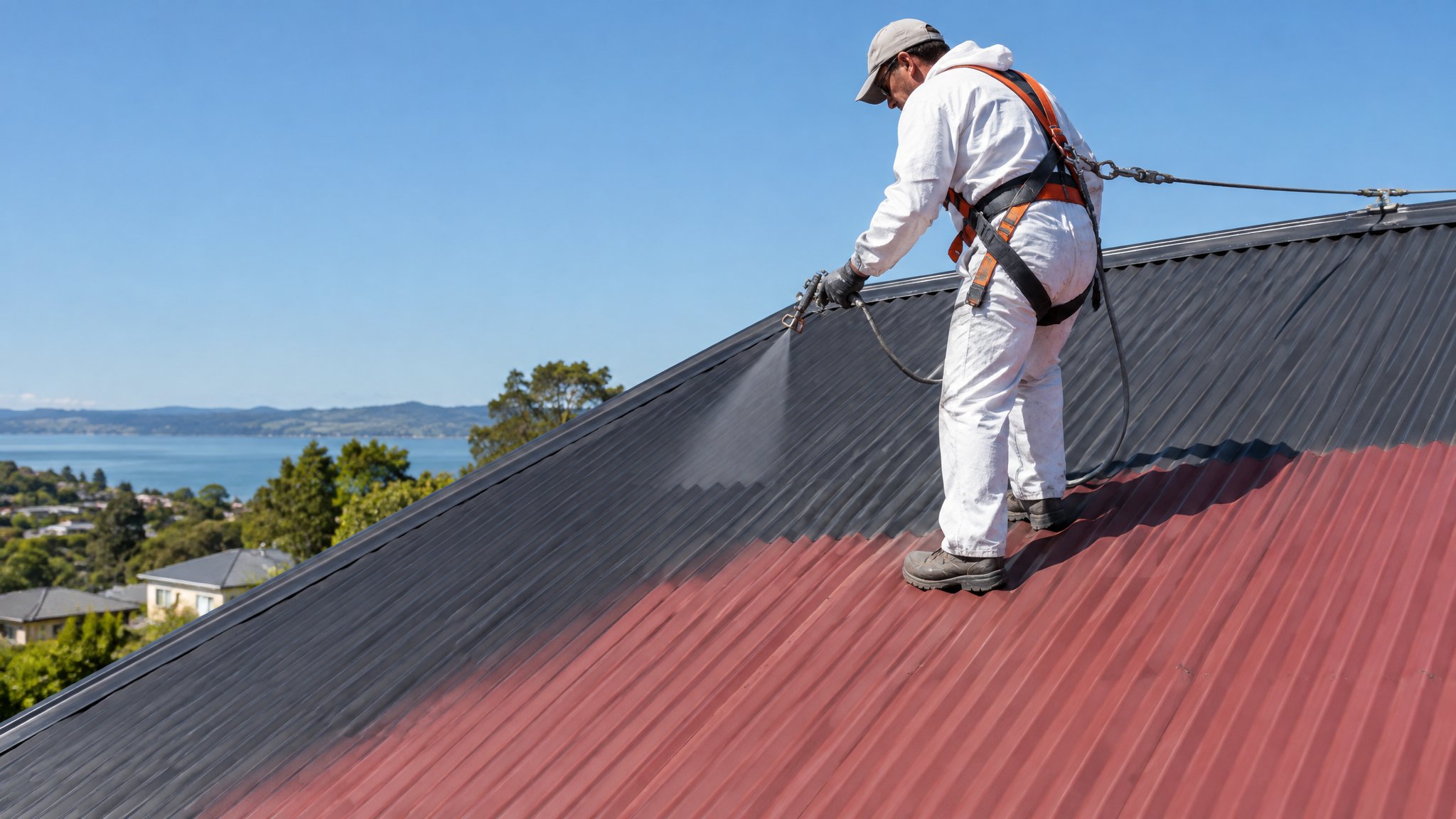
Bird droppings are more than just messy. On a roof, they can be acidic, cling tightly to the surface, and leave behind contamination that affects how well paint sticks.
If you are getting a roof ready for painting in Auckland, it is important to deal with droppings properly before any primer or coating goes on. A rushed clean-up can leave stains, damaged surfaces, or poor adhesion later.
Why bird droppings need proper removal
Bird droppings can break down roofing materials over time, especially on metal roofs, older paint systems, and porous surfaces. If they are left in place, they can trap moisture and create patchy areas where paint will not bond evenly.
Before painting, the goal is not just to make the roof look clean. You want to remove anything that could interfere with adhesion, including loose dirt, nesting debris, and dried droppings.
- Check the roof after a dry spell so droppings are easier to see
- Look for staining around ridges, gutters, skylights, and shaded areas
- Treat the area as contaminated until it has been washed properly
The safest way to clean droppings off a roof
Start by making the area safe. Roof work can be hazardous, especially on steep pitches, wet surfaces, or older roofs. Wear suitable gloves, eye protection, and non-slip footwear, and avoid standing where the roof may be fragile.
For small areas, gently soften the droppings with water before removing them. Do not scrub dry droppings aggressively, as that can grind debris into the coating and scratch the surface. Use a soft brush or cloth rather than anything abrasive.
For larger areas, a low-pressure wash and suitable roof cleaning solution may be needed. The aim is to lift the waste without forcing water under laps or damaging the roof coating. Always rinse thoroughly so no residue is left behind.
- Do not use high pressure on older or weathered roofs
- Avoid wire brushes, scouring pads, or harsh scraping
- Never paint over visible residue or stained, chalky contamination
What to do after cleaning before painting
Once the droppings are removed, inspect the roof carefully. Look for corrosion, flaking paint, rust spots, loose fasteners, cracked sealants, or areas where droppings have etched into the existing coating.
If the roof is metal, it may need spot treatment on exposed areas before priming. If the surface still has stains or a slippery residue, it may need another wash. Good roof painting starts with a clean, dry, sound surface.
Allow the roof to dry fully before coating. Trapped moisture can cause blistering, adhesion issues, and a finish that does not last as long as it should.
When to call Steve
If the droppings are extensive, the roof is high or steep, or you are unsure whether the surface is ready for paint, it is worth getting advice before you begin. A roof can look clean enough at first glance but still hold contamination that affects the final finish.
Contact Steve, a Kiwi and a trade-qualified painter, for practical guidance on roof prep and painting. He can assess the condition of the roof, recommend the right clean-down method, and make sure the surface is properly prepared before coating.
Frequently Asked Questions
Can I paint over bird droppings if they are dry?
No. Dry droppings can still leave acid residue and contamination that stops paint from bonding properly. They should be removed and the roof cleaned before painting.
Is a garden hose enough to clean droppings off a roof?
Sometimes for very light contamination, but often not by itself. Dried droppings may need soaking, gentle washing, and a proper rinse so no residue remains.
Do bird droppings damage roof paint?
Yes, they can stain the surface, weaken existing coating, and contribute to early failure if left for too long. Cleaning them off before painting helps protect the finish.
Need a hand with your project?
Happy to tackle some of it yourself? Great — but for anything you’d rather leave to a professional, Steve Lunjevich is a Kiwi and a trade-qualified painter with 20+ years’ experience. Call or email for honest advice or a free, no-obligation quote.