
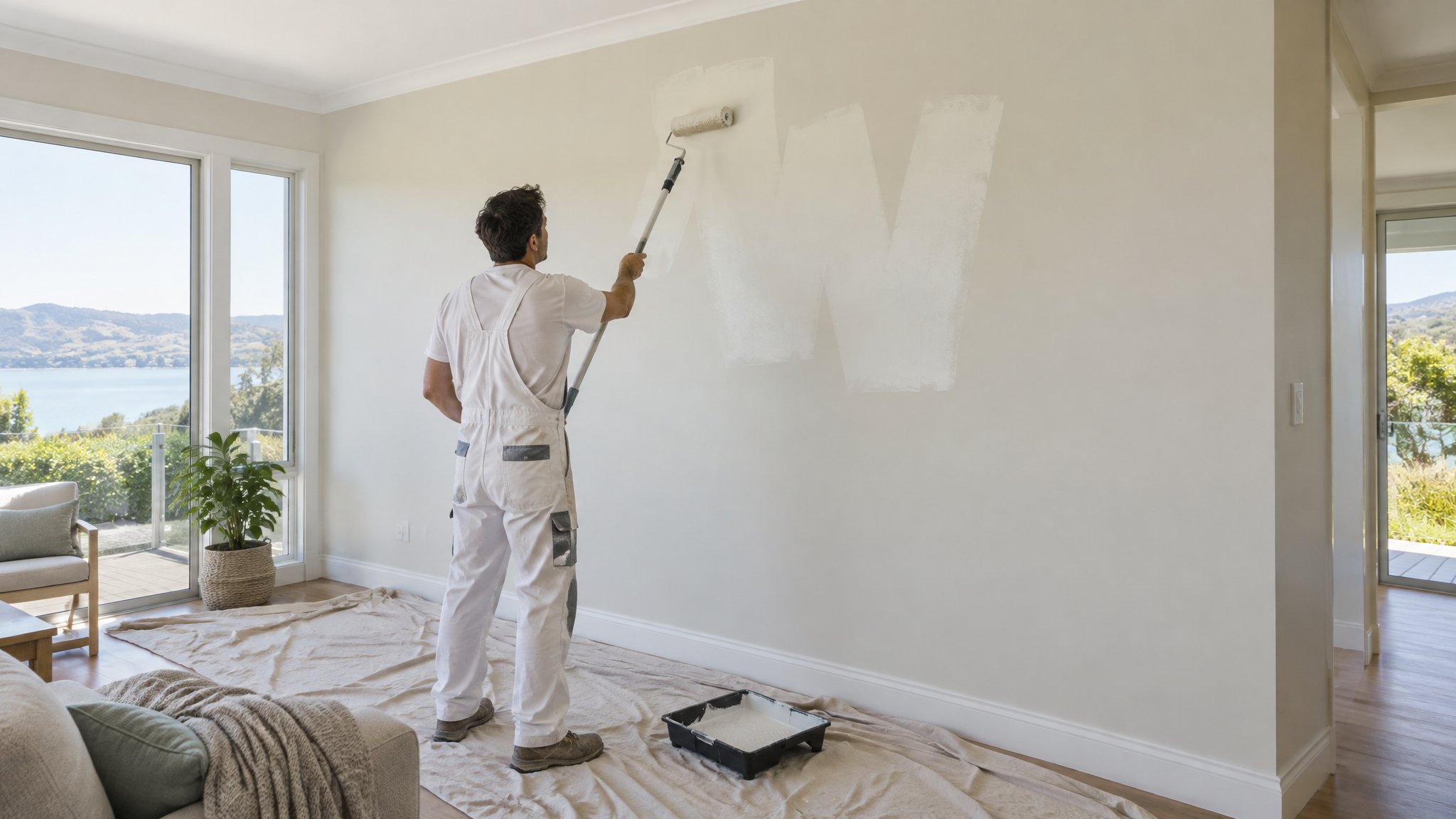
A good paint job starts with having the right amount of paint on hand. Too little, and you risk running short halfway through. Too much, and you’ve spent more than you needed to on leftover tins that may never get used.
For most interior rooms, the amount you need depends on the room size, the number of coats, the surface condition, and whether you’re painting walls, ceilings, trim, or all three.
Start with the room’s wall area
The quickest way to estimate paint is to work out the wall area. Measure the length of each wall, add them together, then multiply by the ceiling height. For a simple room, a common shortcut is: perimeter of the room × wall height = total wall area.
From there, subtract large openings such as windows and doors if you want a tighter estimate. For most rooms, though, a rough calculation is usually close enough because cut-ins, texture, and small waste use a little extra paint anyway.
As a rule of thumb, one litre of quality wall paint often covers around 12 square metres per coat, but coverage can change depending on the product, the sheen level, and the condition of the walls.
- Measure in metres for an easier calculation
- Allow for two coats in most cases
- Add extra for darker colours or patchy walls
What affects how much paint you’ll use?
Not every room drinks up paint the same way. Fresh plasterboard, repaired walls, or very porous surfaces usually need more paint than a previously painted wall in good condition. A flat or low-sheen finish can also use a bit more than you might expect.
Colour change matters too. Covering a deep colour with a much lighter one, or the other way around, often means an extra coat or a proper primer. Ceilings, skirting boards, doors, and window frames all need separate allowances as well.
If you’re painting a rental, a family home, or a premium Auckland property, it’s worth planning for touch-ups too. Having a small amount left over makes future repairs much easier.
- New or repaired surfaces use more paint
- Two coats are standard for most interiors
- Trim and ceilings need their own paint allowance
- Primer may reduce topcoat use on problem surfaces
A simple way to estimate paint for a room
Here’s an easy approach many homeowners use. Measure the wall area, then divide by the paint coverage per litre listed on the tin. Multiply that by the number of coats you need. If you are unsure, round up a little so you’re not caught short halfway through the second coat.
For ceilings, measure length × width, then use the same coverage guide. For trim, doors, and window frames, it’s best to allow a little extra because detailed surfaces, sanding, and brushwork use paint differently from broad walls.
- Walls: perimeter × height
- Ceiling: length × width
- Use the tin’s coverage guide as your baseline
- Round up for second coats and touch-ups
When to call Steve
If you want a more accurate estimate, or you’re painting a tricky room with high walls, detailed trim, damaged surfaces, or a colour change, it’s a smart idea to speak with Steve. He’s a Kiwi and a trade-qualified painter, and he can help work out the right amount of paint before you buy.
That can save time, reduce waste, and help you get a cleaner finish from the start. If you’re planning an interior repaint anywhere in Auckland, Steve can also advise on the best products, primers, and coating system for your room.
Frequently Asked Questions
How much paint does one room usually need?
It depends on the room size and what you’re painting, but many standard bedrooms need roughly enough wall paint for two coats, plus separate paint for the ceiling and trim if needed.
Do I need to buy primer as well as paint?
You may need primer if you’re covering stained, patched, porous, or dramatically different-coloured surfaces. For sound, previously painted walls, primer is not always necessary.
Should I allow extra paint for a room?
Yes. It’s sensible to allow a little extra for touch-ups, absorption, and the final coat. Running short mid-job can affect the colour consistency and finish.
Need a hand with your project?
Happy to tackle some of it yourself? Great — but for anything you’d rather leave to a professional, Steve Lunjevich is a Kiwi and a trade-qualified painter with 20+ years’ experience. Call or email for honest advice or a free, no-obligation quote.