
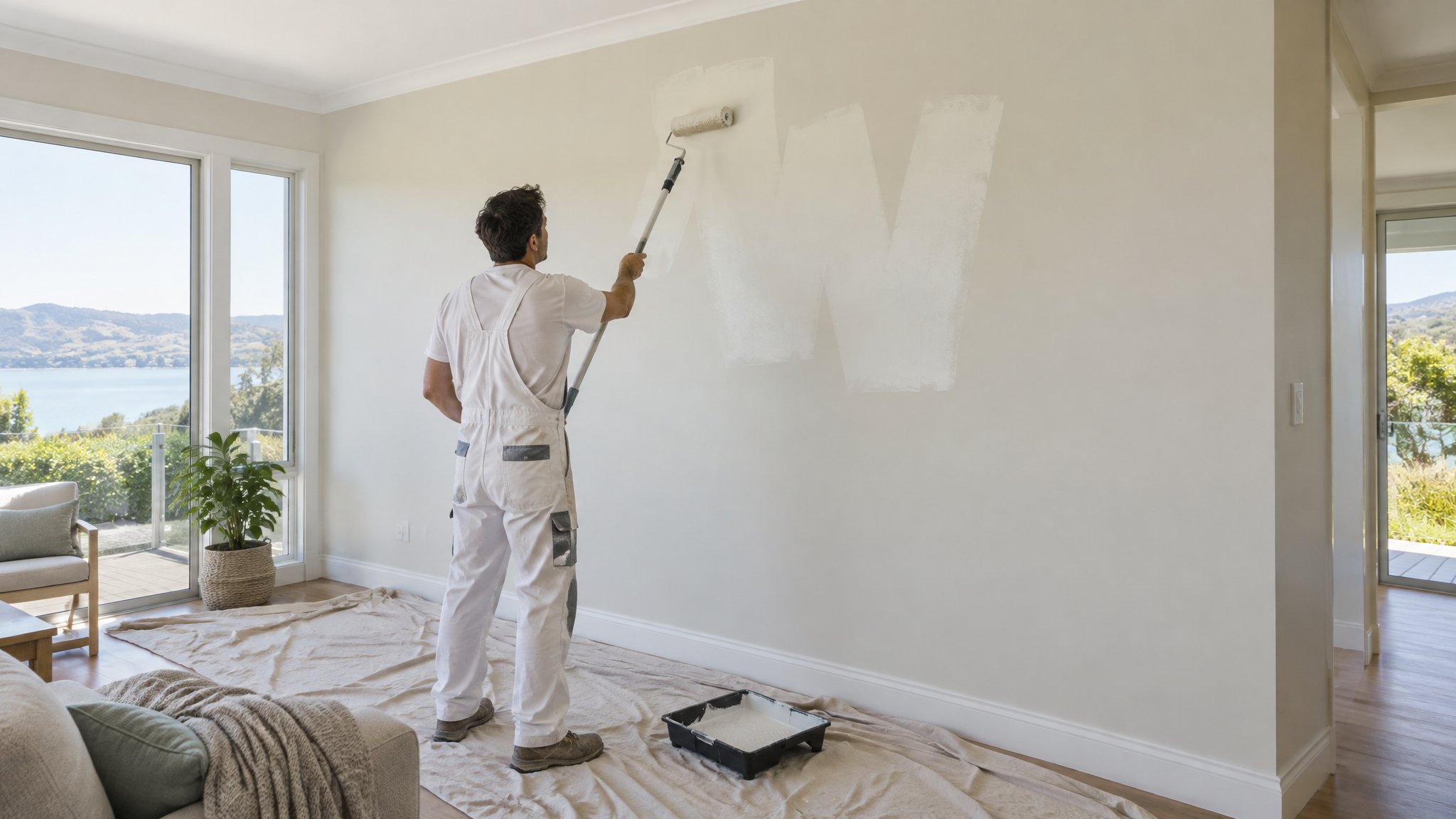
Painting over a smoke-stained ceiling can look simple at first, but without the right prep the stains often bleed back through the new paint. That’s especially common with nicotine, fireplace smoke, or yellowing from years of build-up.
The key is not just painting over the mark — it’s sealing it properly first. If you get the preparation right, you can achieve a clean, bright ceiling that stays looking good.
Why smoke stains bleed through ceiling paint
Smoke residue is oily, stubborn, and often sits deeper in the surface than people expect. Standard ceiling paint is not designed to block that type of contamination, so the stain can reappear even after two or three coats.
This is especially common on older plasterboard ceilings, in homes with wood burners, or where there has been smoking indoors. If the stain is not sealed, the yellowing or brown tinge can migrate through the new finish.
- Nicotine and tar leave an oily residue
- Heat and moisture can pull stains back through paint
- Standard ceiling paint usually won’t block contamination
How to prep the ceiling properly
Start by cleaning the ceiling thoroughly. Use sugar soap or a suitable degreasing cleaner to remove as much residue as possible. If the surface is dusty, greasy, or chalky, primer won’t bond properly.
Once clean and dry, lightly sand any rough areas and remove the dust. If there is flaking paint, scrape it back to a firm edge first. Any loose material left behind can ruin the finish.
For best results, apply a stain-blocking sealer rather than a standard undercoat. Shellac-based or oil-based stain blockers are often the most reliable for smoke damage because they lock the stain in before you topcoat.
Apply the sealer carefully and let it dry fully as per the label. In some cases, a second coat of sealer is needed if the stain is heavy or widespread.
- Clean off nicotine and smoke residue
- Sand and dust down the surface
- Use a proper stain-blocking sealer
- Allow full drying time before topcoating
Choosing the right paint and finishing the job
After the stain is sealed, use a good-quality ceiling paint with a flat finish. Flat ceiling paint helps hide minor surface marks and reduces light reflection, which is useful on older ceilings.
Apply the topcoat evenly with a roller and keep a wet edge to avoid lap marks. Two finish coats are usually the safest option for full coverage and a consistent look.
If the ceiling has very deep staining, you may need to repeat the sealing stage before painting. Rushing straight into topcoat is the main reason smoke stains come back through.
When to call Steve
If the staining is heavy, the ceiling is textured, or you’re unsure what’s causing the marks, it’s worth getting advice before you start. Steve is a Kiwi and a trade-qualified painter who can assess the surface, choose the right sealer, and make sure the bleed-through problem is dealt with properly the first time.
For homeowners and property managers across Auckland, especially in premium suburbs where finish quality matters, professional prep can save a lot of frustration. If you want a ceiling repaint that looks clean and stays that way, contact Steve, a Kiwi and a trade-qualified painter, for practical advice or to handle the job.
Frequently Asked Questions
Can I just paint over smoke stains with ceiling paint?
Usually no. Standard ceiling paint often won’t stop smoke, nicotine, or soot from bleeding through. You need to clean the surface and use a stain-blocking sealer first.
What is the best primer for smoke-stained ceilings?
A shellac-based or oil-based stain blocker is often best for smoke damage because it seals in residue more effectively than a normal water-based undercoat.
Do I need to wash the ceiling before priming?
Yes. Cleaning is important because smoke residue can stop the primer from bonding properly. Sugar soap or a degreasing cleaner is usually the right starting point.
Need a hand with your project?
Happy to tackle some of it yourself? Great — but for anything you’d rather leave to a professional, Steve Lunjevich is a Kiwi and a trade-qualified painter with 20+ years’ experience. Call or email for honest advice or a free, no-obligation quote.