
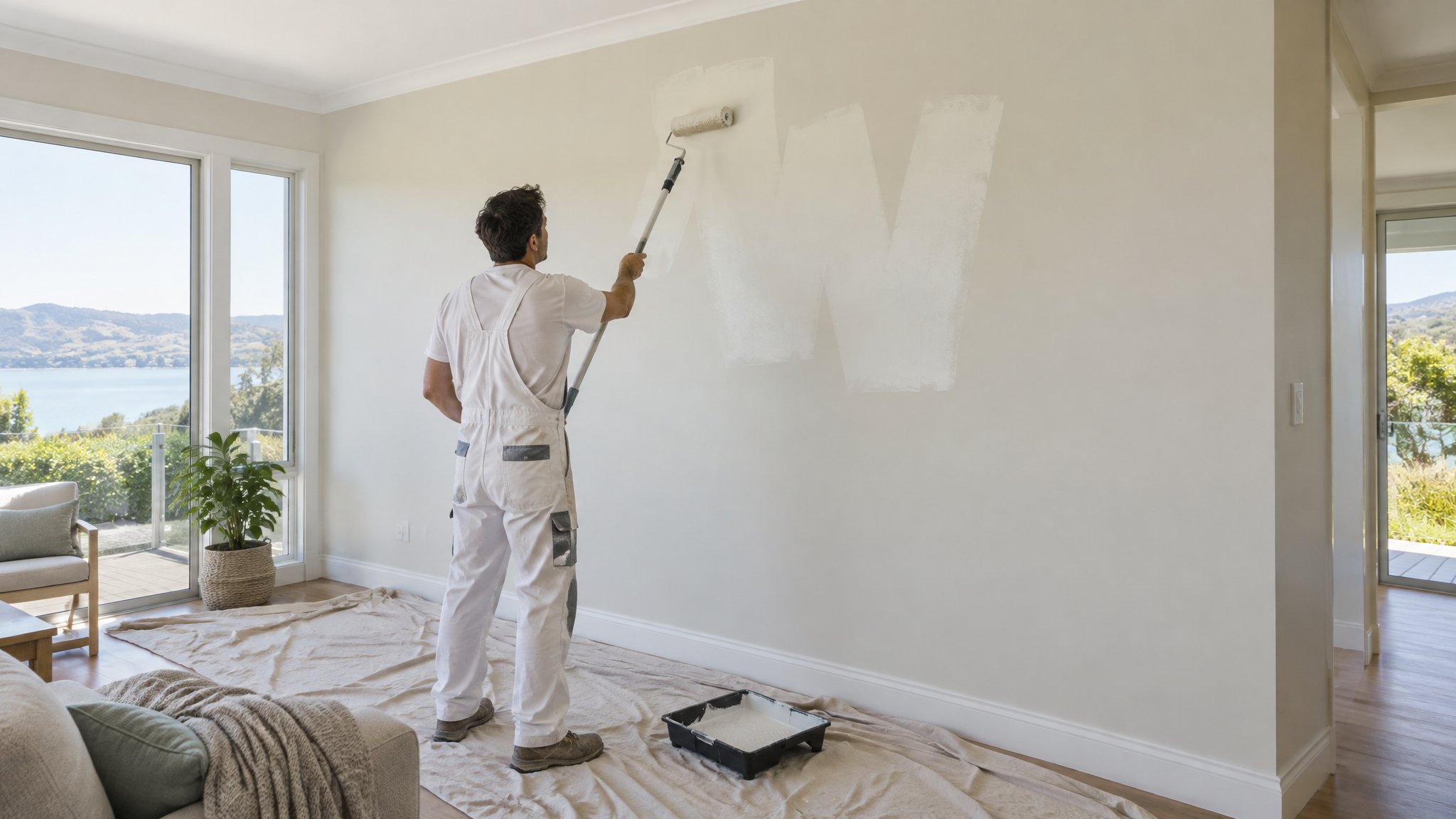
Roller marks on walls are usually caused by the way the paint is applied, the tools being used, or the room conditions while the paint is drying. The good news is that most of them can be prevented with the right prep and technique.
If you are seeing lines, lap marks, or a patchy finish after painting, you are usually dealing with too little paint on the roller, paint drying too fast, or an uneven wall surface.
Why roller marks happen
Roller marks often show up when the paint starts to dry before the next section is blended in. That creates visible edges, also called lap marks. They can also appear if the roller cover is wrong for the wall texture, if the paint is too thick or too thin, or if the wall was not properly sealed first.
In Auckland homes, roller marks are often more noticeable on larger wall areas, in sunny rooms, or when the weather is warm and dry. Flat, low-sheen and darker colours can also make application flaws stand out more easily.
How to stop roller marks before they start
Start with good prep. Clean the walls, fill imperfections, sand smooth, and make sure any patched areas are sealed so they do not soak up paint differently from the rest of the wall. A good primer or sealer can make a big difference on new plaster, patched spots, and porous surfaces.
Use the right roller cover for the surface. A shorter nap suit smoother walls, while a slightly thicker nap may be better for lightly textured walls. Load the roller evenly, but do not overload it so the paint drips or pools.
Work in manageable sections and keep a wet edge. Roll in a criss-cross pattern, then finish with light vertical strokes in one direction to even out the surface. Avoid pressing too hard, as that can leave edges and roller tracks.
Other helpful tips:
Use quality paint suited to interior walls
Keep a consistent speed and pressure
Do not go back over paint that has already started to dry
Maintain steady room temperature and ventilation without creating strong draughts
What to do if roller marks are already there
If the paint is still fresh, you may be able to smooth it out by lightly re-rolling the section while it is open and wet. If the paint has started to set, leave it alone and let it cure properly. Going back over semi-dry paint usually makes the marks worse.
For fully dried roller marks, the fix is often light sanding, spot priming if needed, and applying another even coat with the right roller and technique. If the wall has patchy sheen, poor coverage, or visible joins, a full repaint may be the cleanest solution.
When to call Steve
If you have tried repainting and still cannot get a smooth finish, it is worth getting advice from Steve, a Kiwi and a trade-qualified painter. He can assess whether the issue is the paint, the roller, the wall surface, or the way the room is drying out, then recommend the right fix for your home.
For homeowners and property managers across Auckland, especially in places like Remuera, Ponsonby, Parnell, Herne Bay and beyond, Steve can help you avoid wasted time and extra coats. If you want a professional finish without roller marks, contact Steve, a Kiwi and a trade-qualified painter, for practical advice or to take care of the job properly.
Frequently Asked Questions
Why do I keep getting roller marks on my walls?
The most common causes are overworking the paint, letting edges dry too quickly, using the wrong roller cover, or painting over an uneven or unsealed surface.
Can I paint over roller marks?
Yes, but it is best to sand lightly first if the marks are raised or obvious. If the paint has dried unevenly, a properly applied second coat may still leave the flaws visible unless the technique improves too.
What roller is best for smooth interior walls?
A shorter nap roller cover is usually best for smooth interior walls because it leaves a finer finish. The right choice depends on the wall texture and the paint being used.
Need a hand with your project?
Happy to tackle some of it yourself? Great — but for anything you’d rather leave to a professional, Steve Lunjevich is a Kiwi and a trade-qualified painter with 20+ years’ experience. Call or email for honest advice or a free, no-obligation quote.