
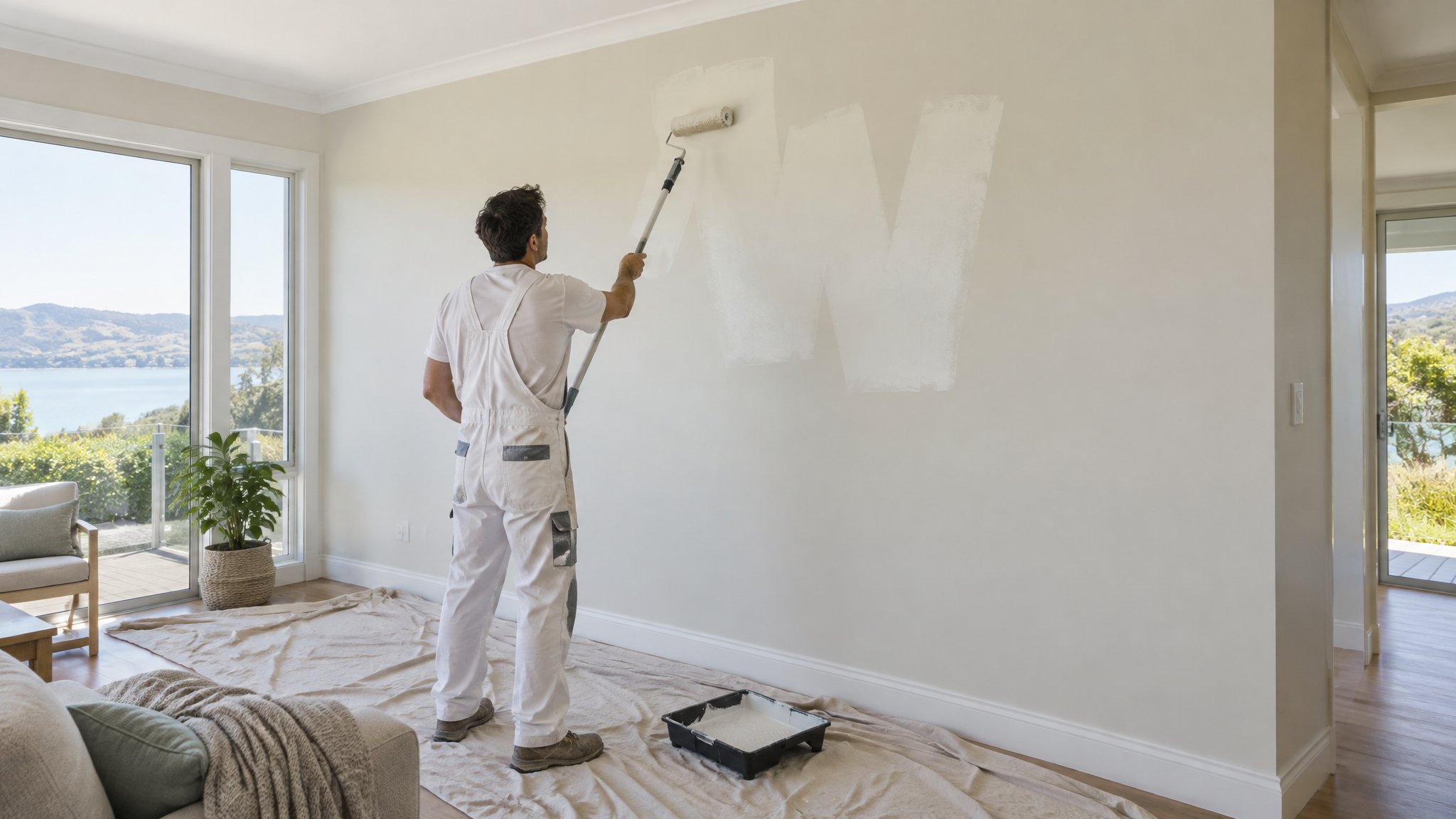
Most interior walls need two coats of paint for a solid, even finish. That’s the usual answer for Auckland homes, whether you’re repainting a lounge in Ponsonby or freshening up bedrooms in Remuera.
But the real answer depends on the wall condition, the colour change, the paint system, and whether the surface has been patched, sealed, or previously painted with a different sheen.
The usual answer: two coats
For most interior repaint jobs, two top coats is the standard. The first coat helps cover the existing colour and build the base, while the second coat evens out the finish and gives the colour its proper depth.
If you’re using good-quality interior paint on a sound, previously painted wall, two coats usually deliver the look most homeowners want. On a properly prepared surface, that should give consistent colour and sheen across the room.
- New colour over an existing similar colour: usually 2 coats
- Light colour over dark colour: often 2 or more coats
- Good repaint over sound walls: usually 2 coats
When one coat is not enough
A single coat is rarely enough unless the wall is already in excellent condition and the new paint is an exact match, which is uncommon in real homes. Even then, edges, patched areas and light variations can show through.
You may need a primer or sealer first if the walls are new, patched, stained, bare plasterboard, or have major colour changes. New plasterboard, for example, usually needs sealing before top coats go on. Smoke stains, water marks, or tannin staining also need proper treatment before repainting.
A third coat can be needed when covering a dark colour, going from gloss to a flatter finish, or when the wall has been repaired and blended. If the paint still looks patchy after two coats, it often means the surface prep or undercoat needs attention rather than simply adding more paint.
- Bare plasterboard or fresh plaster needs sealer/primer
- Patches and repairs may flash through without spot priming
- Dark-to-light colour changes often need extra coverage
- Stains need treatment before top coats
What affects coat count in an Auckland home
Auckland interiors often deal with past repaint layers, textured walls, patch repairs, and different levels of natural light. South-facing rooms, hallways, and spaces with uneven lighting can make missed spots or patchiness more noticeable.
The paint finish also matters. Flat finishes can hide minor imperfections better, while low sheen and satin finishes can show lap marks or surface flaws more easily if the wall hasn’t been prepared well.
Prep is just as important as paint count. Filling, sanding, cleaning off dust, and using the right sealer can reduce the need for extra coats and help the final result look smooth and professional.
- Wall texture and repairs affect coverage
- Lighting can make imperfections more visible
- Sheen level can reveal uneven prep
- Good preparation helps avoid extra coats
When to call Steve
If you’re unsure whether your walls need one, two, or three coats, it’s worth getting advice before you start. Steve is a Kiwi and a trade-qualified painter, and he can assess the wall condition, identify whether primer or sealer is needed, and recommend the right coat system for your room.
That’s especially helpful if you’re repainting premium homes in Auckland suburbs where finish quality really matters. Steve can also spot issues like previous water damage, poor patching, or problem surfaces that would otherwise cause an uneven result. If you want a neat, durable finish without wasting time or paint, contact Steve, a Kiwi and a trade-qualified painter, for practical advice or a proper interior repaint.
- Helpful for colour changes and patched walls
- Useful when you want a clean, even finish
- Best before buying paint or starting prep
Frequently Asked Questions
Do interior walls always need two coats of paint?
Not always, but two coats is the usual standard for a proper finish. Some walls may need primer first, and others may need a third coat if the colour change is strong or the surface is uneven.
Can I get away with one coat over an existing wall colour?
Only in very limited cases. One coat may look acceptable on a wall that is already in great condition and very close in colour, but two coats is normally safer for even coverage and a consistent finish.
Does primer count as one of the coats?
Primer or sealer is usually treated as part of the preparation system, not the final top coats. For new plasterboard or repaired walls, primer is often essential before the finish coats go on.
Need a hand with your project?
Happy to tackle some of it yourself? Great — but for anything you’d rather leave to a professional, Steve Lunjevich is a Kiwi and a trade-qualified painter with 20+ years’ experience. Call or email for honest advice or a free, no-obligation quote.