
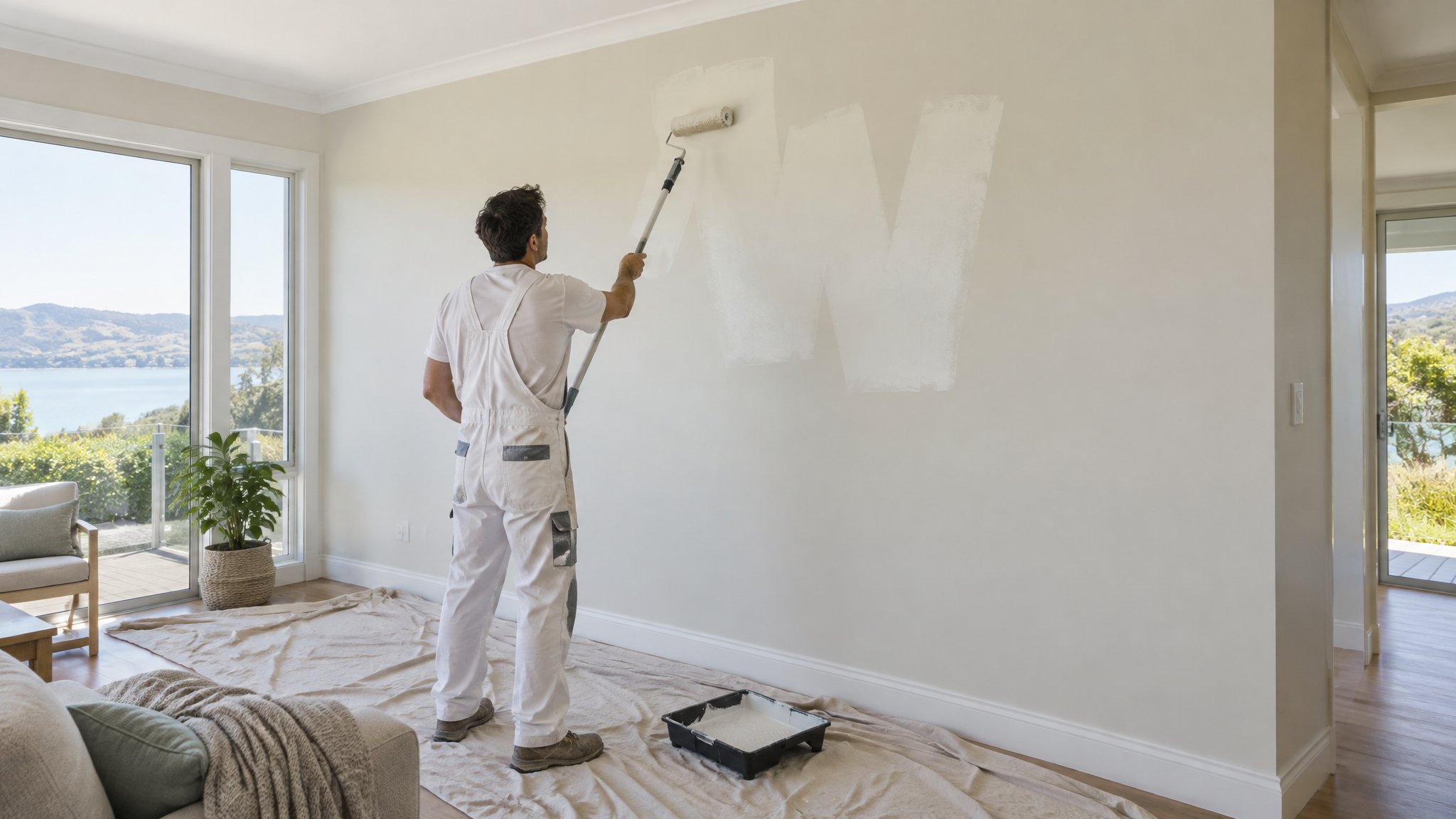
If you are repainting your home, the ceiling is easy to overlook — but the right paint makes a big difference to how a room looks and feels. In most Auckland homes, the best choice is a good-quality ceiling paint with a low-sheen finish that hides imperfections and keeps glare down.
The exact product depends on the room, the condition of the ceiling, and whether you are painting over old paint, plasterboard, or a surface with stains or moisture marks.
Best paint type for interior ceilings
For most interior ceilings, a flat or ultra-flat water-based acrylic paint is the go-to option. It gives the least amount of reflection, so the ceiling looks smooth and even, even if the surface is not perfect.
A flat finish is especially useful in living rooms, bedrooms, hallways, and open-plan spaces where ceiling light can show every ripple and patch.
In New Zealand homes, water-based acrylic is usually preferred because it dries reasonably quickly, has low odour, and is easier to clean up than oil-based products.
- Flat or ultra-flat finish: best for hiding surface flaws
- Low odour water-based acrylic: practical for occupied homes
- Ceiling-specific paint: designed to reduce splatter and glare
How to choose the right finish for each room
Most ceilings should be painted in a true flat finish, but there are a few exceptions. In bathrooms, laundries, and kitchens, you may need a moisture-resistant ceiling paint that can cope better with steam and higher humidity.
If the ceiling has been patched, has old water marks, or is in a room with strong natural light, a specialist ceiling paint can help create a more uniform look. Some ceiling paints are slightly thicker and designed to reduce flashing, which is when repaired areas or roller marks show through the finish.
If you are painting over a stained ceiling, the stain should be sealed first with the correct primer or stain blocker before the topcoat goes on. Paint alone will not reliably stop tannin, water, or smoke marks from coming back through.
What to avoid when painting ceilings
A glossy or semi-gloss finish is usually a poor choice for ceilings because it reflects too much light and highlights imperfections. Even a small patch of uneven plaster can become obvious once the lights are on.
It is also worth avoiding bargain paint that does not cover well. Ceiling painting is one area where better coverage usually means fewer coats, less mess, and a neater result.
Before painting, make sure the surface is clean, dry, and free of loose material. Dust, cobwebs, and nicotine residue can all affect adhesion and the final finish.
- Do not use gloss unless there is a specific design reason
- Do not skip primer over stains or patched areas
- Do not paint onto dusty or damp surfaces
When to call Steve
If you are unsure what paint should be used on your interior ceilings, Steve can help you choose the right product for your home and the condition of the surface. He is a Kiwi and a trade-qualified painter, and he understands the practical differences between a standard ceiling repaint, a stained ceiling, and a full interior refresh.
For Auckland homes with high light, old plaster, water damage, or tricky bathroom ceilings, getting the prep right is just as important as the paint itself. Steve can assess the ceiling, recommend the most suitable finish, and complete the work to a clean, professional standard.
Frequently Asked Questions
Should ceiling paint be flat or matt?
Flat is usually the best choice for ceilings because it reduces glare and hides imperfections. Some products are labelled matt, but for ceilings, look for a true flat or ultra-flat finish.
Can I use wall paint on a ceiling?
You can, but it is not ideal. Wall paint often has more sheen and may show roller marks or surface flaws more easily. Ceiling-specific paint is generally a better option.
Do bathroom ceilings need special paint?
Yes, bathroom ceilings benefit from a moisture-resistant paint designed for humid areas. Good ventilation is still important, especially in older Auckland homes.
Need a hand with your project?
Happy to tackle some of it yourself? Great — but for anything you’d rather leave to a professional, Steve Lunjevich is a Kiwi and a trade-qualified painter with 20+ years’ experience. Call or email for honest advice or a free, no-obligation quote.