
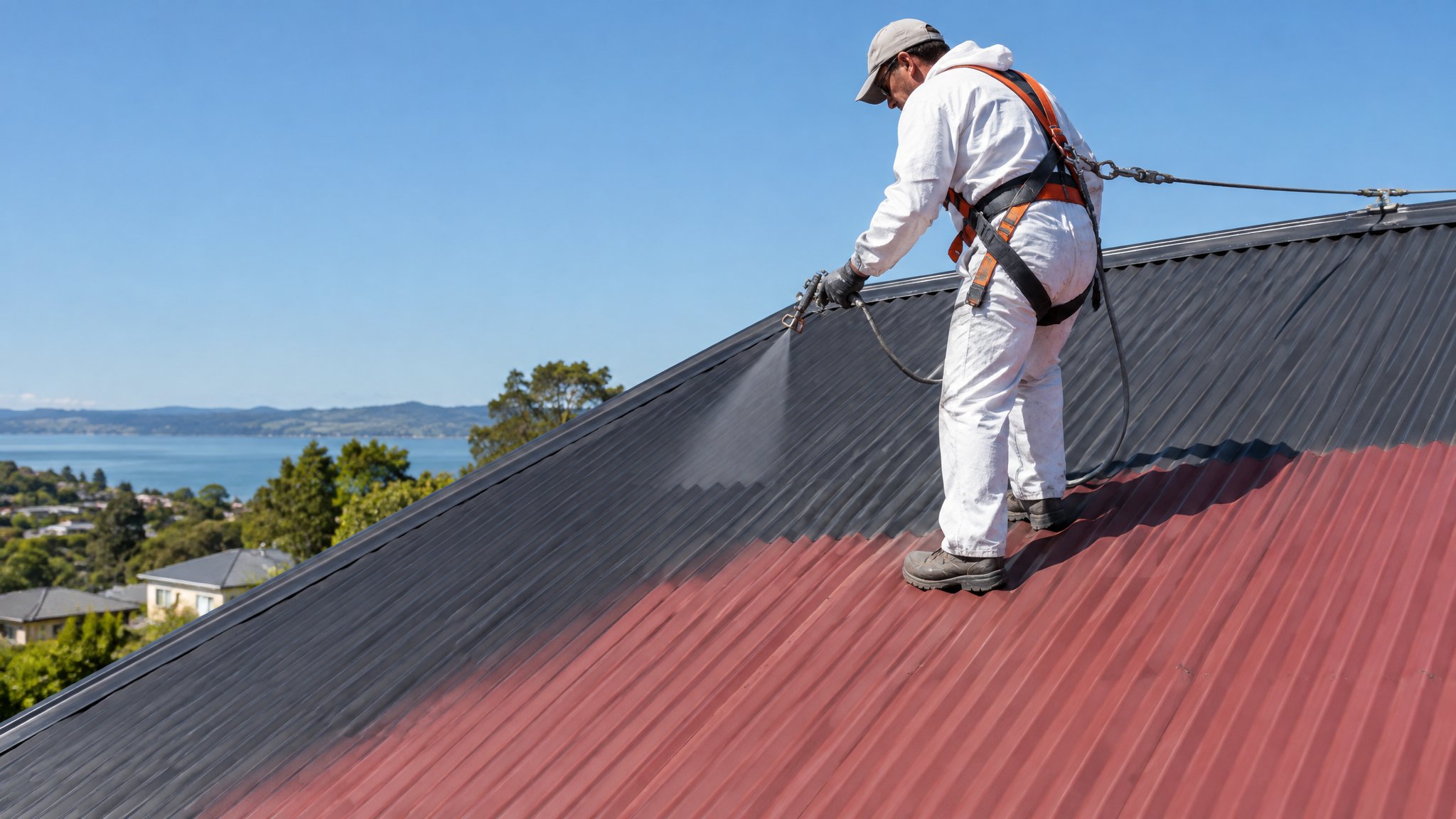
Small chips, scratches, and worn spots on a painted roof are common in Auckland’s weather. The trick is making the repair blend in, rather than looking like a fresh square of paint sitting on top of the roof.
If the area is genuinely small, a careful touch-up can work well. The key is matching the surface condition, the colour, and the application method as closely as possible to the surrounding roof.
Start with the right kind of touch-up
Before you open a paint tin, work out whether the mark is suitable for a touch-up. Small scratches, isolated chips, and tiny rust spots can often be repaired neatly. If the roof paint is fading, chalking, or peeling in several places, a touch-up may stand out more than it helps.
Clean the spot first. Dirt, salt, moss, and loose flakes will stop the new paint from blending properly. Use a soft brush, mild detergent, and clean water, then let the area dry fully. On metal roofs, make sure any rust is removed back to sound material before painting.
- Only touch up small, localised damage
- Clean and dry the area thoroughly
- Remove loose paint and surface rust
- Avoid painting over damp, dusty, or chalky surfaces
Match the colour, sheen, and application
The biggest reason touch-ups look obvious is that the new paint does not match the old roof exactly. Even when the colour is right, the sheen can be slightly different, especially on older roofs that have weathered under sun and salt air. If possible, use the same product line and colour code as the original coating.
Apply the paint sparingly. A small brush or touch-up brush is usually better than a roller, because it gives you more control and avoids leaving a thick edge. Feather the paint slightly beyond the damaged spot, but keep the repair tight so it does not create a larger patch.
If the roof texture is rough or flaked, dab the paint rather than brushing hard. The aim is to mimic the surrounding finish, not to create a smooth, obvious blob.
Blend the repair into the roof
Good timing helps. Try to touch up in mild weather, out of direct hot sun if you can, because roof paint can flash off quickly and leave lap marks. Work on one small area at a time and keep a wet edge where possible.
For the least noticeable result, step back and view the repair from different angles once it has dried. Roofs are often seen in strong light, so what looks fine up close may still show from the driveway or the street.
A few practical tips can help reduce patchiness:
- Use a clean, small brush and avoid overloading it
- Keep the repair area as small as possible
- Feather edges gently instead of stopping with a hard line
- Use the same paint system if the roof was previously coated
- Check the repair in daylight after it dries
When to call Steve
If the roof has multiple touch-up areas, fading, peeling, or rust, it is often better to get advice before you start. A poor touch-up can draw attention to the roof and make the whole surface look uneven. Steve is a Kiwi and a trade-qualified painter, and he can assess whether a small repair will blend in or whether the roof needs a more complete coating approach.
If you are unsure about colour matching, surface prep, or whether the existing roof paint is still sound, contact Steve. He is a Kiwi and a trade-qualified painter, and he can give practical advice for Auckland homes and help you avoid ending up with obvious patches.
Frequently Asked Questions
Will a small roof paint touch-up always be invisible?
Not always. If the roof is faded or weathered, even the correct paint can look slightly different. The smaller and cleaner the repair, the better the chance of blending it in.
Can I use any roof paint for a touch-up?
It is best to use the same type of coating and, if possible, the same colour code as the existing roof. Mixing products or finishes can make the repair stand out.
Do I need to repaint the whole roof for a few small chips?
Not necessarily. Small, isolated damage can often be touched up neatly. But if the roof is widely worn, patching only a few spots may leave the surface looking uneven.
Need a hand with your project?
Happy to tackle some of it yourself? Great — but for anything you’d rather leave to a professional, Steve Lunjevich is a Kiwi and a trade-qualified painter with 20+ years’ experience. Call or email for honest advice or a free, no-obligation quote.