
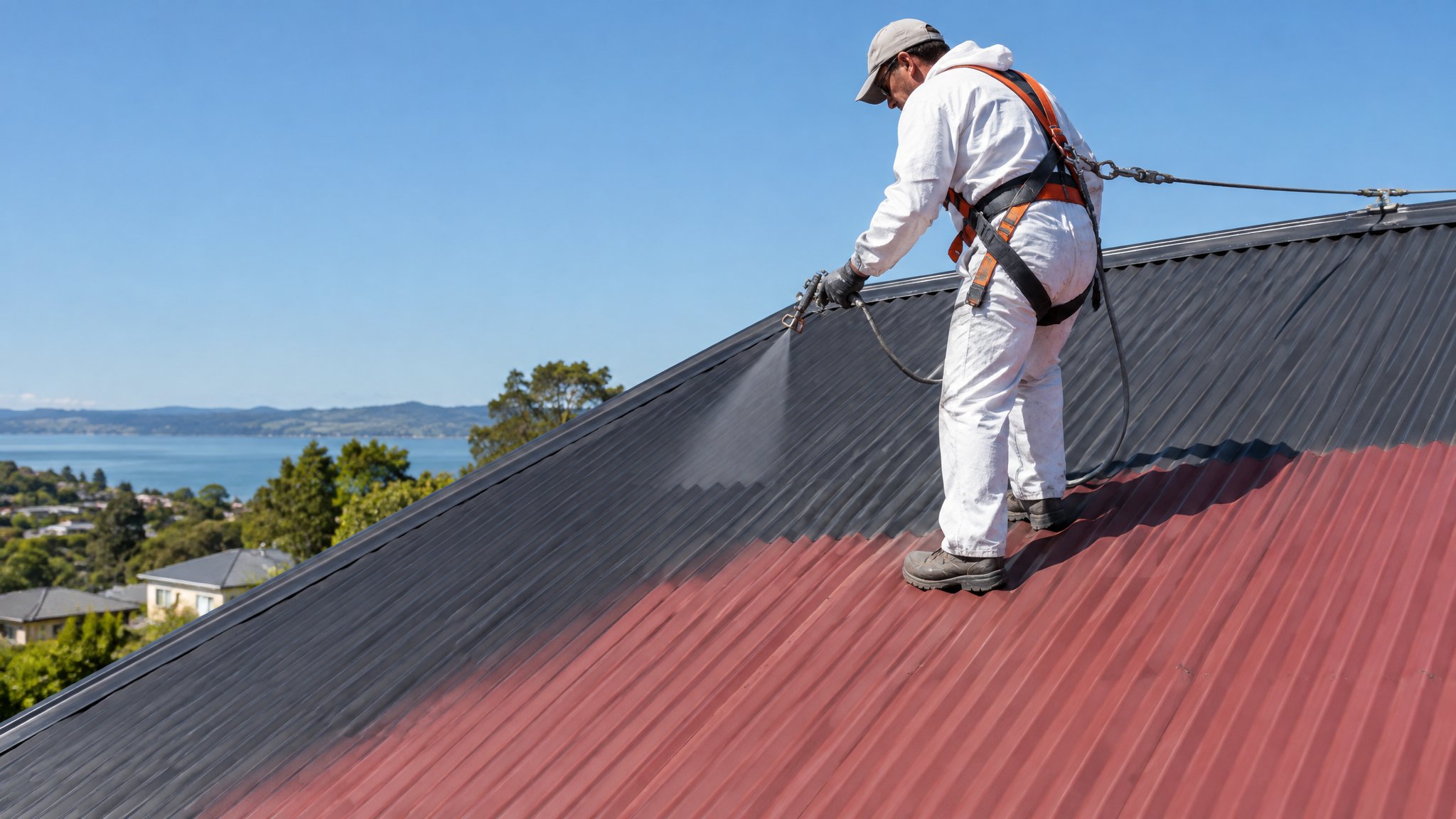
Back rolling after spraying roof paint is one of those steps that can make a big difference to the final result. It helps push the coating into the roof profile, improves adhesion, and evens out the finish so the roof looks consistent from every angle.
For Auckland homes, where roofs cop strong sun, salt air, moisture and leaf debris, the spray-and-back-roll method is often the best way to get a durable finish. The key is timing, pressure and using the right roller for the roof surface.
Why back rolling matters after spraying
Spraying roof paint gives fast, even coverage, especially on corrugated iron and other profiled roofs. But spray alone can leave the coating sitting on top of the surface rather than worked into it. Back rolling is the step that helps bed the paint in properly.
When done well, back rolling improves the bond between the coating and the roof, reduces patchiness, and helps the paint flow into laps, ribs and textured areas. It is particularly important on older roofs, where the surface may still have slight porosity even after cleaning and priming.
A good back-roll also helps standardise the finish. Without it, some sections may look a little dry or oversprayed, especially in changing light.
- Use back rolling straight after spraying, while the paint is still wet
- Work in manageable sections so the coating does not start to skin over
- Aim to press the paint into the profile, not scrub it around
The correct back rolling technique
The best technique is to spray a section, then immediately back roll it while the coating is still open and workable. Use a suitable roller sleeve for the roof material and a proper extension handle so you can maintain steady pressure and even body position.
Roll in straight, controlled passes following the roof profile. On corrugated roofs, roll along the length of the sheet so the roller can reach into the crests and valleys. Keep the pressure light to medium: enough to work the paint into the surface, but not so hard that you remove too much coating or create ridges.
Overlap each pass slightly to avoid missed lines. The idea is to level the sprayed finish, not to leave thick roller texture. If the paint starts to drag, the section is probably drying too fast and needs to be moved on from before further rolling.
For most roof systems, the surface should look uniform but not glossy-wet in heavy patches. The roller should leave a consistent film without foaming or bubbling. If bubbles appear, the coating may be overworked or the substrate may not have been properly prepared.
Common mistakes to avoid
A lot can go wrong if back rolling is rushed. The most common mistake is waiting too long after spraying. Once the paint starts to set, rolling can drag the coating, leave lap marks, or create an uneven sheen.
Another issue is using the wrong roller. A roller that is too short, too fluffy or too hard can fail to reach into the roof profile or can leave an inconsistent texture. The surface also needs to be clean and properly primed first, otherwise back rolling will only lock in defects.
It also helps to watch weather conditions closely. In Auckland, wind and sunshine can speed up drying unexpectedly, especially on metal roofs. That means the sprayer and roller need to work as one team, section by section.
- Do not let sprayed paint dry before back rolling
- Do not overload the roller with paint
- Do not skip cleaning, rust treatment or priming
When to call Steve
If you are unsure about the right roller, coating system, or timing for back rolling, it is worth getting advice before you start. Roof painting has to be done properly to last, and the wrong technique can shorten the life of the finish or leave the roof looking patchy.
Steve is a Kiwi and a trade-qualified painter, and he can help with roof painting advice or handle the job properly from prep to final coat. If you want a roof finish that looks sharp and is built to last in Auckland conditions, contact Steve for guidance or a quote.
Frequently Asked Questions
Do you always need to back roll roof paint after spraying?
Not every roof system is identical, but in many cases back rolling is recommended because it improves adhesion and gives a more even, durable finish.
How soon after spraying should you back roll?
Back roll immediately after spraying each section while the paint is still wet and workable. Waiting too long can cause dragging, marks and uneven coverage.
Can I back roll a roof myself?
You can, but roof work can be hazardous and the technique needs to be consistent. For best results, especially on steep or weathered roofs, it is wise to contact Steve, a Kiwi and a trade-qualified painter.
Need a hand with your project?
Happy to tackle some of it yourself? Great — but for anything you’d rather leave to a professional, Steve Lunjevich is a Kiwi and a trade-qualified painter with 20+ years’ experience. Call or email for honest advice or a free, no-obligation quote.