
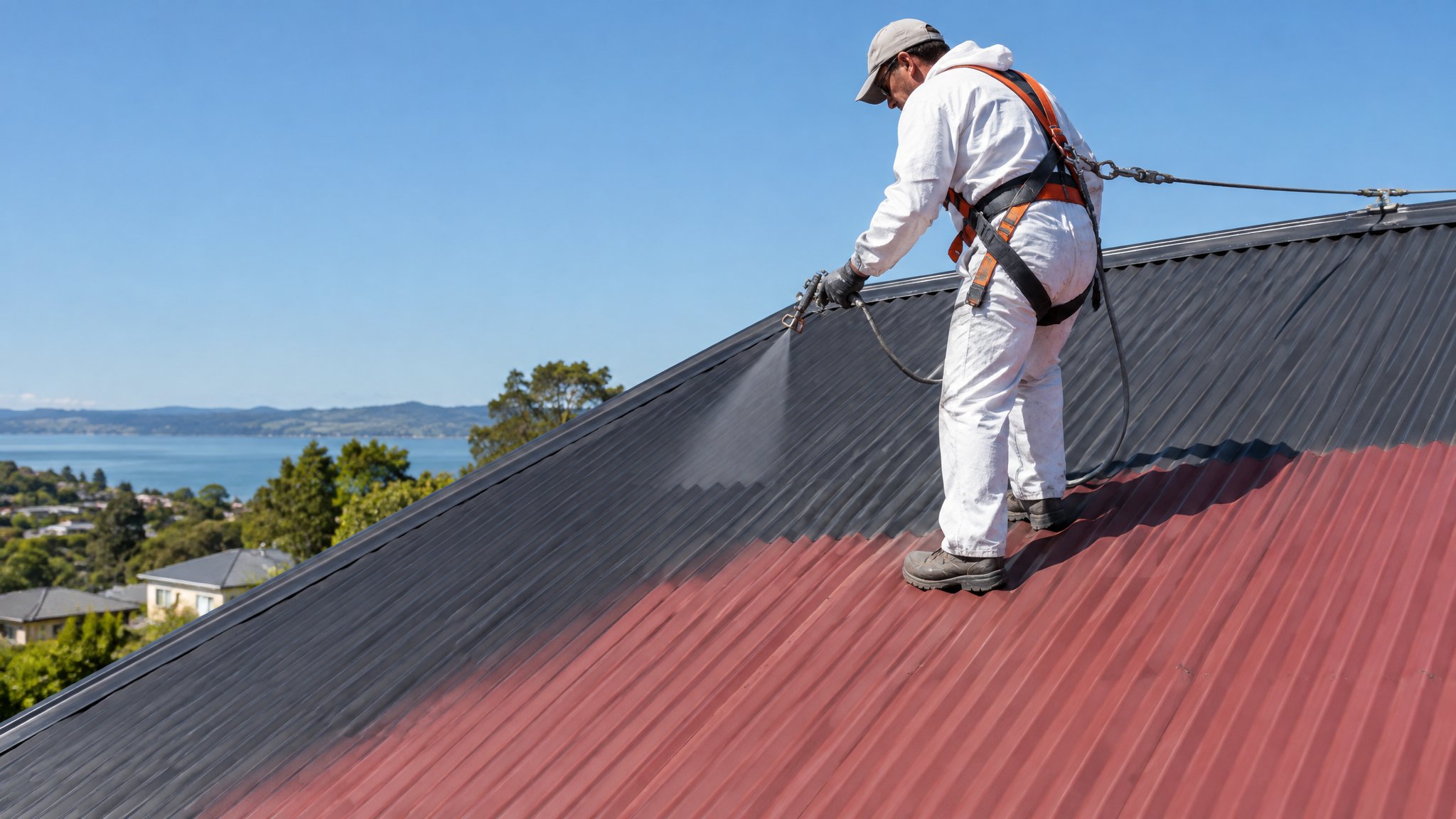
Yes, you can use a foam roller for roof paint on some flat surfaces, but it is not always the best choice. In roof painting, the right roller depends on the coating, the surface texture and how much control you need.
For Auckland homes, especially where roofs deal with damp weather, salt air and debris, the finish matters as much as the product. A foam roller can be handy for certain smooth areas, but it is important to know its limits before you start.
When a foam roller can work
A foam roller is usually best on very smooth, flat surfaces where you want a fine finish and minimal stipple. It can suit small touch-ups, detailed sections or roof areas where the coating is designed to roll out smoothly.
On properly prepared flat roof sheets or smooth metal panels, a foam roller may help spread paint evenly if the product has the right viscosity. It can also be useful when you are working carefully around flashings, edges or tight spots.
That said, foam rollers are not always the best option for every roof paint. Some roof coatings are thicker and need a more durable roller sleeve to hold more paint and cover evenly.
- Best for smooth, flat areas
- Good for small sections and touch-ups
- Less suitable for rough or textured roofing
- May struggle with thicker roof coatings
The limits of foam rollers on roof paint
The main issue with foam rollers is that they can load less paint and wear out quickly on larger roof jobs. If the roof paint is a heavier coating, the roller may drag, leave lines or create an uneven finish.
Foam can also pick up grit or catch on rough patches, which makes it less reliable on older roofs. If your roof has surface rust, flaking paint, seams, or light texture, a different roller sleeve is often the better choice.
On larger flat roofs, a foam roller can slow the job down and make it harder to maintain a wet edge. That can lead to lap marks, patchiness or an inconsistent sheen.
Better tools and prep for a quality roof finish
For many roof painting jobs, a high-density synthetic roller or a purpose-made roof roller is a better option than foam. These tools usually hold more paint and give better coverage across flat surfaces.
Good prep is just as important as the roller itself. Before painting, the roof should be cleaned, rinsed if needed, dried properly and checked for loose debris, rust, chalking or failed coating. Any damaged areas should be repaired before paint goes on.
A few practical tips:
Use the roller recommended by the paint manufacturer
Work in manageable sections to keep a wet edge
Avoid painting in damp, windy or very hot conditions
Always follow the product data sheet for application thickness and drying time
When to call Steve
If you are unsure whether a foam roller is suitable for your roof, it is worth getting advice before you begin. Roof paint systems vary a lot, and the wrong roller can affect adhesion, coverage and the final look.
Steve is a Kiwi and a trade-qualified painter, so he can assess the roof surface, recommend the right application method and make sure the coating suits Auckland conditions. That is especially useful for premium homes where you want a clean, durable result without guesswork.
If your roof is large, weathered, or has any signs of rust or previous coating failure, contact Steve, a Kiwi and a trade-qualified painter, for practical advice or a full roof painting job.
Frequently Asked Questions
Is a foam roller good for metal roof painting?
It can be, if the roof is very smooth and the paint is suited to rolling. For many metal roofs, a higher-density roller gives better coverage and a more even finish.
Will a foam roller leave marks on roof paint?
It can leave lines or an uneven finish if the paint is too thick, the roof is rough, or the roller runs dry. Good prep and the right roller sleeve help reduce that risk.
What is the best roller for roof paint on flat surfaces?
A purpose-made roof roller or a durable high-density synthetic roller is often the best option. The right choice depends on the roof profile, paint type and surface condition.
Need a hand with your project?
Happy to tackle some of it yourself? Great — but for anything you’d rather leave to a professional, Steve Lunjevich is a Kiwi and a trade-qualified painter with 20+ years’ experience. Call or email for honest advice or a free, no-obligation quote.