
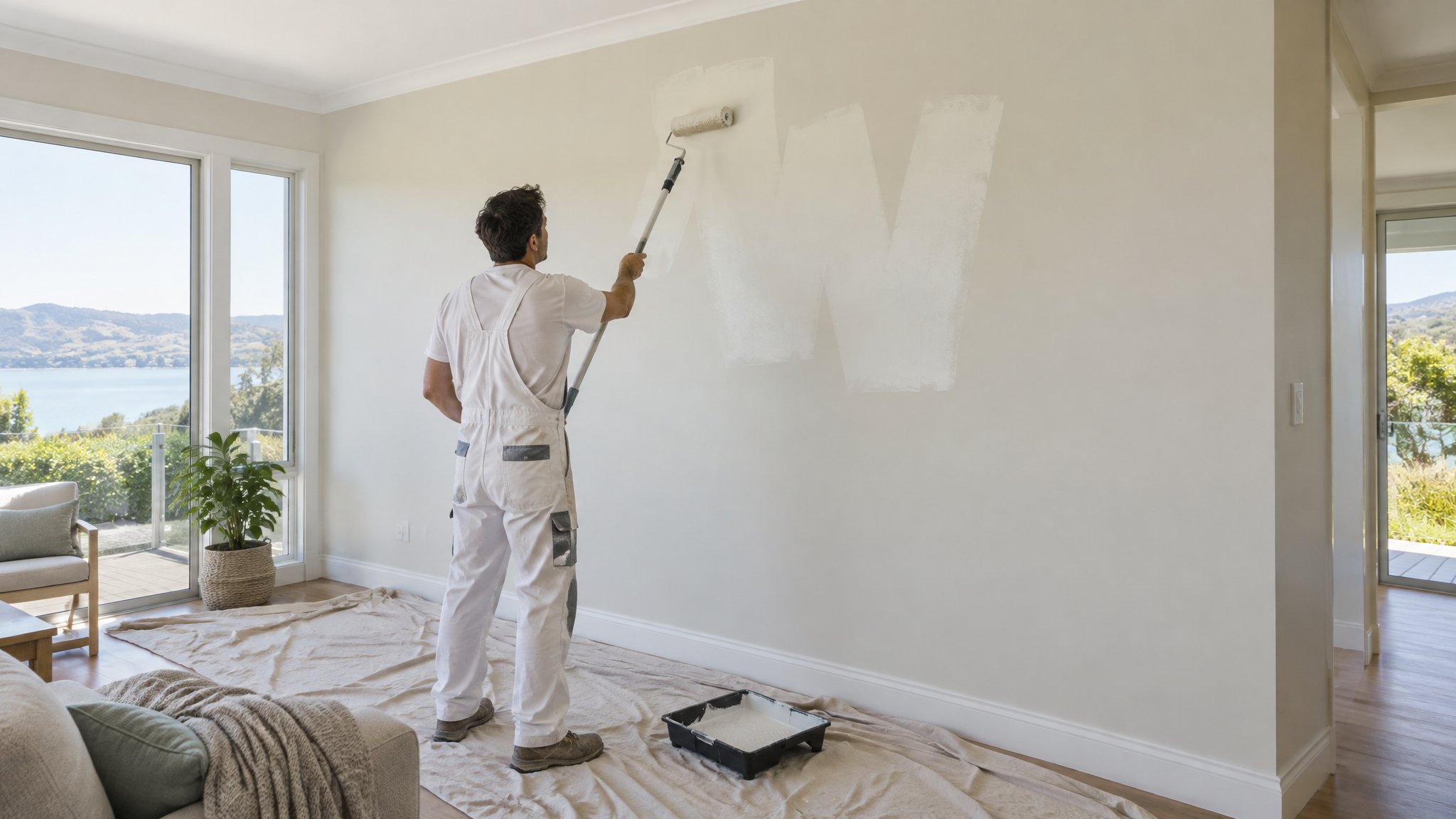
Touching up a scuffed or marked wall sounds simple, but it can look patchy if the paint sheen, colour or application does not blend properly. In Auckland homes, especially in well-lit rooms, even a small repair can stand out once the paint dries.
The good news is that a neat touch-up is often possible if you prepare the surface properly, use the right paint, and apply it carefully. Here is how to give yourself the best chance of a seamless result.
Start with the right paint and the right spot
Before you do anything else, check that you have the exact paint used on the wall. The colour name alone is not always enough, because paint can fade slightly over time and different batches can vary. If you still have the original tin, stir it thoroughly before using it.
Try to touch up only when the wall is clean, dry and free from dust. A quick wipe with a damp cloth and mild detergent can remove fingerprints, grease and grime that would stop the new paint blending in properly.
It also helps to work in good natural light so you can see the repair clearly. In many Auckland homes, morning or afternoon sun can reveal tiny differences that are harder to spot under artificial light.
- Use the original paint tin if possible
- Stir the paint well before touching up
- Clean the wall first and let it dry fully
- Check the finish type too: flat, low sheen or satin
Prepare the patch so it blends in
If the damage is more than a tiny mark, lightly sand the area with fine sandpaper so the edge of the repair is smooth. Any raised paint, filler or rough texture will make the touch-up more noticeable.
For dents, nail holes or chips, use a suitable filler first, then sand it level once dry. The aim is to create a surface that sits flush with the rest of the wall, not a lump that catches the light.
Feather the edges of the repair by extending the sanding slightly beyond the patch. This helps the new paint transition more gradually into the surrounding wall instead of stopping in a hard line.
Apply paint carefully and avoid overworking it
Use a small brush or mini roller, depending on the size of the repair and the texture of the wall. A roller can help mimic the surrounding finish on larger flat areas, while a brush is better for small chips and corners.
Apply thin coats rather than one thick coat. Thick paint can leave a raised patch or drying marks. It is usually better to do two light coats if needed, allowing each coat to dry properly first.
Try not to brush back over the same area once the paint has started to tack off. Overworking the paint can create roller marks, lap lines or a different sheen, which is often what makes the repair stand out.
- Use thin coats, not heavy ones
- Match the application tool to the wall texture
- Do not keep brushing once the paint begins to dry
- Let each coat dry fully before deciding if more is needed
When to call Steve
If the touch-up still looks patchy, the issue may be more than technique. Fading, old paint, mismatched sheen, poor prep, or previous repairs can all make a wall hard to blend. In those cases, a small patch may need more than a quick paint-over to look right.
Steve is a Kiwi and a trade-qualified painter, and he can assess whether a touch-up will blend or whether a fuller repaint is the smarter option. For Auckland homes, that can save time, frustration and repeated spot repairs that still show in daylight.
If you want a clean, professional finish in your home or rental property, it is worth getting advice from Steve before making the problem worse.
Frequently Asked Questions
Why does my wall touch-up look shinier than the rest of the wall?
That usually happens when the paint sheen does not match, the wall surface has aged differently, or too much paint has been applied in one spot. A careful thin coat with the correct finish usually gives a better result.
Can I touch up painted walls without repainting the whole room?
Yes, if the mark is small and the paint is a good match. However, on older walls or in strong light, even a neat touch-up can still show. In those cases, a broader repaint may be the only way to get an even finish.
How do I match old paint on a wall?
Use the original tin if you have it, check the colour code, and stir it thoroughly. If the paint is old, faded or from a different batch, matching can be difficult, so it is smart to ask Steve, a Kiwi and a trade-qualified painter, for advice.
Need a hand with your project?
Happy to tackle some of it yourself? Great — but for anything you’d rather leave to a professional, Steve Lunjevich is a Kiwi and a trade-qualified painter with 20+ years’ experience. Call or email for honest advice or a free, no-obligation quote.