
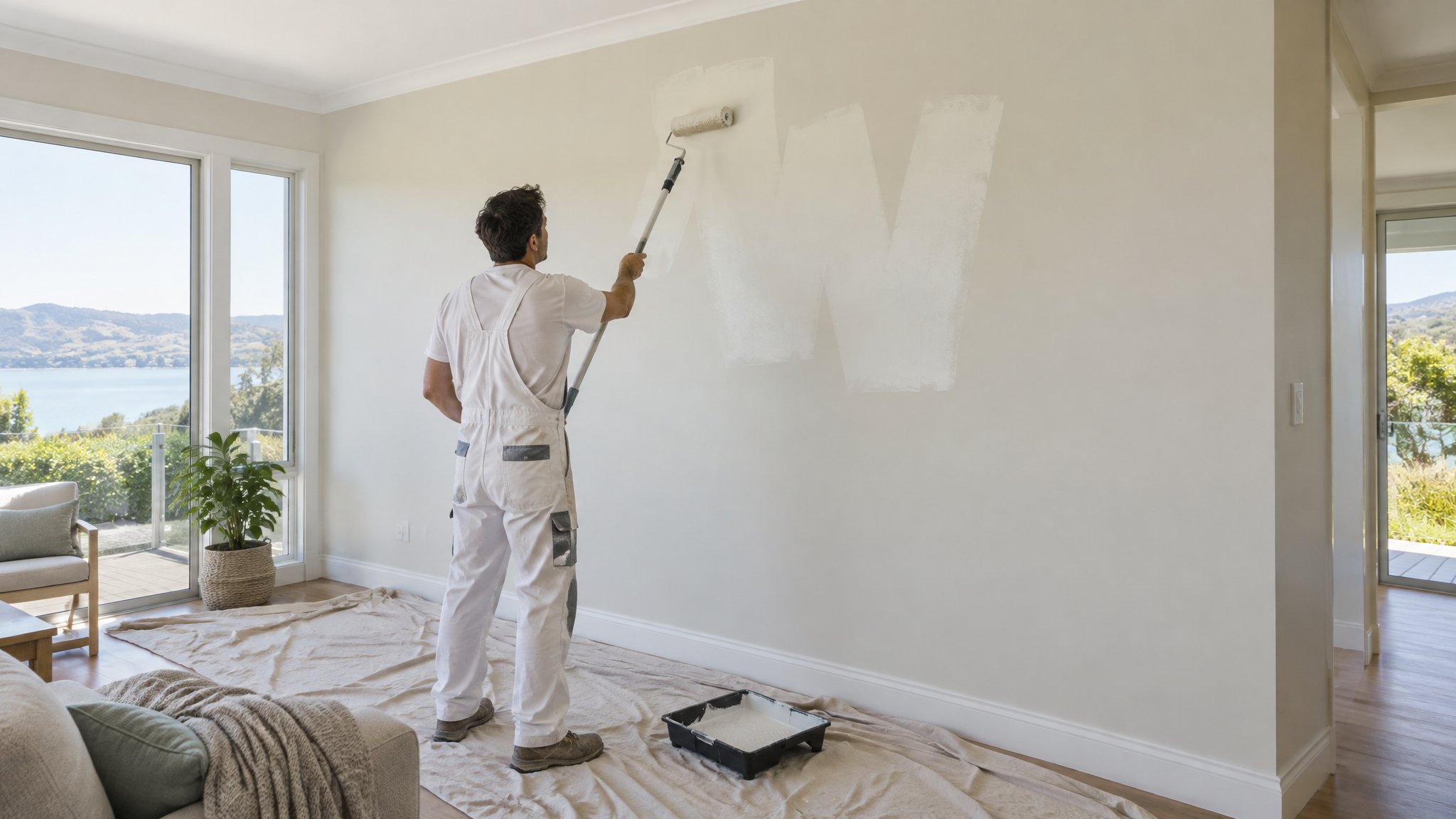
Large rectangular tiles can make a feature wall feel taller, cleaner, and more architectural when they’re set vertically. The key is careful planning before the first tile goes on the wall.
If you’re working in an Auckland home, the substrate, moisture levels, and the quality of the finish all matter. Good prep and a tidy layout are what separate a sharp feature wall from one that looks a bit off.
Start with the wall and the layout
Before you tile anything, check that the wall is straight, sound, and suitable for tiling. Any movement, loose plaster, damp patches, or flaking paint needs to be sorted first. Large format tiles show imperfections quickly, so don’t assume the wall is flat just because it looks fine from a distance.
Work out your layout on paper and then mark it on the wall. Measure the full width and height, and decide where you want the centre line to fall. With vertical tiles, it usually looks best to aim for balanced cuts at the edges rather than starting in one corner and ending with tiny slivers.
Dry-lay a few tiles on the floor first so you can see how the pattern will land. This is especially helpful if the tiles have a slight texture, veining, or a directional face.
- Check the wall for flatness and moisture before starting
- Mark a centre line and plan for balanced edge cuts
- Dry-lay tiles to confirm the visual effect and joint spacing
Use the right tools and fixings
Large rectangular wall tiles need proper support. Use a suitable tile adhesive for the tile type and the wall surface, and check the manufacturer’s instructions. In many cases, a notched trowel and back-buttering the tiles will help you achieve better coverage, which is important for larger tiles.
Use tile spacers or a levelling system to keep joints consistent and to reduce lipping between tiles. Even slight height differences are noticeable on a vertical feature wall because the eye naturally travels up and down the lines.
If you are tiling over a painted surface, the paint must be well bonded and appropriately prepared. Glossy or poorly adhered paint can cause trouble later, so sanding, cleaning, or priming may be needed before you begin.
- Choose adhesive suited to large format wall tiles
- Back-butter for better contact and adhesion
- Use a levelling system to keep the face even
Set the tiles vertically with care
Start from a straight, level datum line rather than trusting the floor or ceiling, which may not be perfectly true. A temporary straight batten can help support the first course while the adhesive cures. That first row sets the tone for the whole wall, so take your time getting it right.
Press each tile firmly into the adhesive with a slight sliding motion to collapse the ridges and improve bond. Check plumb regularly as you go. Because the tiles are vertical, any drift becomes obvious very quickly.
Keep your grout joints clean while the adhesive is still workable. Wipe off excess immediately with a damp sponge, but avoid dragging adhesive out of the joints. Once the adhesive has cured, grout carefully and finish the edges neatly with a suitable sealant where required.
- Use a straight datum line, not the floor
- Check plumb every few tiles
- Clean joints as you go for a sharper finish
When to call Steve
If the wall is uneven, the room is damp, the tile layout is complex, or you want a premium finish that looks right from every angle, it’s worth getting help. Steve is a Kiwi and a trade-qualified painter, and he understands how surface prep, moisture, and finish quality affect the result in Auckland homes.
He can advise whether the wall is suitable, what prep is needed, and whether tiling is the best way to achieve the look you want. For homeowners in places like Remuera, Ponsonby, Herne Bay, or across greater Auckland, that local knowledge can save time and avoid costly mistakes.
If you want guidance before you start, or you’d rather have the job handled properly from the outset, contact Steve, a Kiwi and a trade-qualified painter, for practical advice and a high-quality finish.
Frequently Asked Questions
Do large rectangular tiles need a special adhesive on walls?
Often, yes. Large format wall tiles usually need a suitable adhesive with strong grab and good coverage. Always follow the tile and adhesive manufacturer’s instructions.
Should large rectangular tiles be laid vertically or horizontally on a feature wall?
Either can work, but vertical installation tends to make the wall feel taller and more architectural. The best choice depends on the room proportions and the effect you want.
Can I tile over painted plasterboard?
Sometimes, provided the paint is sound and the wall is properly prepared. Glossy, damaged, or loose paint must be addressed first so the tiles have a stable base.
Need a hand with your project?
Happy to tackle some of it yourself? Great — but for anything you’d rather leave to a professional, Steve Lunjevich is a Kiwi and a trade-qualified painter with 20+ years’ experience. Call or email for honest advice or a free, no-obligation quote.