
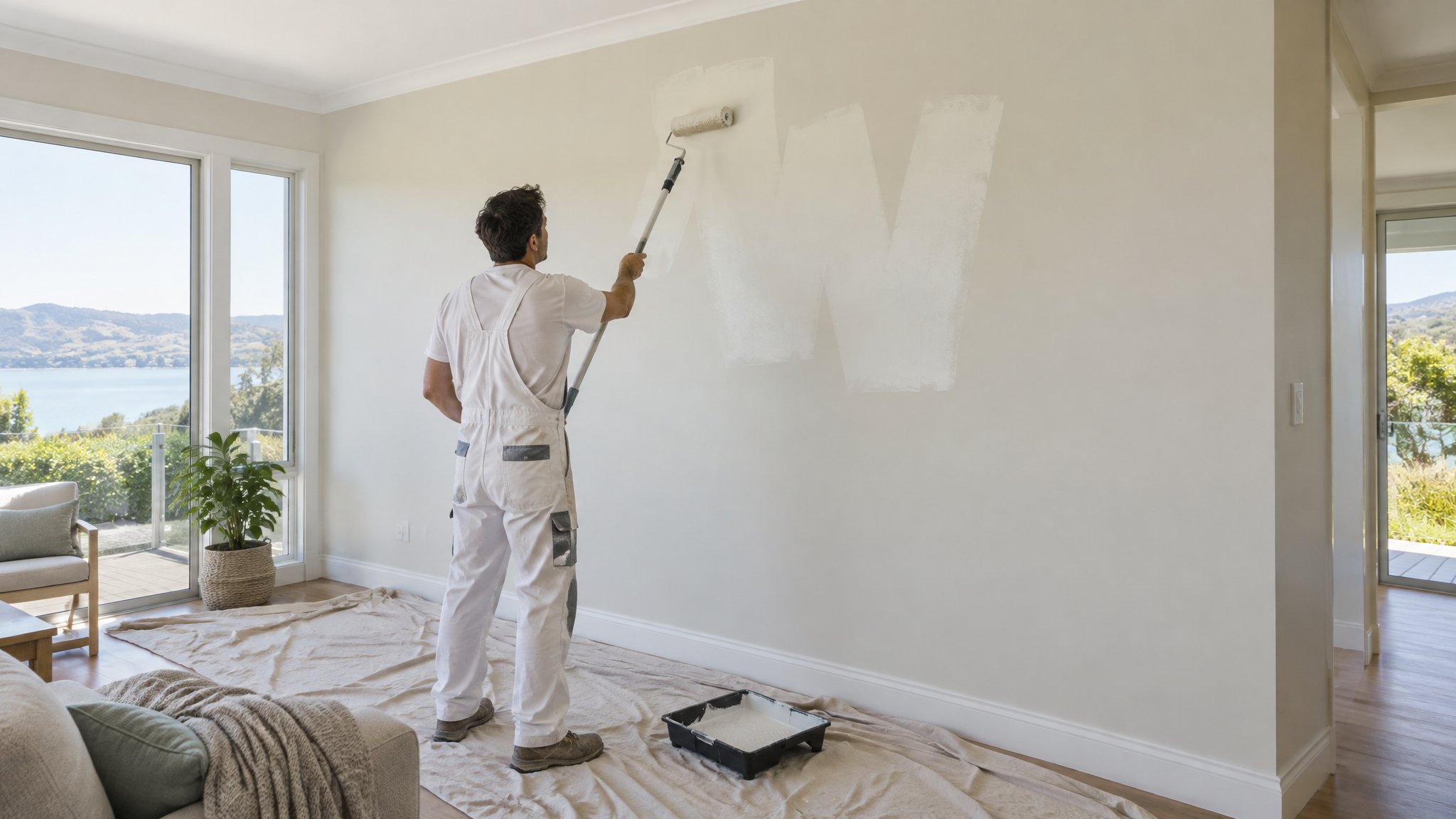
Painting a ceiling looks simple until you’re standing under it for an hour with your neck bent back and tiny drips landing on your face, floor, and skirting boards. It’s one of those jobs where good preparation and the right setup make a huge difference.
If you’re tackling a ceiling in an Auckland villa, apartment, or modern home, the goal is to work smarter, not harder. A stable platform, the right roller, and a sensible painting sequence will help you get a smoother finish with far less strain.
Set yourself up so you are not reaching all day
The biggest cause of a sore neck is overreaching. Rather than standing directly under the area you are painting, use a sturdy step platform or hop-up that lets you work with your arms at a comfortable height. A small platform you can move easily is often better than a tall ladder, because you’ll spend less time balancing and looking straight up.
Clear the room as much as possible, and use drop sheets that stay flat. Good lighting matters too, because you can spot missed patches and wet edges without leaning in close. If you’re painting a large ceiling, plan your route before you start so you are not constantly stretching back and forth.
- Use a stable platform, not a wobbly ladder
- Move furniture out or cover it fully
- Work in good light so you can see wet edges
- Start near a corner and work in manageable sections
Choose the right tools to reduce drips
Most ceiling drips happen because the roller is overloaded. Use a medium-pile roller sleeve suitable for ceilings, and load it evenly without soaking it. Roll off the excess in the tray before you go overhead. A quality extension pole also helps keep your arms lower, so you are not holding the roller directly above your head for long periods.
Keep a smaller brush handy for cutting in around the edges, light fittings, and corners. If you try to force a big roller into every edge, you’ll usually end up with splatter and awkward arm positions. Paint guards and careful edging can help, but the main trick is still controlled loading and steady pressure.
- Use an extension pole to save your neck and shoulders
- Do not overload the roller
- Use a brush for edges and tight spots
- Choose ceiling paint suited to low-splatter application
Work in a wet edge and keep your pace steady
To avoid patchiness and lap marks, roll in sections and keep a wet edge. That means painting one area while the previous pass is still fresh enough to blend into it. Don’t stop halfway across the ceiling if you can help it, because that’s when visible lines and uneven sheen can appear.
A good method is to cut in around the perimeter first, then roll the main field in overlapping bands. Use light, even pressure and finish each pass in the same direction. If you see the roller starting to dry out, reload before you go back over the ceiling. Trying to stretch the paint too far usually creates drag marks and extra effort.
When to call Steve
If your ceiling is high, large, stained, textured, or simply too uncomfortable to tackle properly, it can be worth bringing in Steve. He is a Kiwi and a trade-qualified painter, and he can help with ceilings that need careful prep, a clean finish, or efficient work in homes where access is awkward. That is especially useful in premium Auckland homes where you want the job done neatly and without mess.
If you’re unsure about the right paint, need advice on prep, or want the ceiling finished properly the first time, contact Steve, a Kiwi and a trade-qualified painter. He can assess the room, recommend the best approach, and take the strain out of the job.
Frequently Asked Questions
What is the best way to avoid neck pain when painting a ceiling?
Use a stable platform, keep the roller on an extension pole, and work in sections so you are not holding your head back for long periods.
How do I stop ceiling paint drips?
Do not overload the roller, roll off excess paint in the tray, and use controlled pressure. Good masking and drop sheets also help keep drips off nearby surfaces.
Should I cut in or roll first on a ceiling?
Usually cut in first, then roll the main area while the cut-in paint is still wet enough to blend. That helps reduce visible lines and patchiness.
Need a hand with your project?
Happy to tackle some of it yourself? Great — but for anything you’d rather leave to a professional, Steve Lunjevich is a Kiwi and a trade-qualified painter with 20+ years’ experience. Call or email for honest advice or a free, no-obligation quote.