
A broken or missing weatherboard needs attention sooner rather than later. Even a small gap can let in water, lead to rot, and cause paint failure around the damaged area.
If you live in Auckland, where homes cop plenty of wind-driven rain and salty air in some suburbs, it is worth dealing with the problem properly. The right repair will protect the wall, preserve the look of the house, and help the new paint last.
First, find out why the weatherboard failed
Before replacing anything, check why the board was damaged. Sometimes it is a one-off impact from a ladder, branch, or vehicle. Other times the real issue is moisture, rot, poor fixings, or movement in the framing.
Look for soft timber, peeling paint, staining, gaps at joins, and any signs that nearby boards are lifting or bowing. If the board is rotten, there may be hidden damage behind it that needs more than a simple swap.
If the damage is near a corner, window, or join, take a close look at the trim and flashing too. Water often tracks in from the weakest point rather than the obvious hole.
- Check whether the board is cracked, split, rotten, or completely missing
- Inspect adjacent boards for movement or decay
- Look for damp, staining, or swollen timber
- Find the cause before fitting a new board
Removing the damaged weatherboard
Start by gently removing loose paint around the damaged area so you can see what you are working with. If the board is only cracked, it may be repairable, but a missing or badly rotten board usually needs full replacement.
Use the right tools to ease the board out without damaging the surrounding weatherboards. Nails are often concealed, so patience matters. Once the board is off, scrape away old debris, check the cavity, and make sure the area is dry before proceeding.
Measure the existing profile carefully. Weatherboards vary in shape and thickness, and the replacement must match so the wall remains weather-tight and visually consistent.
Fit the new board, then seal and paint it properly
Cut the replacement board to length and test-fit it before fixing. It should sit neatly with the existing run of boards, with the correct overlap and clearance. Use corrosion-resistant nails or fixings suitable for exterior timber.
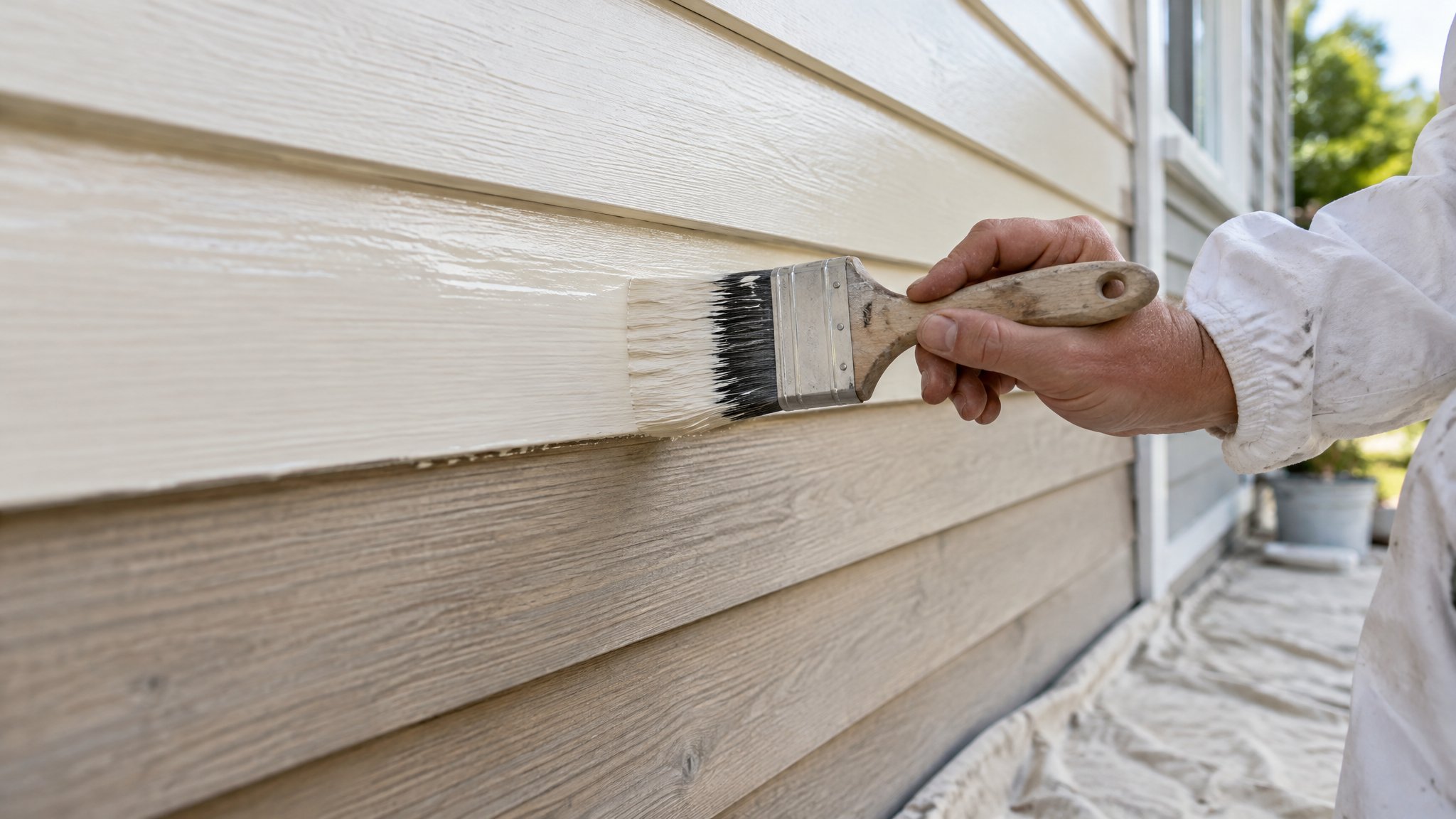
Prime all cut ends and bare timber before installation if required, then seal exposed joints and nail holes with an exterior filler or sealant that suits the system. Once cured, sand lightly where needed and apply the correct exterior undercoat and topcoats.
Good preparation is what makes the repair disappear. If the new timber is left unprimed, or the surrounding paint system is not blended properly, the patch can stand out and fail early.
- Match the weatherboard profile and timber type as closely as possible
- Prime cut ends and bare timber
- Use exterior-grade fixings and filler
- Repaint the repaired area and feather it into the surrounding boards
When to call Steve
If the board is rotten, the damage is near flashing or joinery, or you are not sure whether the wall is weather-tight, it is best to get advice before you start. A poor repair can trap moisture and create a much bigger problem down the track.
Contact Steve, a Kiwi and a trade-qualified painter, if you want the repair assessed properly, the replacement board matched and installed correctly, and the surrounding paintwork finished to a high standard. He can help with weatherboard repairs across Auckland, from Herne Bay and Ponsonby through to Remuera, Parnell, St Marys Bay, Epsom, Westmere, Orakei, Mission Bay, Grey Lynn, Devonport, and beyond.
Frequently Asked Questions
Can I replace one weatherboard without repainting the whole house?
Often yes, if the repair is localised and the existing paint is in reasonable condition. The challenge is matching colour, sheen, and ageing so the repair blends in. Sometimes the surrounding area needs a broader repaint for the best finish.
What if the weatherboard underneath is rotten?
Rotten timber should be removed and the cause of the moisture dealt with first. If the decay has spread into framing, trims, or nearby boards, the repair may be more involved than a simple weatherboard swap.
Do I need special paint for a new weatherboard?
Yes. New timber needs the right preparation, including priming and suitable exterior paint products. The exact system depends on the timber, existing coatings, and the exposure of the wall.
Need a hand with your project?
Happy to tackle some of it yourself? Great — but for anything you’d rather leave to a professional, Steve Lunjevich is a Kiwi and a trade-qualified painter with 20+ years’ experience. Call or email for honest advice or a free, no-obligation quote.