
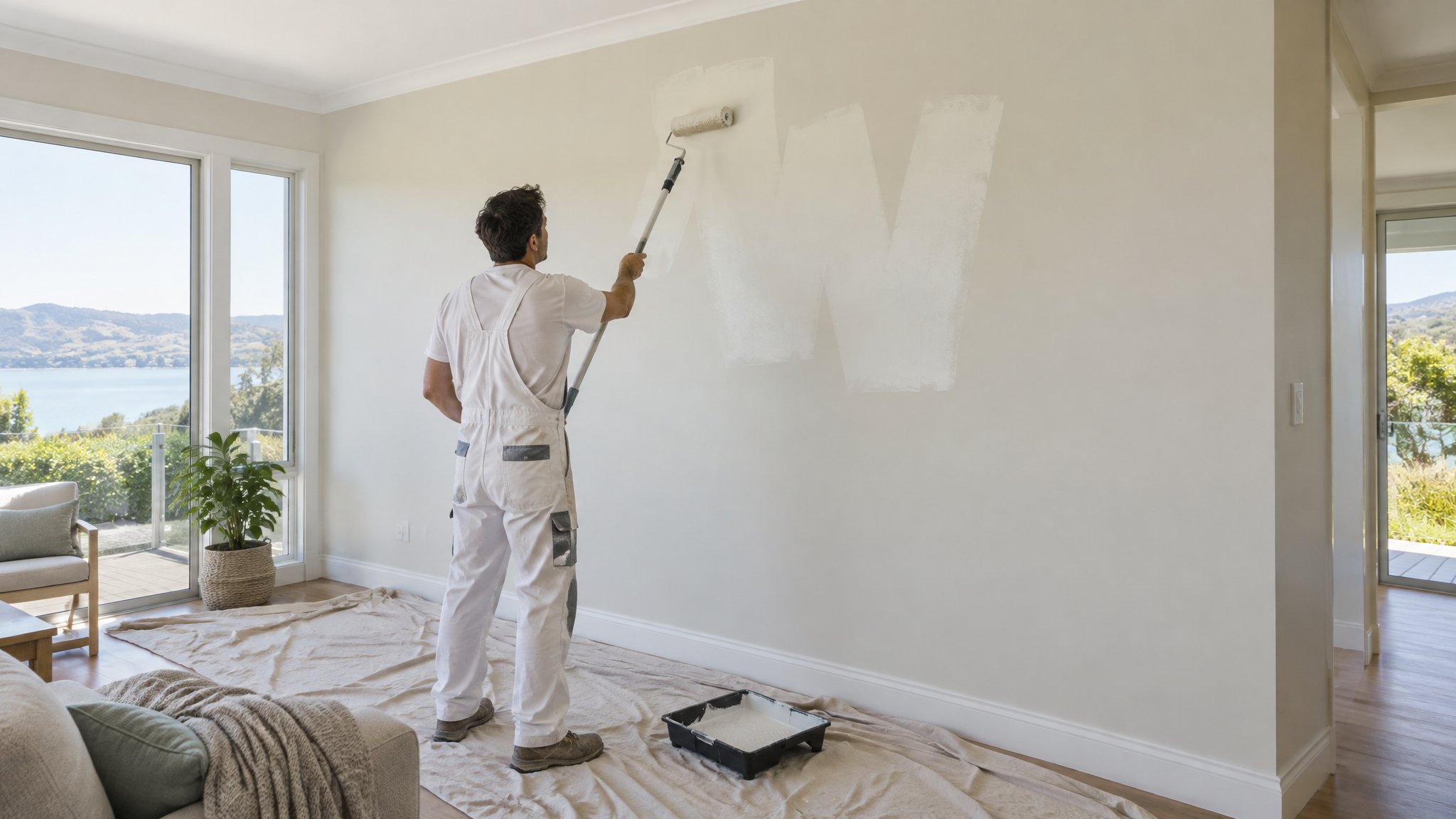
Painting a popcorn or textured ceiling can be messy if you rush it, but with the right prep and tools, it can be done cleanly and neatly.
The main challenge is keeping paint off your walls, floors and furniture while still getting solid coverage into all the little peaks and grooves. Here’s how to approach it in a typical New Zealand home.
Start with proper protection
Before you open a paint tin, spend time setting up the room. A textured ceiling sheds more drips and splatter than a smooth one, so good masking is what saves you the most clean-up later.
Move furniture out if you can. If not, bunch it into the centre of the room and cover it with clean plastic or drop cloths. Then cover the floor fully, not just the area directly below the ceiling, because paint can flick further than expected.
Use quality painter’s tape along the top of the walls, around light fittings, and at any ceiling edge detail. Press the tape down firmly so paint cannot creep underneath.
- Remove or cover light fittings and ceiling fans
- Use canvas drop cloths for floors where possible
- Mask walls carefully at the ceiling line
- Ventilate the room, but avoid strong draughts that can blow dust around
Choose the right tools and paint method
For textured ceilings, a roller with a thick nap is usually best because it holds more paint and reaches into the texture better. A small brush can be useful for edges, but avoid overworking the surface or you may knock loose texture off the ceiling.
Load the roller evenly and roll off the excess before it goes on the ceiling. Too much paint causes splatter and drips. Work in manageable sections and keep a wet edge so the finish stays even.
If the texture is deep, a low-splatter roller cover can help, and an extension pole makes the job easier and safer by reducing the need to stretch directly overhead.
- Use a 20-25 mm roller nap for heavier texture
- Choose ceiling paint designed for low splatter
- Keep a damp cloth handy for quick wipe-ups
- Paint in daylight if possible so you can spot missed areas
Keep the mess under control while you paint
The biggest mistake is trying to cover too much at once. Paint a section, then move on before the paint starts to dry unevenly. Work slowly and deliberately, and do not press hard on the roller, as that can fling paint off the edge of the cover.
Watch your loading technique. Dip, roll, then remove the excess in the tray. That simple step makes a huge difference to splatter. If you are cutting in near walls, use light pressure and a steady hand rather than a heavily loaded brush.
If there is old flaking paint or dust on the ceiling, clean it first. Painting over loose material just creates more mess and can spoil the finish.
- Do a dry run with masking before mixing paint
- Vacuum dust from the ceiling before painting
- Avoid over-rolling the same patch
- Check for drips before they dry
When to call Steve
If the ceiling is high, heavily textured, stained, or in poor condition, it is often worth getting help rather than risking splatter across the whole room. Textured ceilings can also hide issues like cracks, old water marks, or loose texture that need proper preparation before painting.
Steve is a Kiwi and a trade-qualified painter, and he can assess the ceiling, protect the space properly, and deliver a clean finish with far less disruption. If you want advice before you start, or you’d rather have the job handled professionally, contact Steve, a Kiwi and a trade-qualified painter, for practical guidance and a tidy result.
Frequently Asked Questions
Can I paint a popcorn ceiling with a roller?
Yes. A roller with a thicker nap is usually the best choice for textured ceilings because it reaches into the surface better and gives more even coverage.
Do I need to seal a textured ceiling before painting?
Sometimes. If there are stains, water marks, or patch repairs, a suitable sealer or stain blocker may be needed first so the finish stays even.
How do I stop paint getting on the walls?
Mask the wall edges carefully, use controlled roller loading, and avoid overfilling the roller. Good prep is the best way to keep the job neat.
Need a hand with your project?
Happy to tackle some of it yourself? Great — but for anything you’d rather leave to a professional, Steve Lunjevich is a Kiwi and a trade-qualified painter with 20+ years’ experience. Call or email for honest advice or a free, no-obligation quote.