
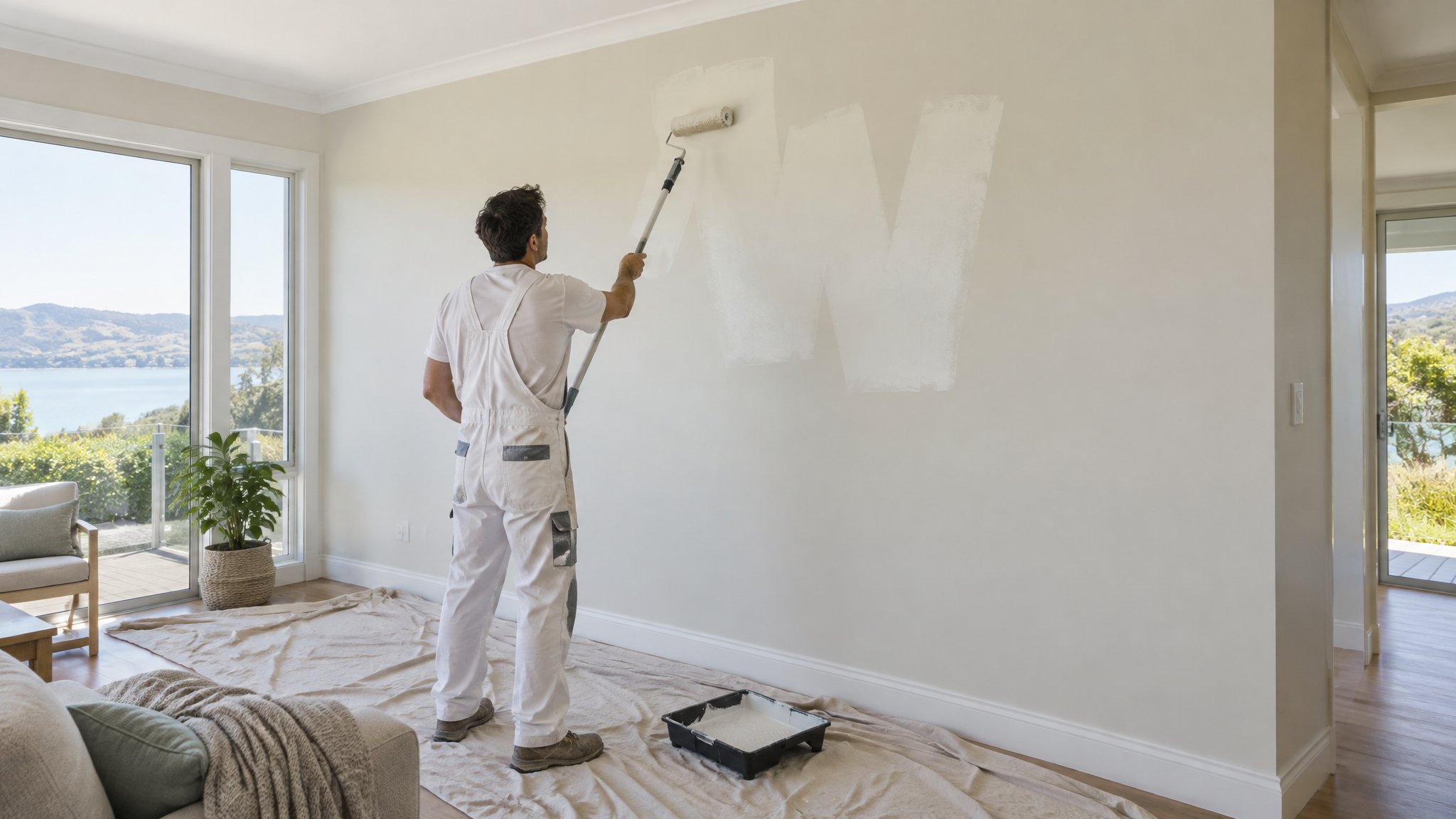
Painting a wardrobe interior or shelving can make a tired storage area feel cleaner, brighter and more finished. It is a good project for a home refresh, especially in bedrooms, hallways and linen cupboards where marks and scuffs build up over time.
The key is not just choosing a colour. Good preparation, the right primer and a durable finish matter just as much, because wardrobe interiors get constant contact from clothes, shoes, hangers and storage boxes.
Start with a proper clean and prep
Before any paint goes on, empty the wardrobe completely and vacuum out dust, cobwebs and loose debris from shelves, corners and shelf supports. Grease, hand oils and old adhesive residue can stop paint sticking properly, so wipe all surfaces down with sugar soap or a mild degreasing cleaner, then rinse and let them dry fully.
If the timber or melamine has chips, dents or raised grain, lightly sand the surface to smooth it out. Fill small damage with a suitable filler, then sand again once it has cured. For existing glossy surfaces, a light sand helps create a key so the primer bonds well.
- Remove hooks, shelf brackets and loose fittings if you can
- Mask hinges, door seals and adjacent walls carefully
- Use good lighting so you can spot missed dust or damage
Choose the right primer and paint
Wardrobe interiors are often timber, MDF, melamine or previously painted surfaces, and each one needs the right approach. A quality adhesion primer is usually the safest choice for slick or coated surfaces, while bare timber may need a sealing primer to reduce tannin bleed and improve coverage.
For the topcoat, use a hard-wearing interior enamel or a durable low-sheen acrylic designed for trim and cabinetry. A washable finish is important because wardrobe shelves and walls are touched often. Very flat paints can mark too easily in storage spaces.
If you want a bright, clean look, white or off-white is popular because it reflects light and makes the wardrobe feel bigger. That said, a soft neutral can also suit a more premium interior and hide light scuffs better than a stark white.
- Use a primer suitable for timber, MDF or melamine
- Choose a durable, washable finish
- Keep sheen consistent across all shelves and panels
Apply thin coats for a smoother result
Use a small quality brush for edges, corners and detailed areas, and a mini roller for flat shelving and side panels. Thin coats are better than one heavy coat, especially in confined spaces where paint can run or pool along shelf edges.
Allow each coat to dry fully before recoating. Light sanding between coats with fine abrasive paper helps remove dust nibs and gives a smoother final finish. If you are painting shelf edges or narrow vertical panels, work methodically from top to bottom so you do not trap drips on fresh paint.
If the wardrobe has adjustable shelving, consider painting the fixed structure first, then the removable shelves separately. Let everything cure properly before refitting shelves or hanging clothes back inside.
- Cut in first, then roll flat areas
- Keep coats light and even
- Let paint cure before loading the wardrobe
When to call Steve
If your wardrobe is made from melamine, has peeling paint, tannin staining, water damage or tricky built-in shelving, it is worth getting expert help. A poor prep or the wrong primer can leave you with flaking paint, patchy coverage or shelves that mark too easily.
Steve is a Kiwi and a trade-qualified painter, and he can advise on the best system for your wardrobe interior or shelving, whether it is a small cupboard refresh or part of a full interior repaint. For Auckland homes, especially where finish quality matters, getting the prep and coating system right from the start saves time and frustration.
Frequently Asked Questions
Can I paint wardrobe shelving without taking it out?
Yes, you can paint fixed shelving in place if you prep carefully and use masking to protect nearby surfaces. If shelves are removable, taking them out often gives a neater finish.
What is the best paint for a wardrobe interior?
A durable, washable interior enamel or hard-wearing low-sheen acrylic is usually best. The right primer is just as important, especially for melamine or glossy surfaces.
Do I need to sand wardrobe shelves before painting?
Usually yes, at least lightly. Sanding helps remove gloss, improve adhesion and smooth any rough patches before priming and topcoating.
Need a hand with your project?
Happy to tackle some of it yourself? Great — but for anything you’d rather leave to a professional, Steve Lunjevich is a Kiwi and a trade-qualified painter with 20+ years’ experience. Call or email for honest advice or a free, no-obligation quote.