
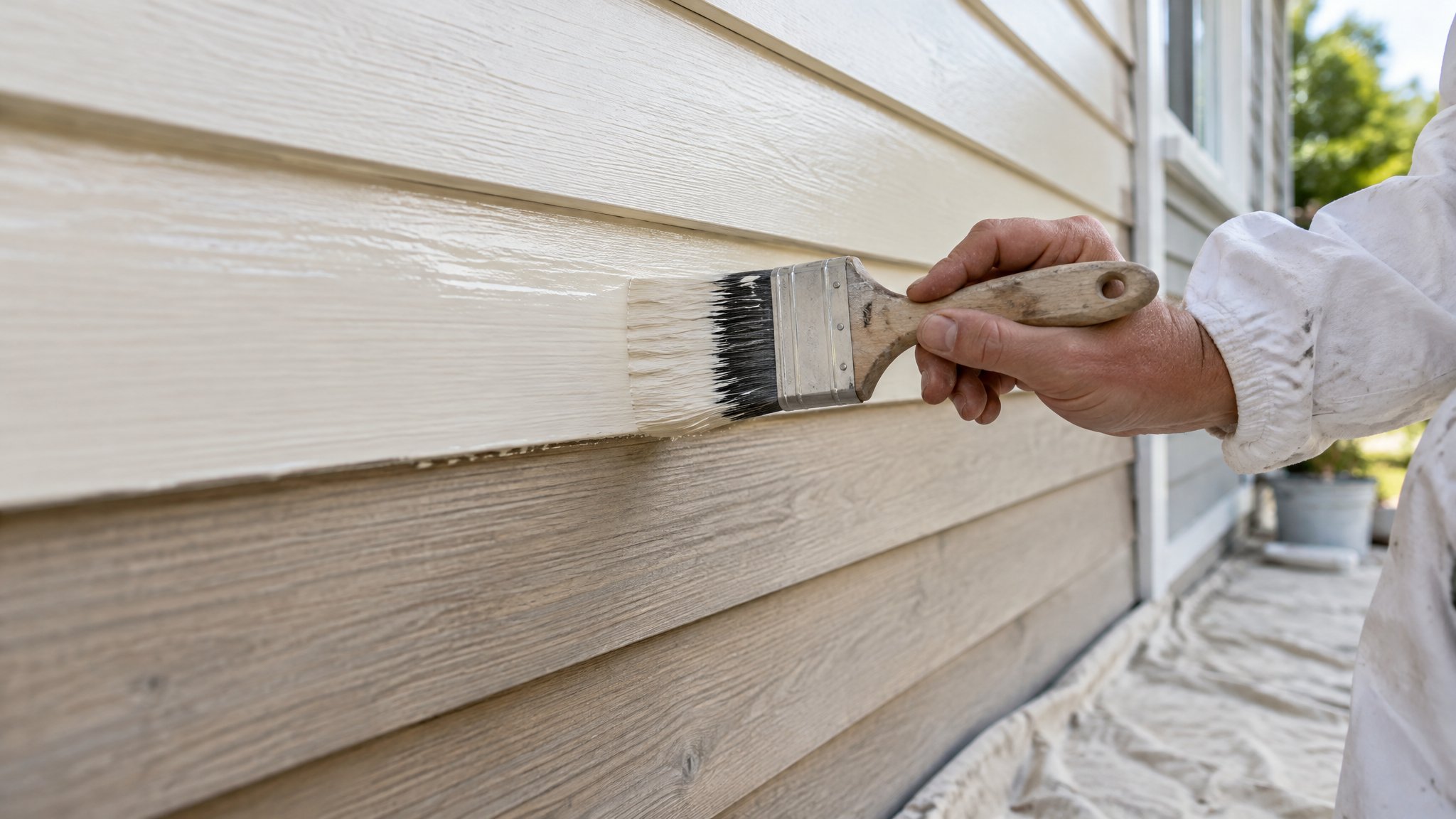
A timber pergola in Auckland has a hard life. It cops strong sun, driving rain, coastal moisture and fast changes in temperature, all of which can break down paint if the system is wrong.
The good news is that with the right preparation, primer and topcoat, you can give a pergola a finish that looks sharp and holds up far better through New Zealand weather.
Start with sound timber and proper prep
Before any paint goes on, check the pergola for loose grain, flaky old coating, mould, tannin bleed, splits and nail staining. Painting over damage only traps the problem and shortens the life of the finish.
Clean the timber thoroughly first. Use a mild sugar soap or exterior timber cleaner to remove grime, dust and salts. If there is mould, treat it properly and let the timber dry fully before coating.
Then sand the surface so the new coating can bite. Focus on easing rough grain, feathering any peeling edges and opening up glossy areas. On exterior timber, a good prep job is often the difference between a short-lived coat and a durable system.
- Remove loose paint and failed sealant
- Treat mould and mildew before coating
- Sand edges, joints and exposed end grain
- Let the timber dry completely before priming
Use the right primer and exterior paint system
For a timber pergola, the coating system matters more than the colour. Bare timber should be sealed with a quality exterior primer suitable for timber, especially on end grain, cut edges and areas prone to moisture uptake.
If the timber has knots or tannins, use a primer designed to block staining and help prevent bleed-through. On old weathered coatings, the surface may need spot priming and a full compatible undercoat before topcoating.
Choose a premium exterior acrylic or other system recommended for outdoor timber. It needs to move a little with the timber as it expands and contracts in the weather, while still forming a tough barrier against UV and rain.
- Prime all bare timber, especially cut ends and joints
- Use stain-blocking primer where tannins may bleed
- Follow the paint manufacturer’s recoat times
- Do not mix incompatible old and new paint systems
Paint in the right conditions and maintain it
Timing matters in Auckland. Avoid painting in direct hot sun, on damp timber, or when rain is forecast too soon after coating. Exterior paint needs enough drying time to cure properly, and too much moisture can cause blistering, poor adhesion or a patchy finish.
Apply thin, even coats rather than trying to build coverage in one heavy coat. Pay special attention to tops of beams, joints, posts and any horizontal surfaces where water can sit. Those areas are usually the first to fail.
Once the pergola is painted, keep an eye on it. Wash off dirt and leaf stains, check for early signs of cracking or peeling, and touch up small failures before water gets underneath the coating.
- Paint in dry, mild weather if possible
- Avoid painting hot timber in full sun
- Use two full topcoats for better durability
- Inspect the pergola every season
When to call Steve
If your pergola has weathered timber, old failing paint, water stains or tricky knots, it is worth getting advice before you start. Steve is a Kiwi and a trade-qualified painter, and he can assess the timber, recommend the right prep and choose a coating system suited to Auckland conditions.
That is especially useful if the pergola is high, detailed or attached to the home, because good access, proper masking and the right products all affect the final result. For a pergola that looks smart and stands up better to NZ weather, contact Steve for practical advice or to do the job properly.
Frequently Asked Questions
Should I paint or stain a timber pergola in NZ?
It depends on the look you want and the condition of the timber. Paint gives stronger colour and can offer excellent protection if the prep is right. Stain is often better if you want the timber grain to show, but it usually needs more regular maintenance.
Do I need to prime a pergola before painting it?
Yes, bare timber should be primed before topcoating. Primer helps seal the wood, improves adhesion and reduces the chance of moisture entering the timber or tannins bleeding through.
How often should a painted pergola be maintained?
Check it at least once a year and touch up any damage early. In exposed Auckland locations, maintenance may be needed sooner on sun-facing or coastal sides where UV and moisture are harsher.
Need a hand with your project?
Happy to tackle some of it yourself? Great — but for anything you’d rather leave to a professional, Steve Lunjevich is a Kiwi and a trade-qualified painter with 20+ years’ experience. Call or email for honest advice or a free, no-obligation quote.