
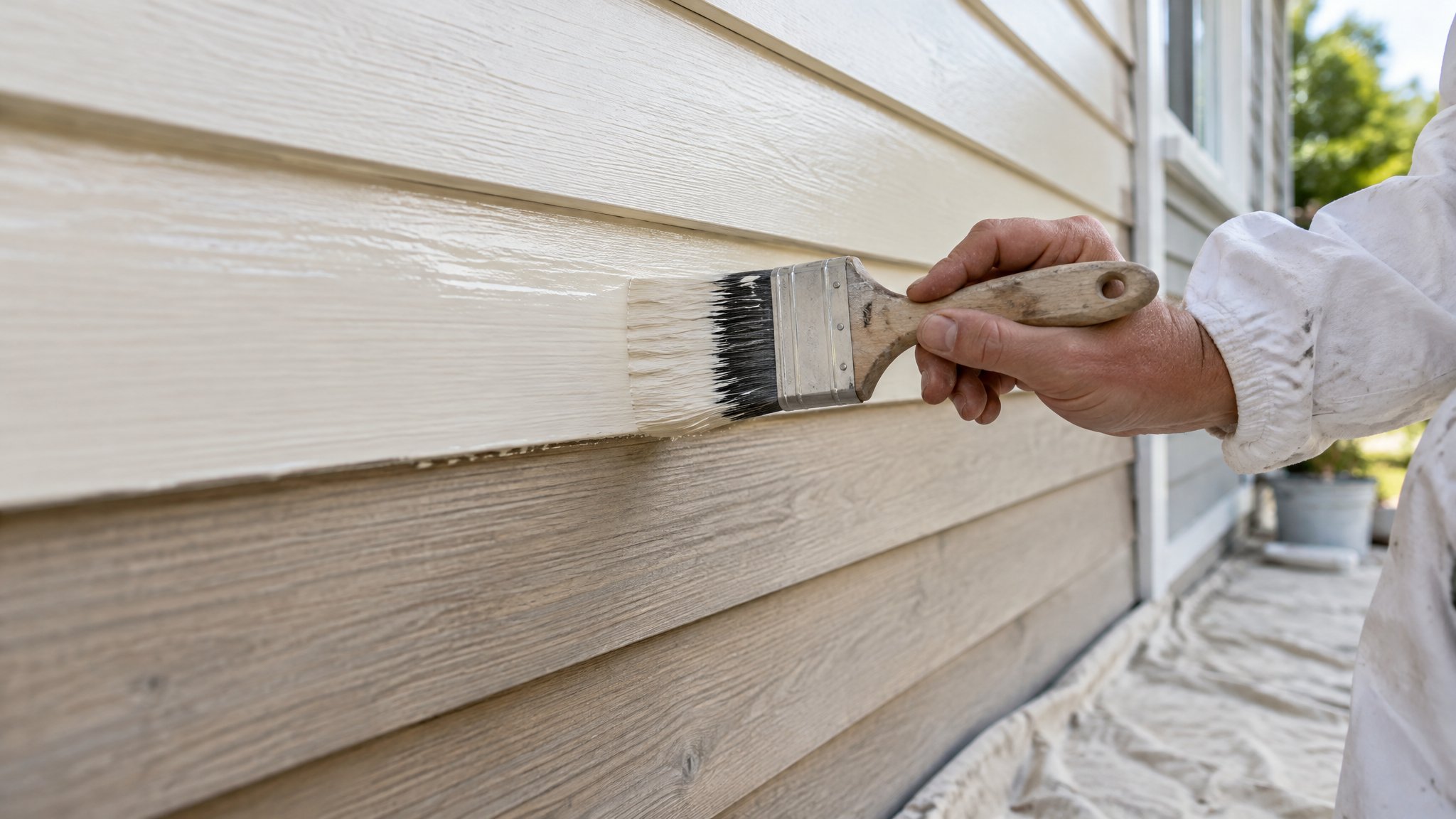
Yes, you can usually paint over oil based paint with a water based product, but the key is prep. If you skip the sanding and primer stage, the new coating may not bond properly and can peel or flake sooner than it should.
For timber doors, trims, architraves and windows in Auckland homes, the right process makes all the difference. A little extra preparation now will save a lot of frustration later.
Check what you are painting over
Before you start, confirm the existing coating is oil based, often called enamel. Older trim, doors and window frames are commonly painted this way. If you are unsure, a simple test can help: rub a hidden spot with methylated spirits on a cloth. If the paint softens or comes off, it may be water based. If it stays hard, it is likely oil based.
Also check the surface condition. If the old paint is sound, you can usually repaint over it. If it is chalky, peeling, cracked or glossy, it needs more preparation before any new water based topcoat goes on.
- Look for a hard, glossy finish on trim and doors
- Check for peeling, flaking or yellowing
- Test a discreet area if you are unsure
- Make sure the surface is clean and dry before starting
Prep the surface properly
The most important step is to create a surface the new paint can grip. Start by washing the timber with sugar soap or a suitable cleaner to remove dirt, hand oils and residue. Rinse well and allow it to dry fully.
Next, sand the surface to dull the gloss. You do not need to remove every trace of the old paint, but you do need to key the surface so the primer can adhere. Dust off thoroughly after sanding.
Fill dents, nail holes and minor damage with a suitable filler, then sand smooth again. If there are any bare timber areas, stain marks or patches of old coating that are damaged, spot prime them before applying the full primer coat.
Use the right primer before the topcoat
Do not apply water based paint directly onto a glossy oil based surface. Instead, use a bonding primer or a primer designed for tricky surfaces. In many cases, a quality adhesion primer is the safest bridge between the old enamel and the new water based topcoat.
Once the primer has cured as directed by the manufacturer, lightly sand if needed for a smoother finish, then apply your water based enamel or topcoat. Two thin coats are usually better than one heavy coat, especially on doors, skirting boards and window frames.
Keep an eye on drying times, temperature and ventilation. Auckland humidity can slow drying, so allow plenty of time between coats for the best result.
- Use a primer suitable for oil based surfaces
- Apply thin, even coats of water based paint
- Allow full drying and curing between coats
- Lightly sand between coats if the product recommends it
When to call Steve
If the coating is old, patchy, stained or painted on timber that gets a lot of use, it is worth getting advice before you start. Steve is a Kiwi and a trade-qualified painter, and he can assess the existing finish, recommend the right primer and make sure the new water based system performs properly.
That is especially helpful for heritage-style homes, weathered joinery, or detailed trim where a poor prep job can show up quickly. If you would like a clean, durable finish without the guesswork, contact Steve for practical advice or to handle the job from start to finish.
Frequently Asked Questions
Can I paint water based paint straight over oil based paint?
Not usually. You need to clean, sand and prime first so the water based paint can bond properly to the old oil based surface.
What primer should I use over oil based paint?
Use a bonding primer or an adhesion primer that is suitable for glossy or hard-to-stick surfaces. The exact product depends on the timber and existing finish.
Do I have to sand oil based paint before repainting?
Yes, light sanding is important. It removes the gloss and gives the primer something to grip, which helps prevent peeling later.
Need a hand with your project?
Happy to tackle some of it yourself? Great — but for anything you’d rather leave to a professional, Steve Lunjevich is a Kiwi and a trade-qualified painter with 20+ years’ experience. Call or email for honest advice or a free, no-obligation quote.