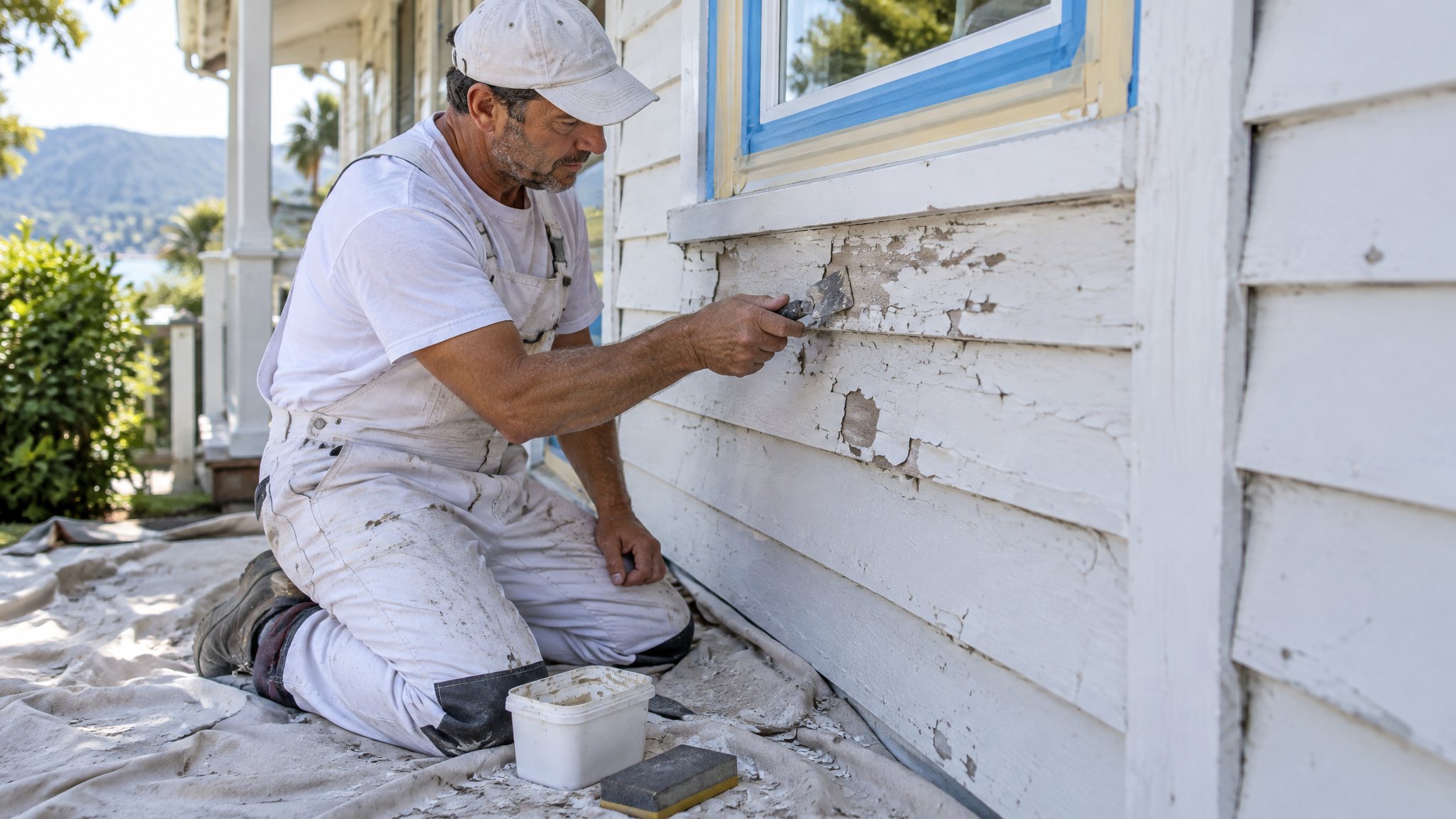
Flaking paint on an old villa is common, but if the home was built before 1980, there’s a good chance some of that coating contains lead. That means the job is not just about appearance — it’s about safety and proper preparation.
The key is to avoid creating dust, keep the area contained, and use the right approach for the condition of the coating. In many Auckland villas, the safest option is careful stabilisation and repainting rather than aggressive removal.
First, treat it as a lead paint risk
If your villa is older and the paint is flaking, assume it may contain lead until proven otherwise. Lead dust is the main hazard, especially for children, pregnant women, and anyone doing the work without proper protection.
Do not dry sand, grind, or scrape aggressively. Those methods create fine dust and chips that can spread through the home, garden, and gutters.
- Keep children and pets away from the work area
- Wear disposable gloves and a properly fitted respirator
- Dampen surfaces before disturbing loose paint
- Use drop sheets and seal off the area where possible
Decide whether to stabilise or remove
Not every flaky lead paint surface needs full removal. If the coating is otherwise sound, a sensible approach is to remove only loose and unsound paint, then prime and repaint with a suitable system.
If the paint is widespread, lifting badly, or failing in multiple layers, it may need more extensive remediation. That can involve controlled removal methods, extra containment, and careful disposal of waste.
A villa’s weatherboards, trims, windows, and decorative features often need different prep methods. Timber movement, moisture, and old layers of paint can all affect what is safest and most durable.
Use safe preparation and cleanup methods
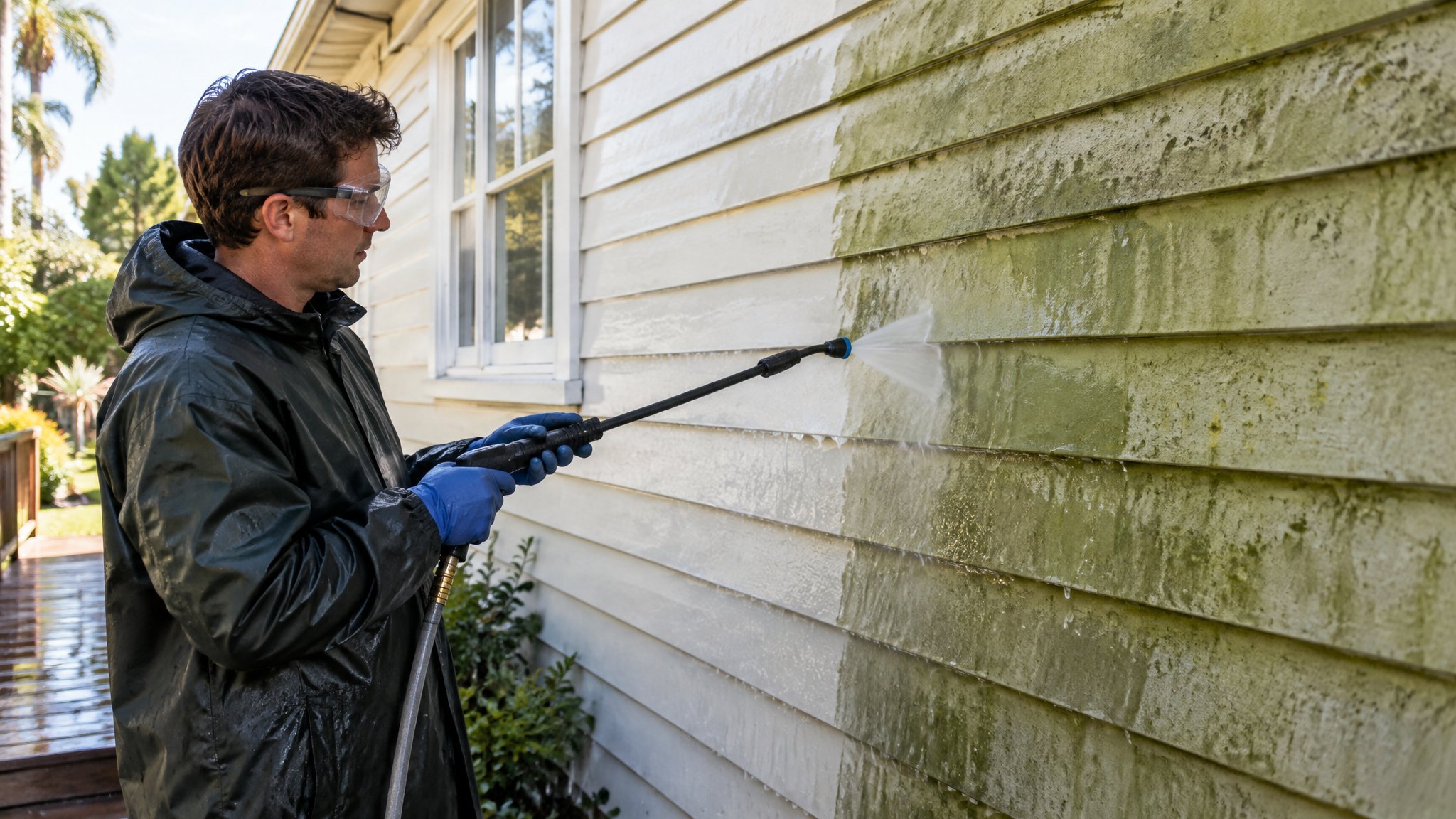
Preparation matters as much as the topcoat. Start by isolating the area, protecting the ground, and collecting chips as you go. Do not hose debris into drains or onto lawns.
For small areas, wet scraping and gentle hand preparation are generally safer than machine sanding. Any loose paint, dust, and disposable materials should be bagged carefully and removed from site.
After prep, the bare or exposed timber should be sealed promptly with the right primer so moisture does not get into the substrate. A good repaint system will last longer when the surface has been properly stabilised first.
- Use wet methods rather than dry sanding where possible
- Vacuum with a HEPA-filter machine if available
- Dispose of chips and dust safely
- Prime exposed timber as soon as practical
When to call Steve
If the paint is flaking over a large area, if you are unsure whether the coating contains lead, or if you want the job handled safely from start to finish, contact Steve, a Kiwi and a trade-qualified painter. He can assess the condition of the existing paintwork, recommend the right preparation method, and help you avoid creating unnecessary dust or damage.
For Auckland villas, the best results usually come from a careful, experience-based approach rather than rushing into stripping everything back. Steve can advise on the safest way to manage lead paint and prepare the surface for a proper long-lasting finish.
Frequently Asked Questions
How can I tell if old villa paint contains lead?
You usually can’t tell just by looking. If the home was built before 1980, assume lead may be present unless testing confirms otherwise. A trade-qualified painter can advise on the safest next step.
Can I paint over flaking lead paint?
Not directly. Loose and failing paint needs to be dealt with first. At minimum, the unstable material should be safely removed, the surface stabilised, and the area primed before repainting.
Is it safe to sand lead paint myself?
Dry sanding is not recommended because it creates hazardous dust. If you are unsure, stop and get advice from Steve, a Kiwi and a trade-qualified painter, before starting work.
Need a hand with your project?
Happy to tackle some of it yourself? Great — but for anything you’d rather leave to a professional, Steve Lunjevich is a Kiwi and a trade-qualified painter with 20+ years’ experience. Call or email for honest advice or a free, no-obligation quote.