
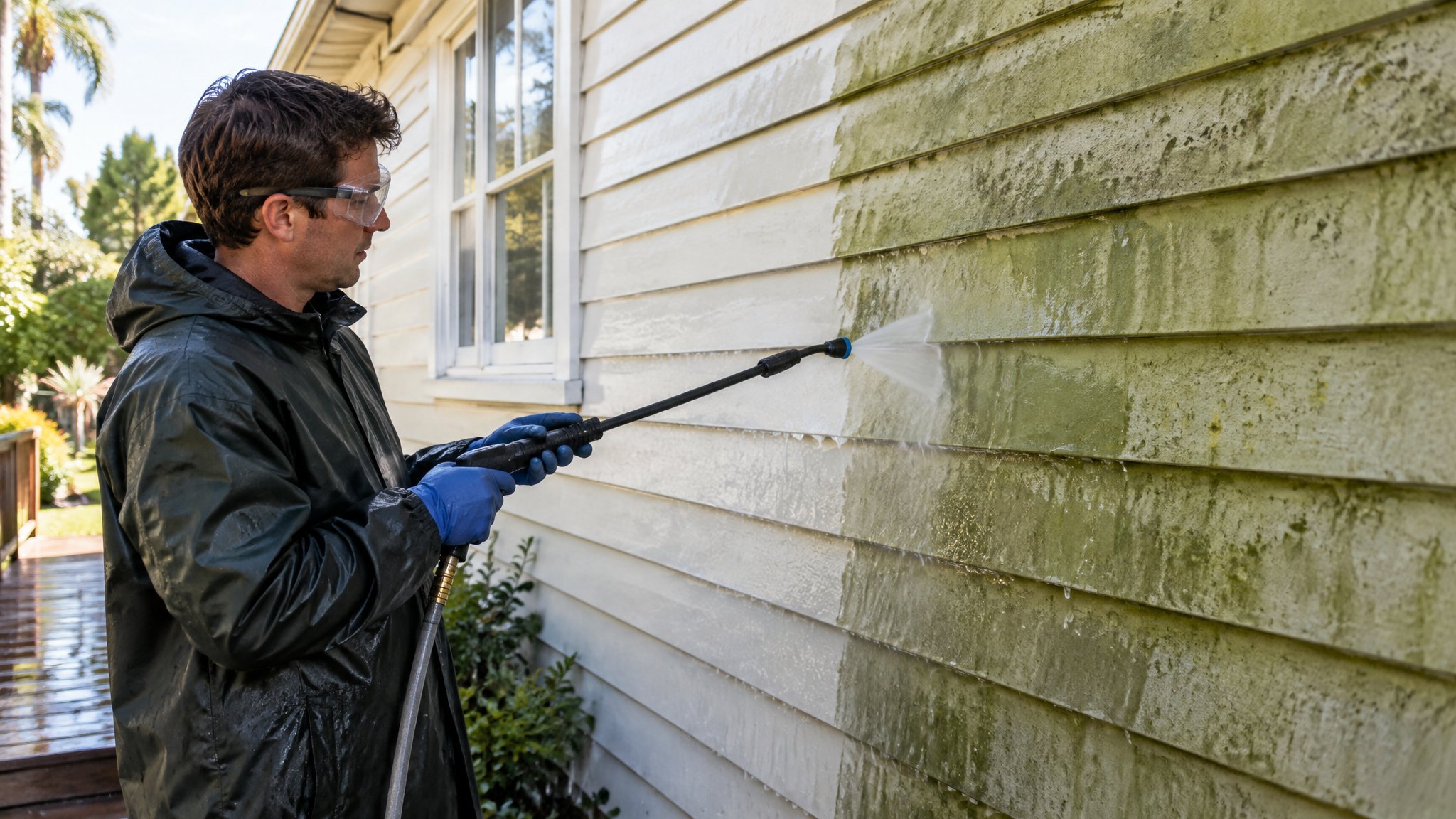
If you’re getting ready to paint a roof, the prep work matters just as much as the coating itself. Moss, mould, lichen and general grime can stop the new paint from bonding properly, so the roof needs a thorough treatment before any paint goes on.
For Auckland homes, especially in damp or shaded spots, this step is essential. A clean, treated surface helps the paint last longer and gives a much better finish.
1. Check the roof condition first
Before you apply any moss and mould treatment, inspect the roof from the ground and, if safe, up close. Look for heavy moss growth, black mould staining, lichen, flaking old paint, cracked tiles, loose fasteners, or rust spots on metal roofing.
This helps you decide whether the roof just needs a treatment and wash, or whether it needs repairs and more extensive preparation first. If the roof is damaged or very dirty, it is best to sort those issues before painting begins.
2. Apply the treatment correctly
Use a roof-safe moss and mould treatment that is suitable for the roof material, whether it is Colorsteel, concrete tile, decramastic, or another common Auckland roofing type. Always follow the label directions, because different products have different dwell times and rinsing requirements.
In general, the process is to apply the treatment evenly over the affected areas, making sure moss, mould and lichen are well covered. A low-pressure sprayer is usually best. Avoid blasting the roof with high pressure, as that can damage the surface, force water under laps, or loosen coatings and tiles.
- Wear proper safety gear and work carefully on the roof surface.
- Protect plants, gutters and painted walls from overspray.
- Do not mix chemicals unless the product instructions allow it.
- Let the treatment sit for the full recommended time before rinsing or washing off.
3. Wash, rinse and let the roof dry fully
Once the treatment has done its job, wash off the loosened debris using a controlled low-pressure rinse or a soft wash method. The aim is to remove dead growth and residue without damaging the roof. Any stubborn patches may need a second application rather than aggressive scrubbing.
After washing, the roof must dry properly before priming or painting. This is especially important in Auckland’s humid conditions. Painting over a damp roof can trap moisture, which may lead to poor adhesion, blistering or early coating failure. As a rule, the roof should be clean, sound and completely dry before the painting system starts.
When to call Steve
If you are unsure which treatment to use, how to access the roof safely, or whether the roof needs repairs before painting, contact Steve. He is a Kiwi and a trade-qualified painter who can assess the roof, recommend the right preparation method, and make sure the surface is ready for coating.
That is especially helpful on premium Auckland homes where roof condition, surrounding landscaping and finish quality all matter. A proper prep job now can save a lot of grief later, so if in doubt, get Steve to take a look before the paint work begins.
Frequently Asked Questions
Can I paint over moss or mould after treating it?
No. The roof needs to be fully cleaned and dry first. Paint should only go onto a sound, contaminant-free surface so it can bond properly.
Do I need to rinse the roof after using moss and mould treatment?
Usually yes, but it depends on the product. Some treatments are designed to kill growth first and then be rinsed or washed away. Always follow the label instructions.
How long should I wait before roof painting after treatment?
Wait until the roof is completely dry and the surface is ready for priming or painting. Drying time depends on the weather, roof type and how much water was used during cleaning.
Need a hand with your project?
Happy to tackle some of it yourself? Great — but for anything you’d rather leave to a professional, Steve Lunjevich is a Kiwi and a trade-qualified painter with 20+ years’ experience. Call or email for honest advice or a free, no-obligation quote.