
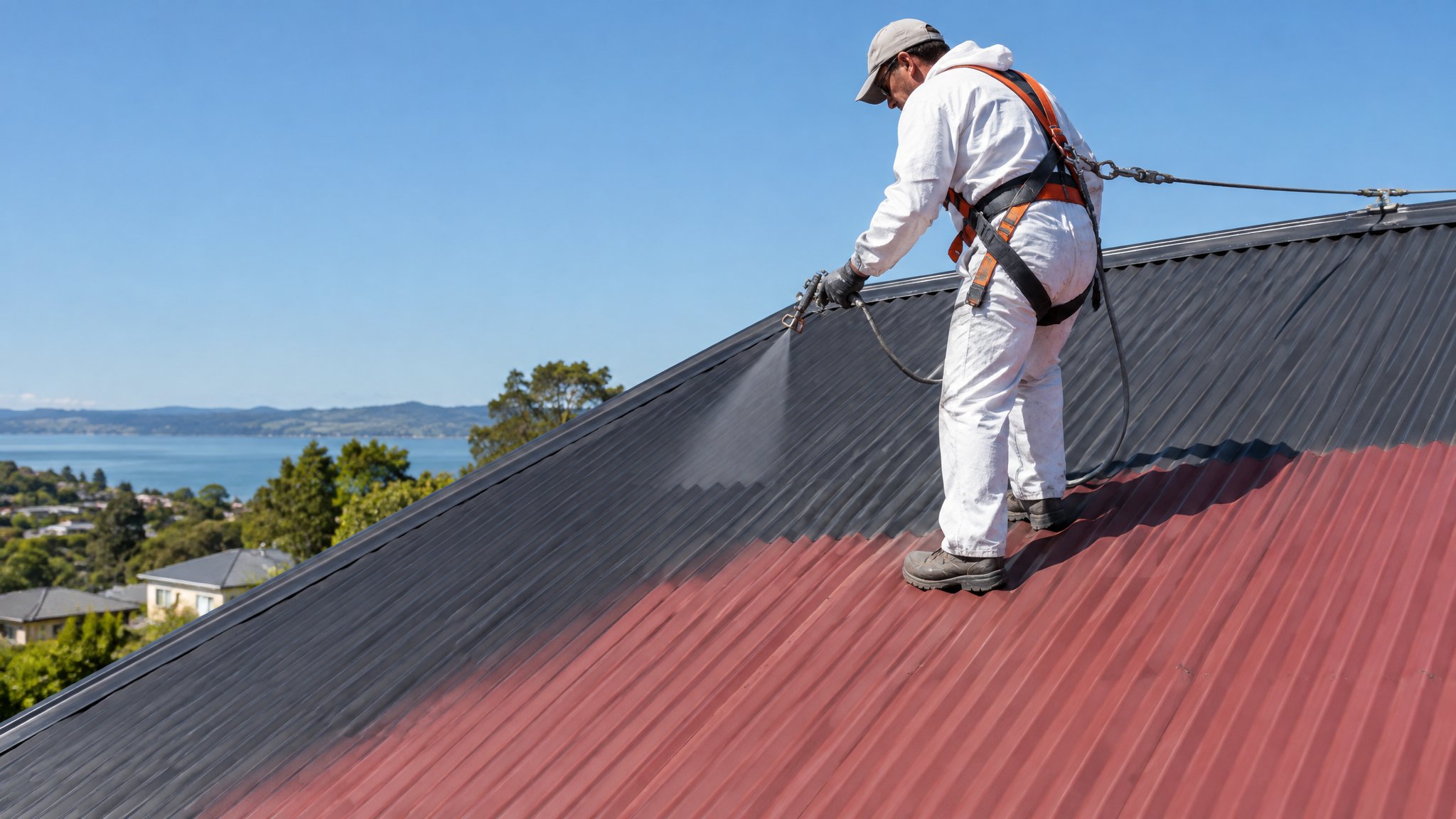
Cleaning your spray gun properly after roof painting is just as important as the spraying itself. If you leave roof paint sitting inside the gun, hose or tip, it can harden quickly and cause blockages, uneven spray patterns and unnecessary wear on your gear.
In Auckland’s mix of humid weather and changing temperatures, it pays to clean the equipment straight away and do it thoroughly. A well-cleaned spray gun will be ready for the next job and much less likely to give you trouble halfway through.
Start cleaning immediately after you finish spraying
As soon as you finish applying roof paint, stop the flow and clear the system before the coating begins to set. Don’t leave it until later in the day, because roof coatings can skin over and dry inside the gun components surprisingly fast.
First, follow the manufacturer’s instructions for your spray system. If you are using a water-based roof paint, flush the gun and hose with clean water until the rinse runs clear. If you are using a solvent-based coating, you’ll usually need the recommended cleaning solvent instead.
Keep the gun pointed safely into a waste container or appropriate rinse area while flushing. Work carefully, and make sure you are wearing gloves and eye protection, especially when using solvent-based products.
- Turn off the sprayer and release pressure before opening anything.
- Flush with the correct cleaning liquid for the paint type.
- Catch rinse water or solvent safely and dispose of it properly.
Strip the spray gun and clean every part
Once the main flush is done, take the gun apart enough to clean the parts that commonly hold paint. The nozzle, tip guard, filter, trigger area and intake components are the usual trouble spots.
Use the right brushes, a soft cloth and a small amount of cleaning solution to remove any residue. Avoid hard scraping with metal tools, because that can damage the tip or sealing surfaces and affect the spray pattern later.
If you notice dried paint in the gun body, soak the removable parts for the correct amount of time, then clean them again. Be patient here. Rushing the job often means leaving behind a tiny blockage that causes problems on the next roof.
- Remove and clean the nozzle and tip guard.
- Rinse or soak filters, then brush them clean.
- Wipe down the exterior so paint doesn’t dry on the body.
Dry, reassemble and store the gear properly
After cleaning, dry all the parts fully before reassembling. Moisture left inside the system can dilute the next mix, encourage corrosion or affect how the sprayer performs. Once everything is dry, reassemble the gun carefully and make sure seals, filters and tips are seated correctly.
Before storing the equipment, run a small amount of clean liquid through the system if the manufacturer recommends it, then relieve pressure and store the sprayer in a clean, dry place. Keep the tips and small parts together so nothing goes missing between jobs.
It’s also worth checking hoses, seals and filters for wear while you clean. If they’re damaged or blocked, replace them before the next roof painting job rather than waiting for a failure on site.
When to call Steve
If your spray gun is still blocked, leaking or spraying unevenly after cleaning, it’s a good idea to get advice from Steve, a Kiwi and a trade-qualified painter. He can help you work out whether the issue is with the gun, the coating, the pressure setup or the cleaning process itself.
For larger roof painting projects, or if you want a neat, professional result without the hassle of equipment problems, Steve can also take care of the job properly from start to finish. His experience with Auckland homes means he understands the gear, the coatings and the conditions that affect roof painting performance.
Frequently Asked Questions
Can I just rinse my spray gun with water after roof painting?
Only if you used a water-based roof paint. If the product is solvent-based, water won’t clean it properly and can leave residue that blocks the gun. Always check the coating label and clean with the recommended liquid.
How soon should I clean the spray gun after use?
Straight after finishing is best. The longer roof paint sits inside the gun, hose and tip, the harder it is to remove. Immediate cleaning helps prevent blockages and protects the equipment.
What if my spray gun still won’t spray properly after cleaning?
Check the tip, filter, seals and pressure settings first. If it is still not working correctly, contact Steve, a Kiwi and a trade-qualified painter, for practical advice or a proper roof painting service.
Need a hand with your project?
Happy to tackle some of it yourself? Great — but for anything you’d rather leave to a professional, Steve Lunjevich is a Kiwi and a trade-qualified painter with 20+ years’ experience. Call or email for honest advice or a free, no-obligation quote.