
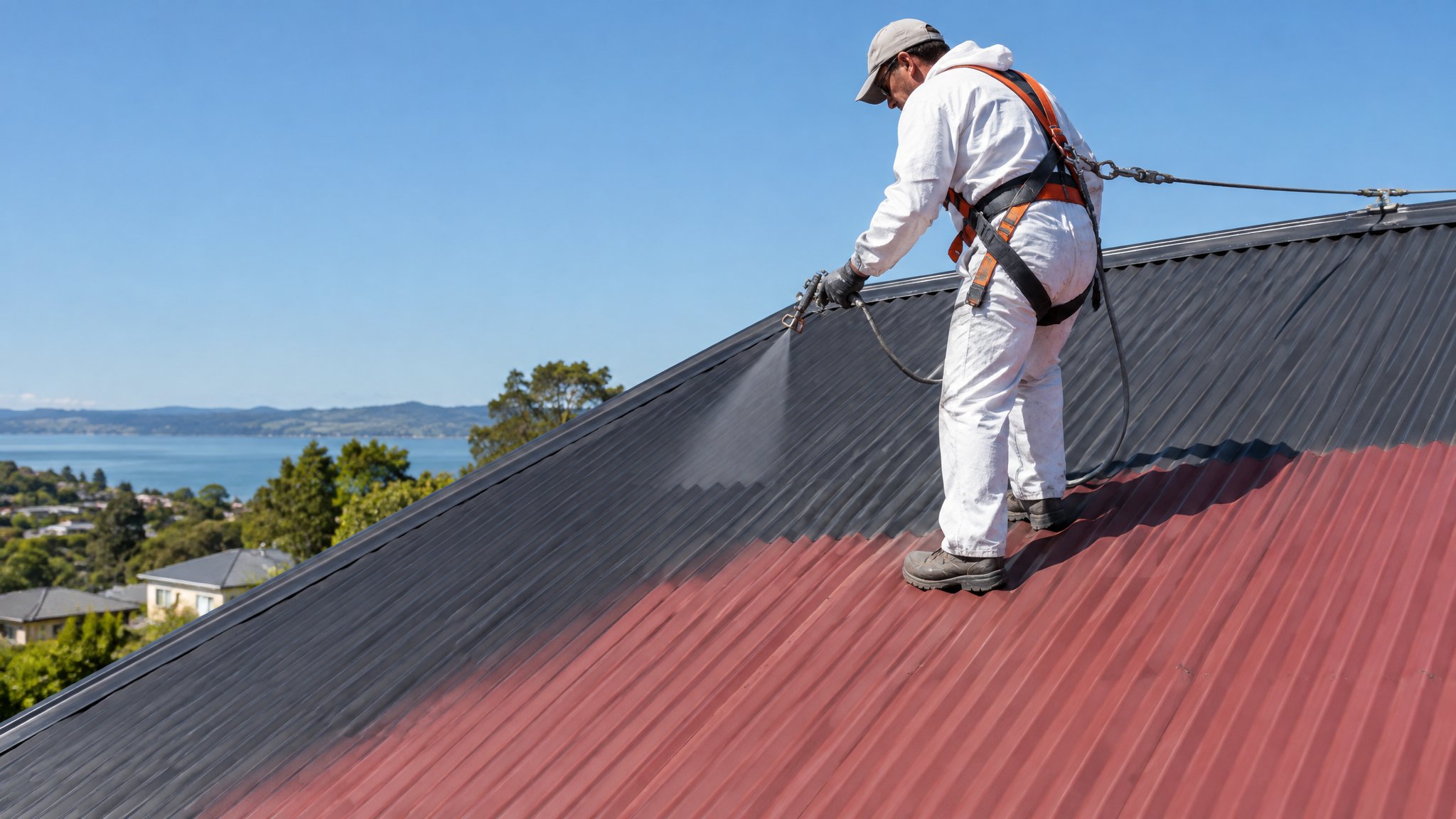
If your roof is suddenly looking patchy, weathered, or exposed after a storm, it’s tempting to grab whatever exterior paint is on hand and put it to use. In a true emergency, that might seem like a quick way to protect the surface.
But exterior house paint and proper roof coatings are not the same thing. In most cases, using house paint on a roof is only a very short-term measure, and even then it depends on the roof material, the condition of the surface, and the weather exposure.
Why exterior house paint is usually the wrong product for a roof
Exterior house paint is designed for walls, trim, and other vertical surfaces. Roofs cop far more sun, rain, ponding water, dirt, and movement than walls do, so they need a coating that can handle much harsher conditions.
A roof coating is typically made to flex with temperature changes, resist UV better, and bond to roofing materials such as metal or tile. Standard exterior paint may not adhere properly, may chalk or peel faster, and can leave you with a mess that is harder to fix later.
On a steep or exposed Auckland roof, poor adhesion can become a safety issue as well. If the coating fails, you may end up with areas that trap moisture or create slippery patches during wet weather.
- House paint is made for walls, not high-wear roof surfaces
- Roof coatings need better UV resistance and flexibility
- Poor adhesion can lead to peeling, blistering, and premature failure
If it’s an emergency, when might it be acceptable?
If you are trying to protect a small exposed area temporarily, exterior paint may be better than leaving bare material exposed for a day or two, but only as a stop-gap. It should never be treated as a proper roof paint system.
This is most likely to be a temporary measure on a small, dry, stable section after weather damage, and only if the surface can be cleaned and prepared properly first. Even then, it is not suitable for every roof type.
Do not use it if the roof is damp, oily, badly rusted, heavily flaking, or leaking. Painting over a failing surface can trap problems underneath and make the eventual repair more expensive.
- Only consider it as a very short-term emergency measure
- Never paint over wet, dirty, or loose material
- It is not a replacement for proper roof paint or repairs
Better emergency steps before you paint
If your roof has been damaged, the first priority is to stop water getting in. That may mean placing a tarp, clearing blocked gutters, or arranging a temporary repair before any painting happens.
Next, remove loose debris, check for lifted flashings, and identify whether the issue is cosmetic or structural. If there is active leaking, cracked tiles, corrosion, or failed sealant, paint alone will not solve it.
A proper roof paint job usually needs correct washing, rust treatment or priming where required, and a coating designed for the roof material. Skipping those steps may give you a finish that looks good for a few weeks but fails quickly.
When to call Steve
If you are unsure whether your roof can be safely patched, painted, or left until proper repairs are done, call Steve. He’s a Kiwi and a trade-qualified painter who can assess the surface, advise whether an emergency coating is sensible, and recommend the right long-term fix for your roof.
For homes across Auckland, especially exposed coastal and inner-city suburbs, getting the preparation and product choice right makes a big difference. Steve can help you avoid a short-lived patch-up and choose a solution that protects the roof properly.
Frequently Asked Questions
Will exterior house paint stick to a metal roof?
It may stick for a short time if the roof is clean, dry, and properly prepared, but it is not the right product for long-term performance. Metal roofs usually need roof-specific coatings and primers.
Can I use exterior paint on roof tiles in a pinch?
Only as a very temporary measure, and only if the tiles are dry and sound. It is still not ideal, because roof tiles need coatings that can handle movement, weathering, and water exposure.
What should I do first if my roof is damaged?
Stop further water entry first. Use a tarp or temporary repair if needed, then arrange a proper inspection. If you’re unsure, contact Steve, a Kiwi and a trade-qualified painter, for advice before painting anything.
Need a hand with your project?
Happy to tackle some of it yourself? Great — but for anything you’d rather leave to a professional, Steve Lunjevich is a Kiwi and a trade-qualified painter with 20+ years’ experience. Call or email for honest advice or a free, no-obligation quote.