
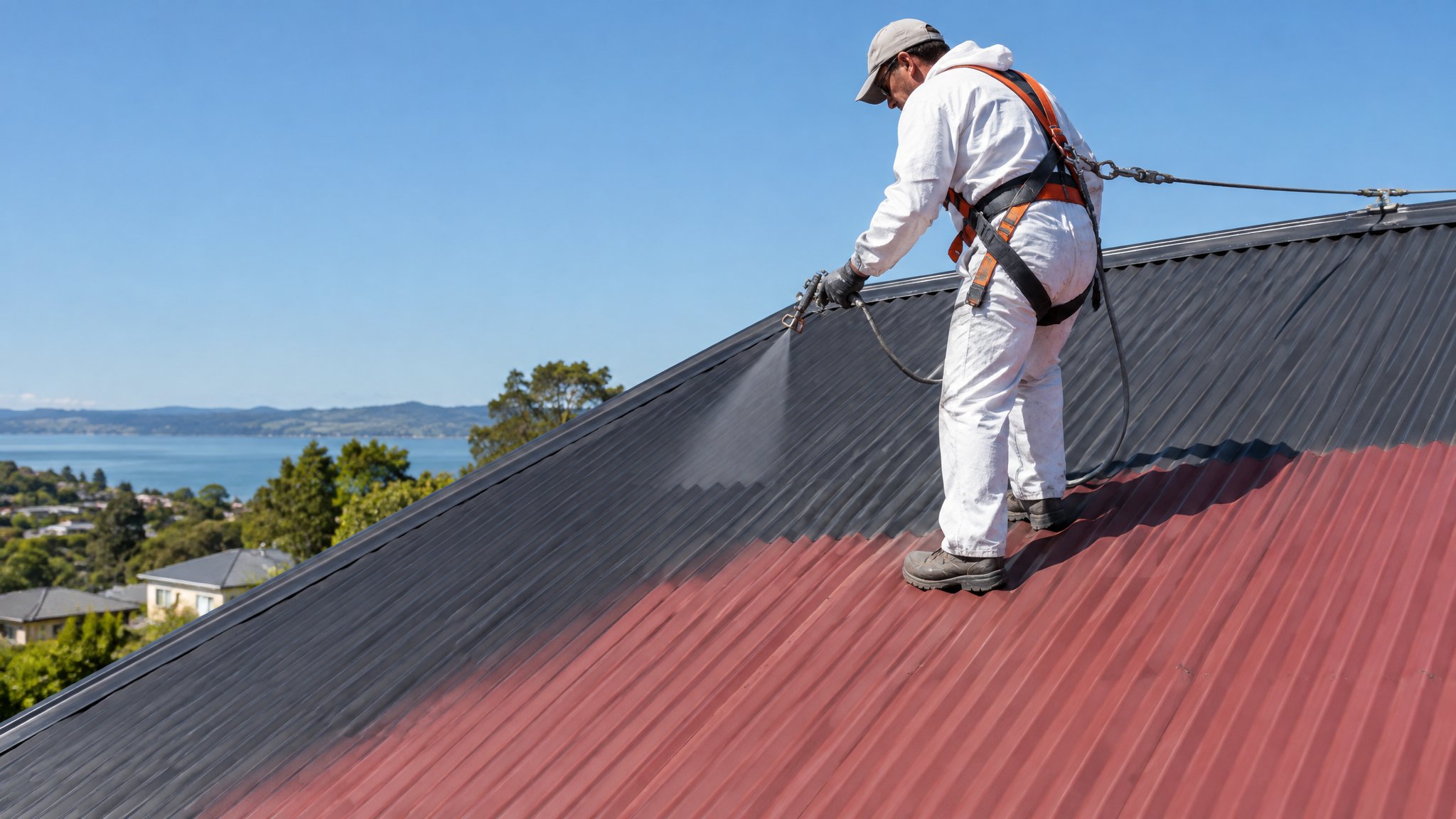
In New Zealand, a roof repaint is not something to leave until the finish is completely failing. Between strong UV, coastal air, rain, wind and general weathering, most roofs need attention sooner than many homeowners expect.
The right repainting interval depends on the roof material, the quality of the original coating, and how exposed the home is. In Auckland, especially in coastal suburbs, a roof may need repainting earlier than the same roof inland.
Typical repainting timeframes for NZ roofs
As a general guide, many roofs in New Zealand should be inspected every few years and repainted when the coating starts to show clear wear. A well-maintained roof can often go many years between repaints, but there is no one-size-fits-all answer.
Metal roofs, concrete tile roofs and decramastic roofs all age differently. Metal roofs often show fading, chalking or coating breakdown first, while concrete tile roofs may need resealing or repainting when they become porous or patchy.
A roof in a sheltered inland area may last longer between coats than one in a windy, salt-exposed Auckland suburb. Homes close to the sea, or roofs with lots of direct sun, usually need closer monitoring.
- Check the roof more often if your home is near the coast
- Look for fading, chalking, rust or peeling
- Do not wait for leaks before planning repainting
- Get an inspection if the roof is older or has had patch repairs
Signs your roof is due for repainting
The best time to repaint is before the protective coating has failed. Once the surface starts breaking down, the roof can be more vulnerable to moisture, rust, moss and further damage.
Common warning signs include a dull or uneven finish, visible rust spots, paint lifting at seams, staining, cracked coating, or bare patches where the original colour has worn away. On tiled roofs, you may also notice increased water absorption, surface roughness or moss holding moisture in shaded areas.
If your roof is starting to look tired from street level, that is often a good cue to have it assessed. What looks like a cosmetic issue can sometimes be an early sign that the weatherproofing is weakening.
What affects how long a roof paint job lasts
Several factors influence repaint timing. Preparation is a big one: a roof that was properly cleaned, repaired and primed will usually perform better than one with rushed prep. The quality of the coating system also matters, along with the skill of the applicator.
Environment plays a major role too. UV exposure, salt air, bird droppings, tree shade, lichen growth and poor drainage can all shorten the life of a roof coating. Roof pitch and material condition also affect how well the paint holds up over time.
Regular maintenance helps extend the life of the finish. That includes keeping gutters clear, removing moss and lichen early, and fixing minor damage before it spreads.
When to call Steve
If you are not sure whether your roof needs repainting now or in a few years, it is worth getting a proper opinion. Steve is a Kiwi and a trade-qualified painter, and he can assess the roof condition, explain what is cosmetic versus urgent, and recommend the right next step for your home.
For Auckland homeowners and property managers, that kind of advice can save time and prevent expensive surprises. Steve can also help you plan around weather, access, and the best coating system for your roof type, so the job is done properly and lasts as long as it should.
Frequently Asked Questions
Can I repaint a roof before it is badly worn?
Yes. In fact, repainting before the coating fails is usually the smarter approach. It is often easier and more cost-effective to restore a roof while the surface is still in reasonable condition.
Does roof colour affect how often it needs repainting?
Lighter and darker colours both weather differently, but exposure matters more than colour alone. Strong sun, coastal air and poor maintenance usually have a bigger impact than the colour choice.
Should I wash my roof instead of repainting it?
Washing can improve the look of a roof and remove moss or dirt, but it will not fix fading, chalking or failed coating. If the protective layer is worn, repainting is the better option.
Need a hand with your project?
Happy to tackle some of it yourself? Great — but for anything you’d rather leave to a professional, Steve Lunjevich is a Kiwi and a trade-qualified painter with 20+ years’ experience. Call or email for honest advice or a free, no-obligation quote.