
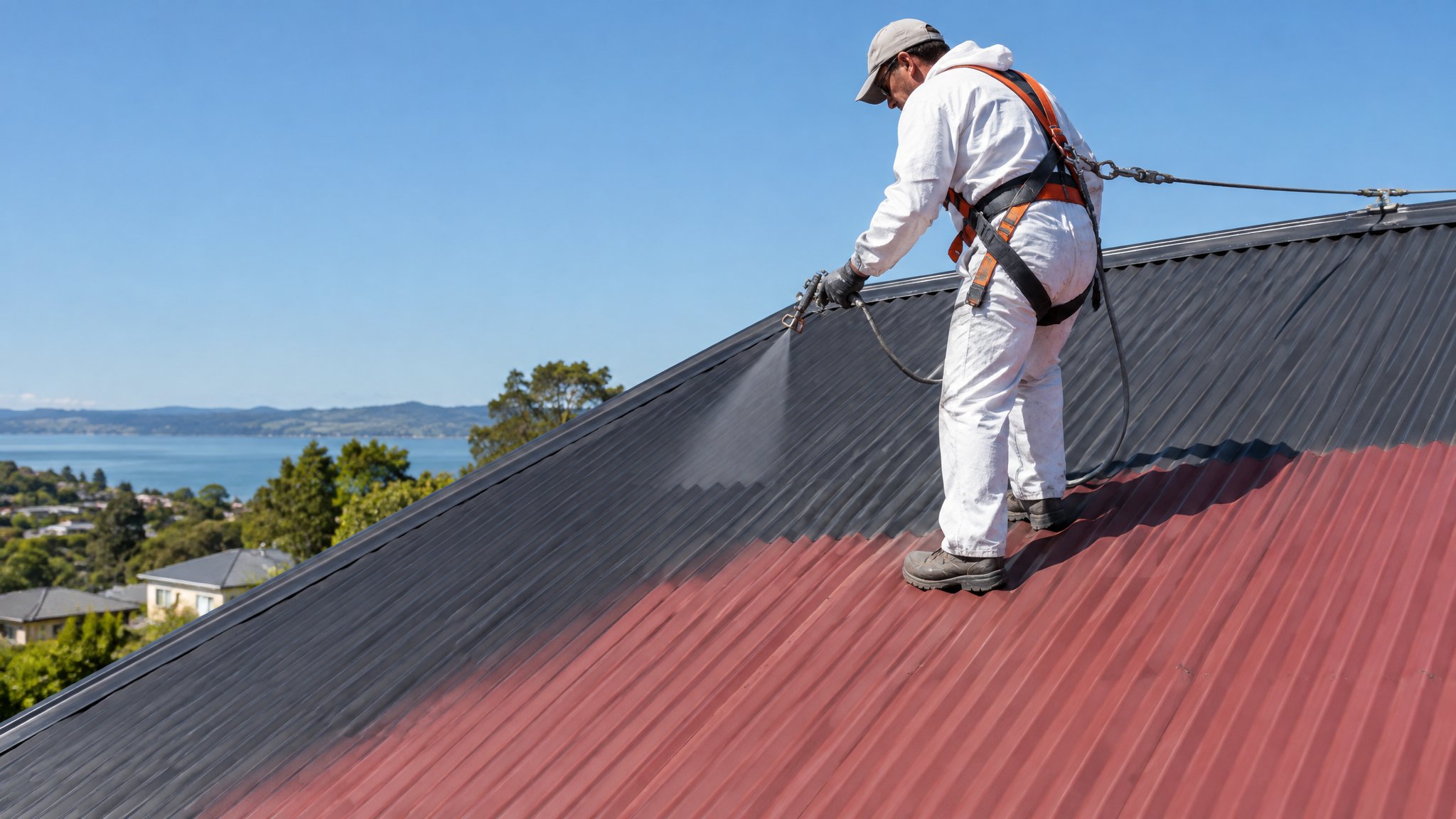
If your roof has been painted before, the biggest question is not just how it looks from the street — it is whether the coating is still sticking properly. Once roof paint starts losing adhesion, it can let in moisture, chalk off, peel, and shorten the life of the whole system.
In Auckland, with our mix of salt air, UV, rain, and humidity, old roof paint can fail in patches long before it looks obvious from the ground. Here is how to check for early signs of bonding failure and what to do next.
Start with a close visual inspection
Begin on a dry day and look over the roof from the ground, then from a safe access point if you have one. You are checking for anything that suggests the coating is no longer firmly attached to the surface underneath.
Common warning signs include peeling edges, curling flakes, blisters, hairline cracking, and areas where the surface looks powdery or chalky. Pay close attention around fasteners, laps, ridge capping, gutters, valleys, and any spots that hold water or get the most sun.
- Peeling or flaking paint
- Blistering or bubbling in the coating
- Powder on your hand after rubbing the surface
- Bare patches or exposed metal/fibre cement
- Rust staining or dark moisture marks under the paint
Do a simple tape and rub check
A basic adhesion check can tell you a lot. First, choose a small area that is already showing some wear, ideally somewhere discreet. Rub the surface firmly with your hand or a clean cloth. If a heavy amount of colour comes off as dust, that is often chalking, which means the old paint surface has started breaking down.
For a rougher check, use a small piece of painter’s tape on a clean, dry section. Press it down well, then pull it off sharply. If flakes of paint lift with it, the coating may not be bonding properly. One small test is not the full story, but if you see repeated lifting in several spots, that is a clear concern.
Keep in mind that some surface dust is normal on older roofs, but widespread transfer, flaking, or lifting usually means the old paint will need more than a quick touch-up.
Look for the causes of poor adhesion
Paint usually starts letting go because something underneath has changed. The most common causes are poor surface preparation, trapped moisture, surface contamination, and age-related breakdown from UV exposure.
On Auckland roofs, salt residue, mould, lichen, bird droppings, and oil or grime can all interfere with bonding. If the original coating was put over a damp or dirty surface, the failure may show up years later as peeling or patchy delamination.
Before any repaint, the roof should be properly cleaned, assessed for moisture issues, and spot-checked for soundness. Painting over loose or failing coating only hides the problem for a short time.
When to call Steve
If you are seeing widespread flaking, blistering, rust, or repeated tape lift, it is worth getting an experienced eye on it before you spend money on repainting. Steve is a Kiwi and a trade-qualified painter, and he can assess whether your old roof paint is still sound, whether it needs spot repairs or full preparation, and what system will suit the roof material.
That is especially important on premium Auckland homes where roof condition affects both weatherproofing and appearance. A proper inspection can save you from coating over a failing surface and help you organise the right prep work from the start.
Frequently Asked Questions
What does it mean if roof paint feels chalky?
A chalky feel usually means the top layer is breaking down from UV and weathering. Some chalking can be normal on older paint, but if it is heavy or widespread, the coating may no longer be bonding properly.
Can I paint over peeling roof paint?
No — not properly. Loose or peeling paint needs to be removed first, and the roof must be cleaned and prepared correctly. Painting over failure will usually lead to the same problem coming back.
Is a few small flakes a major problem?
Not always, but small flakes can be the first sign of a bigger adhesion issue. If you notice the problem in multiple areas, or if flakes keep appearing after cleaning, get it checked before repainting.
Need a hand with your project?
Happy to tackle some of it yourself? Great — but for anything you’d rather leave to a professional, Steve Lunjevich is a Kiwi and a trade-qualified painter with 20+ years’ experience. Call or email for honest advice or a free, no-obligation quote.