
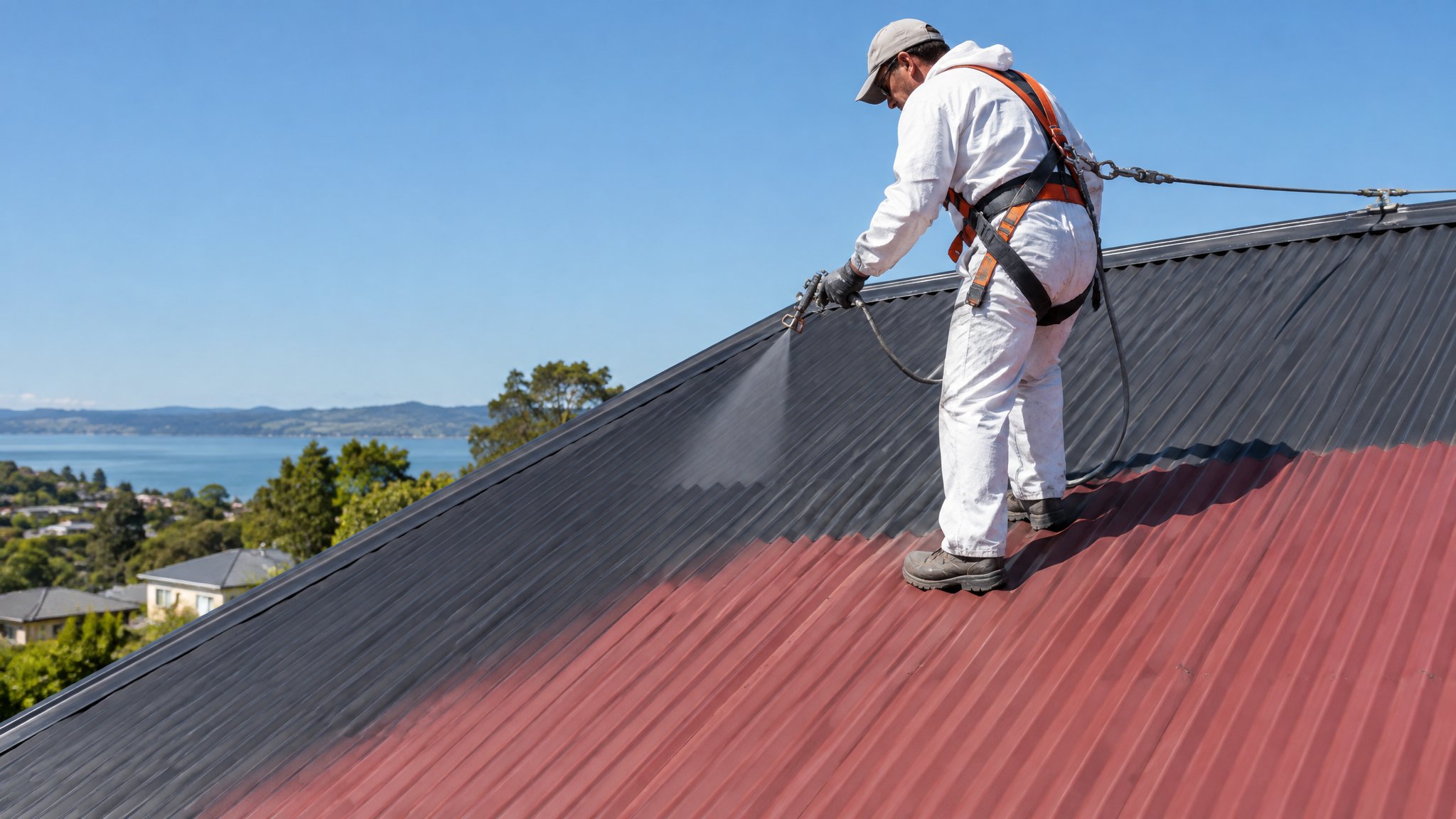
Yes, some homeowners do paint a fibrous cement roof themselves — but it is not a simple weekend job. It involves height safety, careful preparation, and the right coating system to make sure the finish lasts.
If the roof is old, weathered, leaking, or contains asbestos, the answer changes quickly. In those cases, it is usually best to get advice from Steve, a Kiwi and a trade-qualified painter, before you start.
What makes fibrous cement roofs tricky to paint?
Fibrous cement roofs can look straightforward from the ground, but they often hold years of dirt, moss, lichen, flaking paint and chalky residue. If any of that is left behind, the new coating will struggle to bond properly.
The material itself can also be brittle, especially on older homes. Walking on it without the right experience can crack sheets or damage fixings, which may lead to leaks later on.
Another major concern is asbestos. Many older fibrous cement products in New Zealand contain asbestos, so before any work begins you need to know exactly what you are dealing with. If there is any doubt, stop and get it checked.
- Check the age and condition of the roof before doing anything
- Never assume old fibrous cement is safe to sand or cut
- Do not paint over loose, dusty or damp surfaces
- Use only roof coatings suited to the existing roof material
Can a homeowner do it safely and properly?
In some cases, yes — but only if you have the right equipment, a steady understanding of roof safety, and the confidence to carry out thorough prep. That usually means safe access, fall protection, suitable cleaning gear, and weather conditions that allow the roof to dry properly.
The preparation is often the most important part. A proper job may include moss and lichen treatment, low-pressure washing, repairs to cracks or fixings, spot priming, and then applying the correct roof coating in the right film thickness.
If you rush the prep, paint a damp roof, or use the wrong product, the coating can peel, blister, or wear out much faster than expected. That can make the job more expensive in the long run.
For many Auckland homeowners, the bigger issue is not whether they can hold a paintbrush, but whether they can do the roof safely and achieve a durable result.
Signs it is better not to DIY
There are times when painting the roof yourself is simply not worth the risk. If the roof is steep, high, fragile, heavily weathered, or possibly asbestos-containing, it is far safer to get professional help.
You should also avoid DIY if there is visible movement in the sheets, existing leaks, significant rust on fasteners, or any signs of structural weakness. These are problems that should be assessed before coating anything.
Even if the roof looks fine from below, a professional inspection can reveal hidden issues that affect whether painting is suitable at all.
- Possible asbestos-containing roof
- Steep or hard-to-access roof
- Cracks, leaks or loose sheets
- Heavy moss, flaking coating or widespread chalking
- No proper roof safety equipment
When to call Steve
If you are unsure about the roof material, the condition of the sheets, or the right preparation method, contact Steve, a Kiwi and a trade-qualified painter, for practical advice before you begin. He can help you work out whether the roof is suitable for painting, what needs repairing first, and whether DIY is a sensible option.
For many Auckland homes, especially older properties, getting the roof assessed first saves time, reduces risk, and gives you a better finish that lasts. If you want a safe, durable result without the stress, Steve can take care of the job properly.
Frequently Asked Questions
Do I need to prime a fibrous cement roof before painting?
Often, yes — but it depends on the existing coating, the roof’s condition, and the product system being used. Proper cleaning and surface preparation are just as important as priming.
Can I use water blasting on a fibrous cement roof?
Only with care and at the right pressure. Too much pressure can damage the roof surface or force water where it should not go. Low-pressure cleaning is usually safer.
How do I know if my fibrous cement roof contains asbestos?
If the roof is older, assume it may contain asbestos until tested or confirmed otherwise. Do not sand, cut, drill, or disturb it without proper advice.
Need a hand with your project?
Happy to tackle some of it yourself? Great — but for anything you’d rather leave to a professional, Steve Lunjevich is a Kiwi and a trade-qualified painter with 20+ years’ experience. Call or email for honest advice or a free, no-obligation quote.