
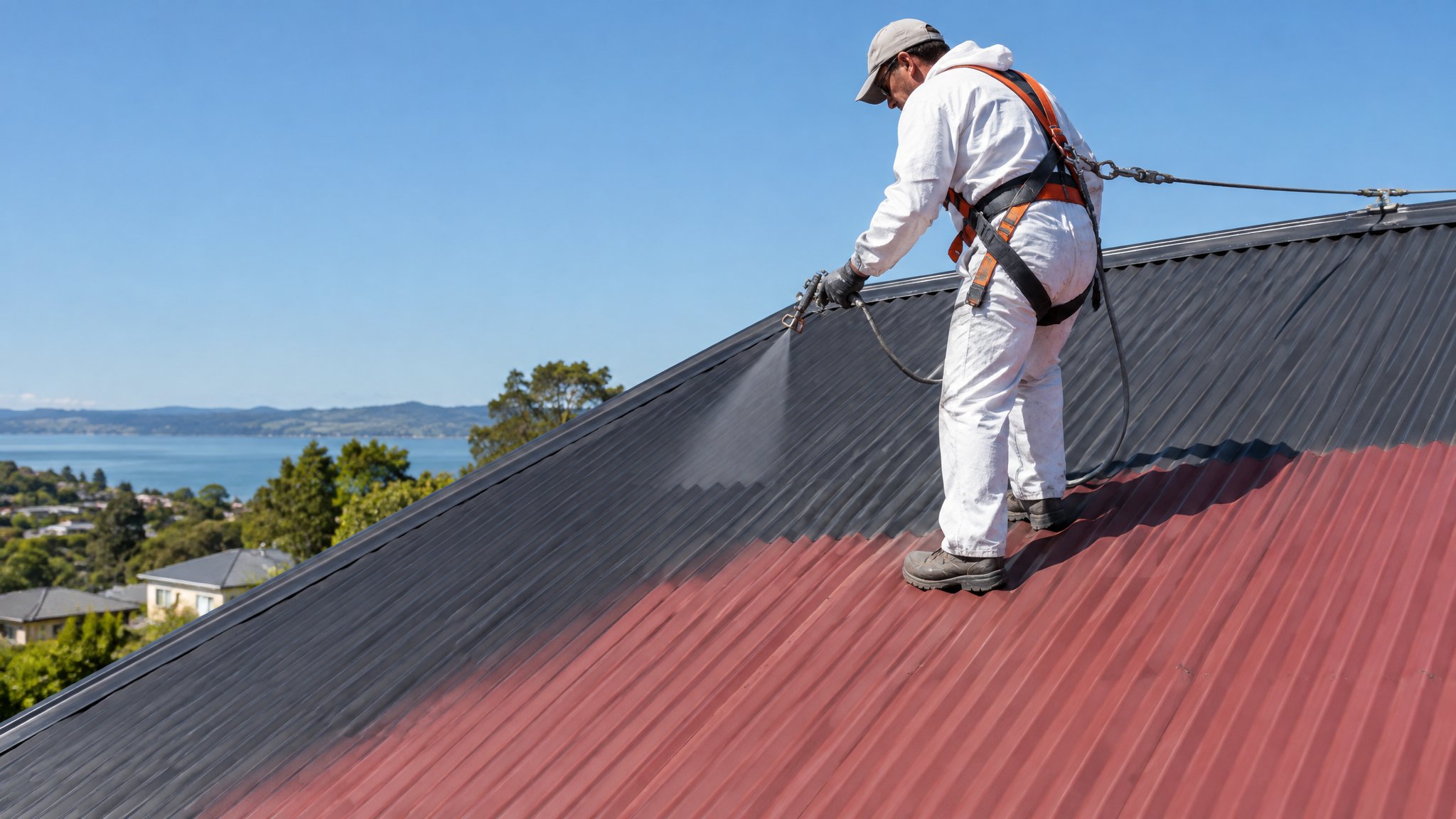
A well-painted roof does more than improve street appeal. It helps protect your home from Auckland’s rain, sun, salt air and humidity. But when roof painting goes wrong, the signs often show up long before the whole roof starts to fail.
If you know what to look for, you can catch problems early and avoid bigger repair work later. Here are the most common roof painter problems, plus the warning signs homeowners and property managers should keep an eye on.
Poor surface preparation
Most roof painting problems start with poor preparation. If the roof is not properly cleaned, treated and primed, the paint will struggle to bond. Dirt, moss, lichen, chalky old coatings and rust all get in the way of a durable finish.
Early signs are often subtle at first. You might notice patchy sheen, rough areas, peeling around fixings, or paint that looks as if it is sitting on top of the surface rather than gripping it.
On metal roofs, poor prep can also leave rust spots showing through sooner than expected. On tile roofs, you may see flaking paint in valleys, around ridge caps, or where water runs more heavily.
- patchy or uneven colour
- paint lifting at edges or overlaps
- visible rust stains or chalking
- moss and grime trapped under the coating
Wrong products or poor application
Another common problem is using the wrong system for the roof type, or applying it in the wrong conditions. A roof coating needs to suit the material, the existing finish and Auckland’s weather exposure. Cheap or unsuitable paint may fade quickly, go brittle, or fail to seal properly.
Application issues can be just as damaging. If the coating is too thin, it may wear out early. If it is too thick, it can crack or lose flexibility. Spraying without proper back-rolling, or painting in damp or windy conditions, can also affect adhesion and appearance.
Look for early warning signs such as lap marks, uneven coverage, overspray, or a finish that looks powdery soon after the job is complete. A roof that seems fine from the driveway may still have thin spots or missed sections up close.
Weather damage and ongoing maintenance issues
If these issues are left too long, they can turn into leaks, corrosion or larger recoating jobs. Regular roof checks after heavy rain and during annual maintenance can save a lot of trouble.
- fading that is more obvious on north-facing slopes
- water staining after rain
- rust around screws, nails or joins
- moss or lichen returning quickly after cleaning
- small cracks or chips near ridges and edges
When to call Steve
If you have noticed peeling paint, rust spots, patchy coverage or signs of moisture getting under the coating, it is worth getting advice early. Steve is a Kiwi and a trade-qualified painter, and he can assess whether your roof needs cleaning, spot repairs, recoating or a fuller repainting system.
For Auckland homes, early intervention is usually the smartest move. It helps protect the roof structure, keeps the property looking sharp, and can prevent a small coating issue becoming a larger maintenance problem. If you are unsure what you are seeing, contact Steve for practical advice before the damage spreads.
Frequently Asked Questions
How can I tell if roof paint is failing?
Look for peeling, fading, chalky residue, rust spots, patchy sheen and paint lifting around edges, screws or ridges.
Does Auckland weather make roof paint problems worse?
Yes. Sun, rain, humidity and salt air can all speed up wear, especially on roofs with poor prep or ongoing maintenance issues.
Can I just repaint over a failing roof coating?
Not usually. The roof needs proper cleaning, prep and repair first, otherwise the new coating may fail early as well.
Need a hand with your project?
Happy to tackle some of it yourself? Great — but for anything you’d rather leave to a professional, Steve Lunjevich is a Kiwi and a trade-qualified painter with 20+ years’ experience. Call or email for honest advice or a free, no-obligation quote.