
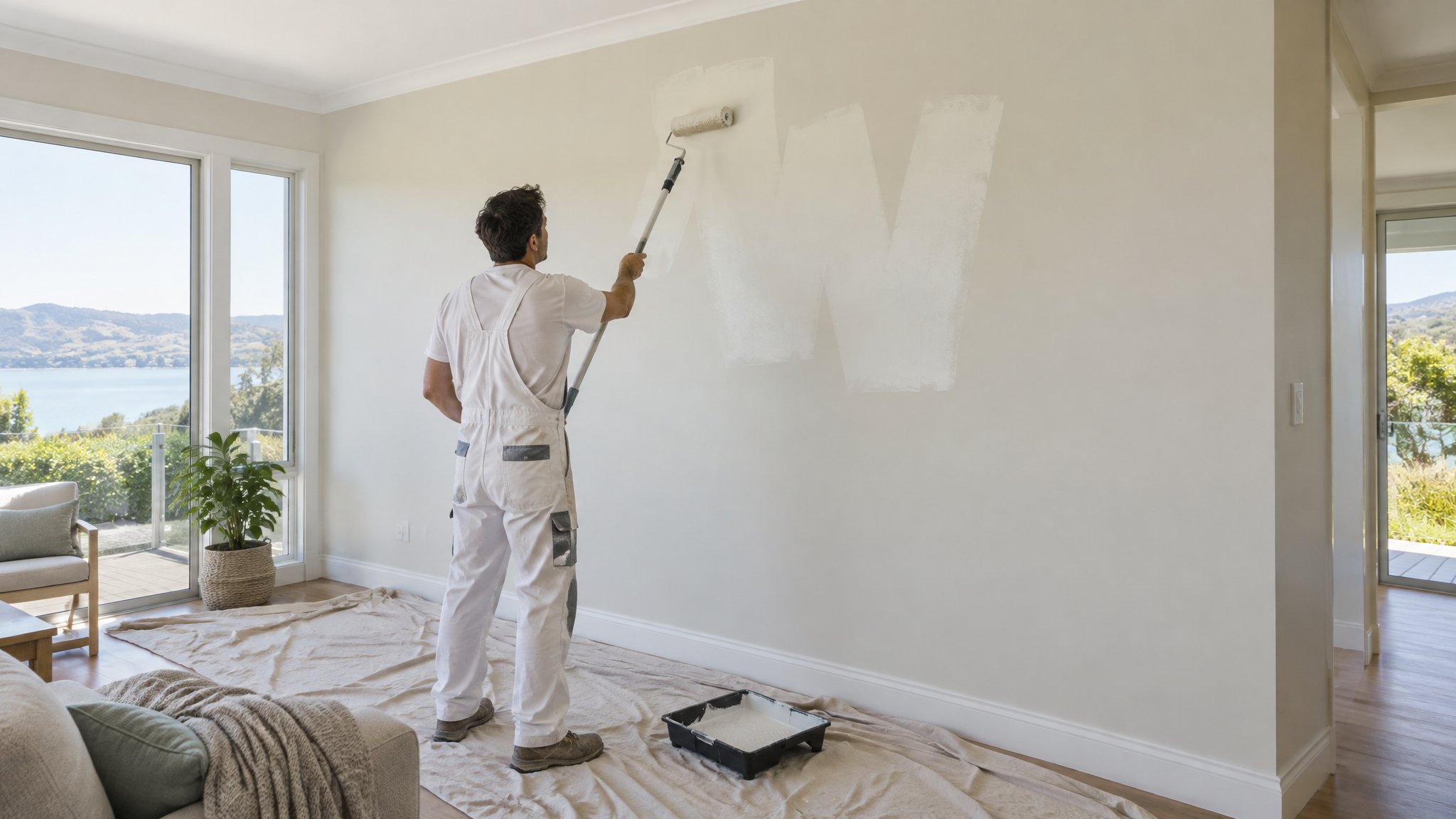
Yes, you can sometimes use leftover interior paint on a garden shed — but only in the right situation. If the shed is fully sheltered and you understand the limits of the paint, it may be a handy way to use up spare product.
In most Auckland conditions, though, interior paint is not the best choice for an exterior shed. The weather, UV, moisture and timber movement usually mean it won’t last nearly as well as a proper exterior coating.
What happens if you use interior paint outside
Interior paint is made for walls and ceilings inside the home, where it is protected from rain, sun and daily temperature swings. Outside, a shed has to deal with all of those conditions, especially in Auckland where coastal air, humidity and UV can be tough on coatings.
If you use leftover interior paint on an outdoor shed, it may start to fade, chalk, peel or crack much sooner than an exterior paint. It can also struggle on bare timber, rough weatherboards or older shed cladding that moves with the seasons.
That does not mean it will fail immediately. On a very sheltered shed, or on a small section such as an internal workshop wall inside the shed, it can be perfectly useful. But for the outside face of the shed, it is usually a short-term fix rather than a proper solution.
- Best for: sheltered, low-exposure areas
- Not ideal for: direct rain, full sun, or bare timber outside
- Expect shorter life than exterior paint
How to tell if the leftover paint is worth using
Before you paint, check what type of paint you have. Water-based acrylics are more flexible and easier to use than old oil-based products, but even then they are still designed for interiors unless the label says otherwise. If the tin has no label, test a small area first and watch how it dries.
Also look at the condition of the paint. If it has gone lumpy, smells off, has a skin you cannot mix back in, or has separated badly, it is better not to use it. Old paint can go on patchy and may not bond properly, especially on a shed that has dust, mildew or worn timber.
Prep matters as much as the paint itself. Clean the surface, remove loose material, sand lightly, and use the right primer if the shed is bare or weathered. Without good prep, even good paint can let you down.
- Check the label for interior-only use
- Stir and strain old paint before using
- Reject paint that smells bad, is very thick, or won’t remix
- Prime bare or weathered surfaces first
Better options for a garden shed in Auckland
If the shed is on the outside of the house, a proper exterior acrylic or specialist timber coating is usually the smarter choice. These products are made to handle weather exposure, which means better colour retention, flexibility and durability.
If you are trying to match the shed to the house, you may still be able to use your leftover interior colour as a reference. A paint supplier can often help colour-match it into an exterior product so the shed looks coordinated without sacrificing performance.
For sheds near the coast, in damp spots, or under strong sun, choosing the right exterior system from the start usually saves time and money in the long run.
When to call Steve
If you are unsure whether your leftover paint is suitable, it is worth getting advice before you start. Steve is a Kiwi and a trade-qualified painter, and he can tell you whether the paint will work, what prep is needed, and whether a different coating would be better for your shed and your Auckland property.
He can also help if the shed has peeling paint, weathered timber, mould, or a tricky surface that needs more than a quick coat. A proper assessment at the start can save you from repainting the job again sooner than you would like.
Frequently Asked Questions
Can I use leftover interior wall paint on an outdoor shed?
Sometimes, but it is usually only suitable for sheltered areas. For the outside of a shed, exterior paint is the better long-term choice.
Will interior paint peel off a shed straight away?
Not always. But it is more likely to fade, chalk, peel or crack earlier than exterior paint, especially in sun, rain and damp conditions.
Can I use old paint if the tin is a few years old?
Maybe, if it has stored well and still mixes properly. If it has gone bad, smells wrong or has badly separated, do not use it.
Need a hand with your project?
Happy to tackle some of it yourself? Great — but for anything you’d rather leave to a professional, Steve Lunjevich is a Kiwi and a trade-qualified painter with 20+ years’ experience. Call or email for honest advice or a free, no-obligation quote.