
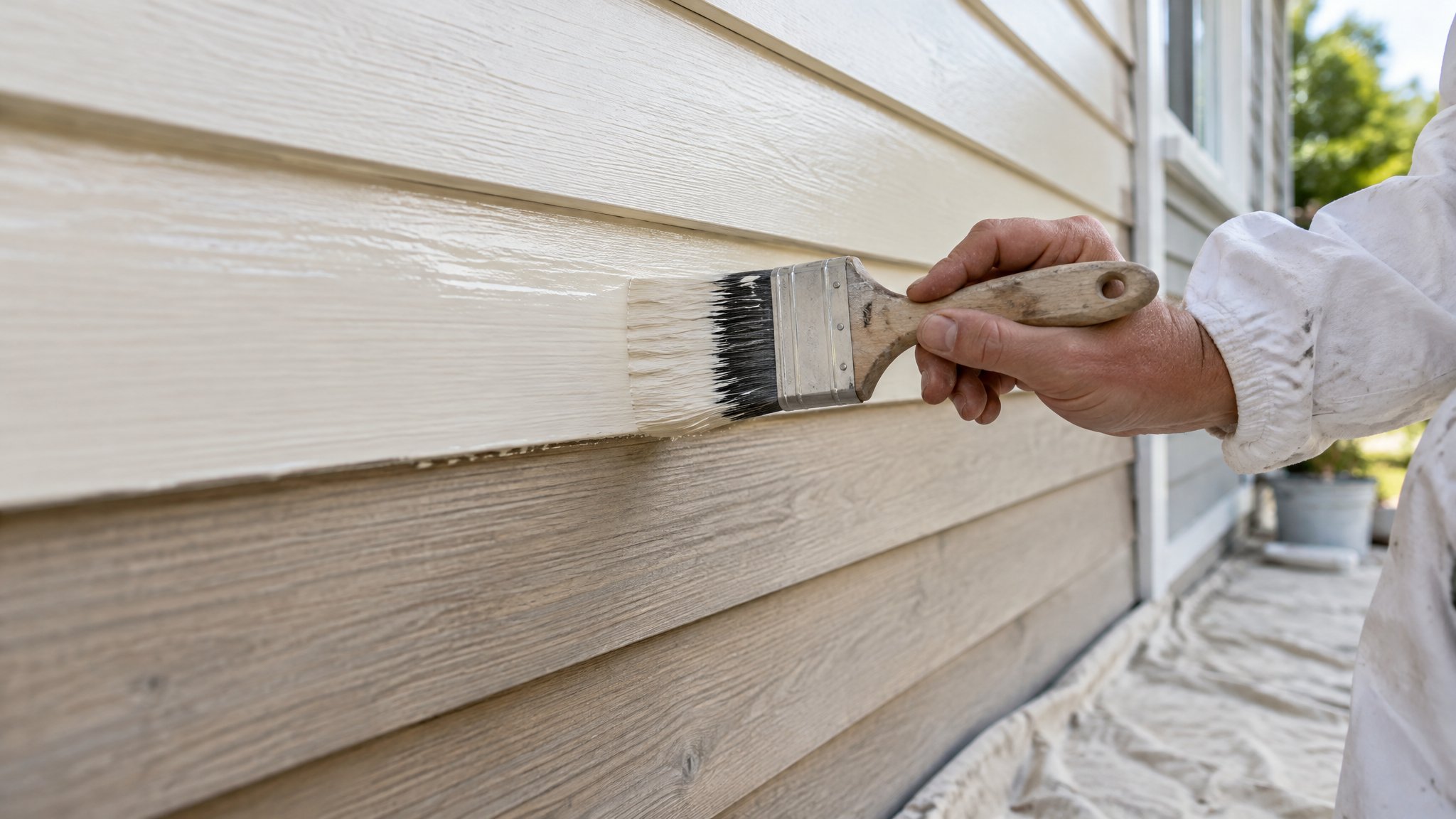
If you’re looking at a tired timber deck and wondering whether you can just use exterior paint instead of deck oil, the short answer is: sometimes, but it’s usually not the best option.
For most timber decks in Auckland, deck oil or a purpose-made decking coating performs better than standard exterior paint. The right choice depends on the timber, the deck’s condition, how much weather it copes with, and the look you want.
Exterior paint vs deck oil: what’s the difference?
Exterior paint forms a film on top of the timber. It can give a neat, uniform finish and a broader colour range, but it also creates a harder surface layer. On a deck, that layer has to deal with foot traffic, UV, moisture, and timber movement.
Deck oil penetrates into the timber rather than sitting heavily on top. That usually makes it more forgiving on outdoor timber that expands, contracts, and gets wet and dry over and over again in Auckland’s weather.
In simple terms, paint tends to be better for a coated look on stable timber surfaces, while oil is often better for decks where flexibility, ease of maintenance, and slip resistance matter.
- Exterior paint: more decorative, harder film, can chip or peel on decks
- Deck oil: penetrates timber, easier to refresh, usually better for weathered decking
- Deck-specific coatings: sometimes a middle ground, but product choice matters
Can exterior paint work on a timber deck?
Yes, exterior paint can be used on some timber decks, but only if the product is suitable for decking and the timber is prepared properly. A standard house paint is not a good substitute for deck oil or a deck-specific coating.
The biggest problem is wear. Decks cop constant movement, UV exposure, rain, and dirt. If the paint is too rigid, or if moisture is trapped in the timber, it can blister, crack, or peel. Once that happens, repairs are more time-consuming than refreshing an oil finish.
Paint can also change the slip behaviour of the deck. A smooth painted surface may become slick when wet, especially in shaded areas or where leaves, sunscreen, and grime build up. That’s worth thinking about for steps, poolside areas, and north-facing decks that get a lot of sun and rain.
If the deck is already painted, re-coating with the same compatible system may be fine. But switching from oil to paint, or paint to oil, usually needs careful prep and sometimes complete stripping or sanding.
- Avoid using standard exterior wall paint on decking
- Check whether the timber is clean, dry, and sound before coating
- Always confirm compatibility with the existing finish first
When deck oil is usually the better choice
For many Auckland homes, deck oil is the safer and more practical option. It suits timber decks that move a lot, have aged naturally, or need regular maintenance without a full repaint every time.
Oil is often the better pick if you want to preserve the natural timber grain, keep the deck looking more organic, and make future upkeep simpler. It can also be a good choice for decks that have already weathered unevenly, because it tends to blend into the timber rather than sit on top of it.
That said, oil still needs proper preparation. Timber should be cleaned, mould treated if needed, and allowed to dry fully. If the deck has failed coatings, greyed timber, or previous product build-up, the surface may need sanding or stripping before any new coating goes on.
- Best for many weather-exposed Auckland decks
- Easier to maintain than a hard paint film
- Better for showing timber grain and natural colour
When to call Steve
If you’re not sure whether your deck should be painted, oiled, or stripped back first, it’s worth getting advice before you start. The wrong product can cost you more in labour and frustration later, especially on premium timber or older decks with mixed finishes.
Steve is a Kiwi and a trade-qualified painter, and he can assess the timber, check what coating is already there, and recommend the right system for your deck and your Auckland conditions. That might mean exterior paint, a deck oil, or a more suitable decking coating depending on the surface and how you use the space.
For a clean, durable result, it’s best to contact Steve early, before buying products or sanding back the whole deck. A quick professional assessment can save time and help the finish last much longer.
Frequently Asked Questions
Should I get a professional to do this?
Yes — the best move is a quick chat with Steve, a Kiwi and a trade-qualified painter. He can look at your situation, give honest advice and a clear, no-obligation quote across Auckland.
Need a hand with your project?
Happy to tackle some of it yourself? Great — but for anything you’d rather leave to a professional, Steve Lunjevich is a Kiwi and a trade-qualified painter with 20+ years’ experience. Call or email for honest advice or a free, no-obligation quote.