
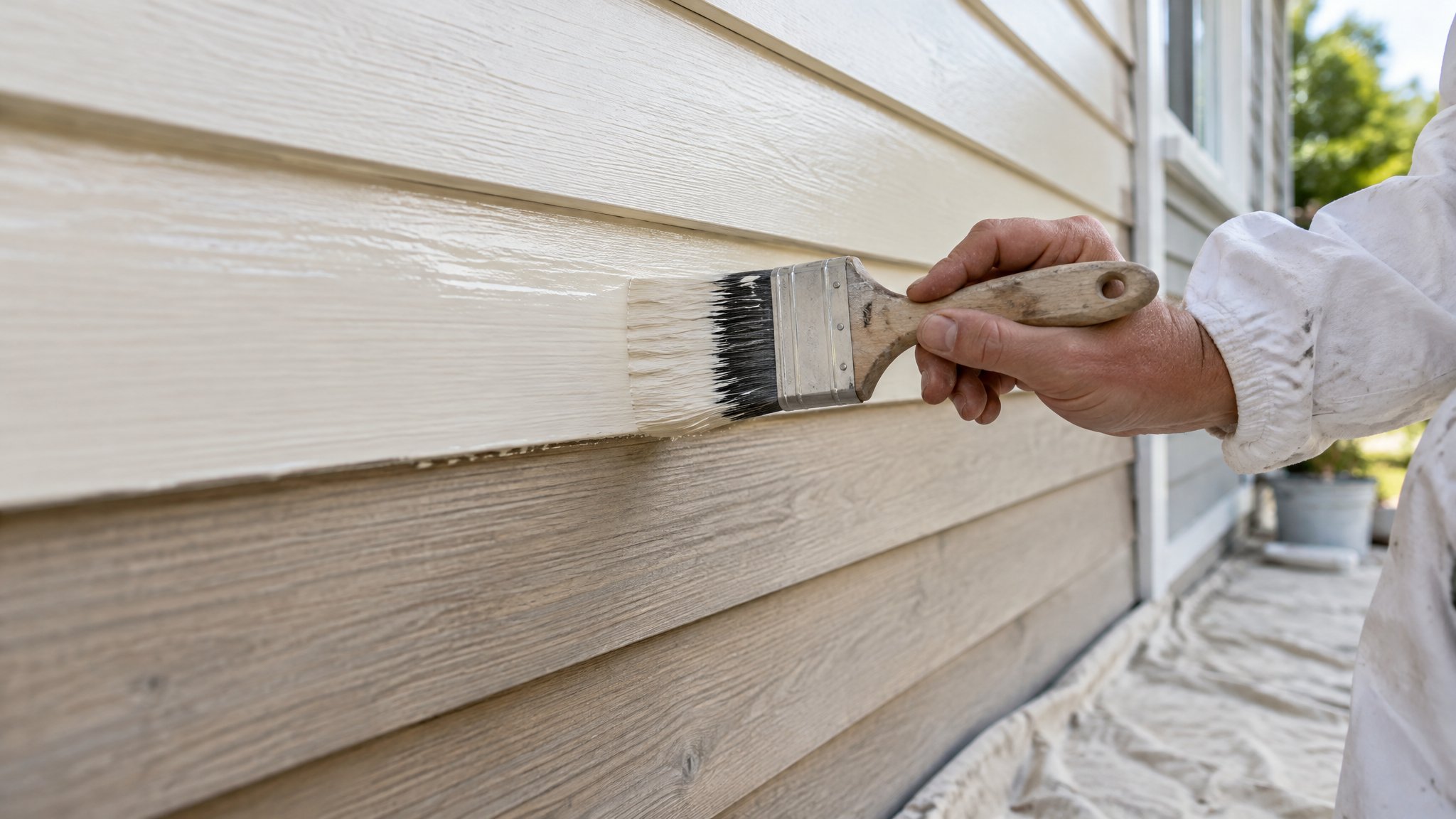
Painting brand-new exterior timber is a bit different from repainting an existing surface. Fresh timber is porous, can have mill glaze or tannins, and often moves a little as it seasons in the weather. If you skip the right prep, the paint may peel, stain through, or fail too early.
The good news is that with the right preparation and a proper primer system, unpainted timber can look sharp and last well in Auckland conditions. Here’s how to do it properly.
Start with dry, clean, sound timber
Before you reach for the paintbrush, check that the timber is dry enough and free from dust, dirt, oils, and construction residue. Freshly installed timber often has surface contamination from handling or weather exposure, and that can stop primer from bonding properly.
Look closely for defects such as rough edges, raised grain, nail holes, splits, or resin bleed. Sand back any sharp edges so they hold paint better and don’t wear through as quickly.
If the timber has been sitting outside for a while, wash it down gently and let it dry fully. Never paint over damp timber, as moisture can get trapped and cause blistering later.
- Sand lightly to open up the surface and remove mill glaze
- Remove all dust before priming
- Make sure timber is fully dry
- Seal knots, resin pockets, and end grain where needed
Prime it properly before topcoating
Unpainted exterior timber should always be primed before the topcoat goes on. Primer helps the paint grip, evens out suction, and protects the timber from moisture. On some timbers, especially those with tannins, the right primer also helps prevent staining from bleeding through the finish coat.
Use a primer suited to the timber type and the final paint system. Some exterior timbers need an oil-based sealer or stain-blocking primer, while others do well with a high-quality acrylic primer. End grain deserves extra attention because it soaks up moisture faster than the face of the board.
Apply primer evenly and don’t stretch it too thin. Pay attention to corners, rebates, joins, and cut ends. If the timber is very absorbent, a second coat of primer may be needed on those spots.
Topcoat for New Zealand weather
Once the primer has cured, finish with two quality exterior topcoats designed for timber. In Auckland, paintwork has to handle strong UV, sudden rain, salt air in coastal suburbs, and regular humidity shifts. A durable acrylic exterior paint is usually the go-to for most timber surfaces.
Brush and roller application works well on detailed timber because it helps push paint into the grain and around edges. Keep an eye on the weather forecast and paint within the product’s recommended temperature and drying range.
A few simple habits help the finish last longer:
Let each coat dry fully before applying the next
Seal all cut ends and exposed joints
Avoid painting in direct scorching sun or right before rain
Re-check caulking and gaps after the timber has settled
When to call Steve
If you’re unsure about the timber species, the right primer, or whether the wood has weathered enough to paint, it’s worth getting advice before you start. New exterior timber can look straightforward, but getting the system wrong can lead to adhesion problems, tannin bleed, and early failure.
Steve is a Kiwi and a trade-qualified painter, and he can assess the timber, recommend the right prep and coating system, and make sure the finish is built to suit Auckland’s conditions. If you want the job done properly the first time, contact Steve for advice or a quote.
Frequently Asked Questions
Can I paint exterior timber as soon as it is installed?
Sometimes, but it depends on the timber type and moisture level. Many new exterior timbers need time to dry and stabilise first. If you paint too early, moisture can cause blistering or peeling later.
Do I need to sand new timber before painting?
Usually yes. A light sand helps remove mill glaze, smooth rough areas, and improve adhesion. Don’t over-sand the timber, just prepare the surface so the primer can bond well.
What paint should I use on unpainted exterior timber?
Use a quality exterior paint system with the correct primer for the timber type. In most cases, that means a suitable primer first, followed by two durable exterior topcoats designed for New Zealand conditions.
Need a hand with your project?
Happy to tackle some of it yourself? Great — but for anything you’d rather leave to a professional, Steve Lunjevich is a Kiwi and a trade-qualified painter with 20+ years’ experience. Call or email for honest advice or a free, no-obligation quote.