
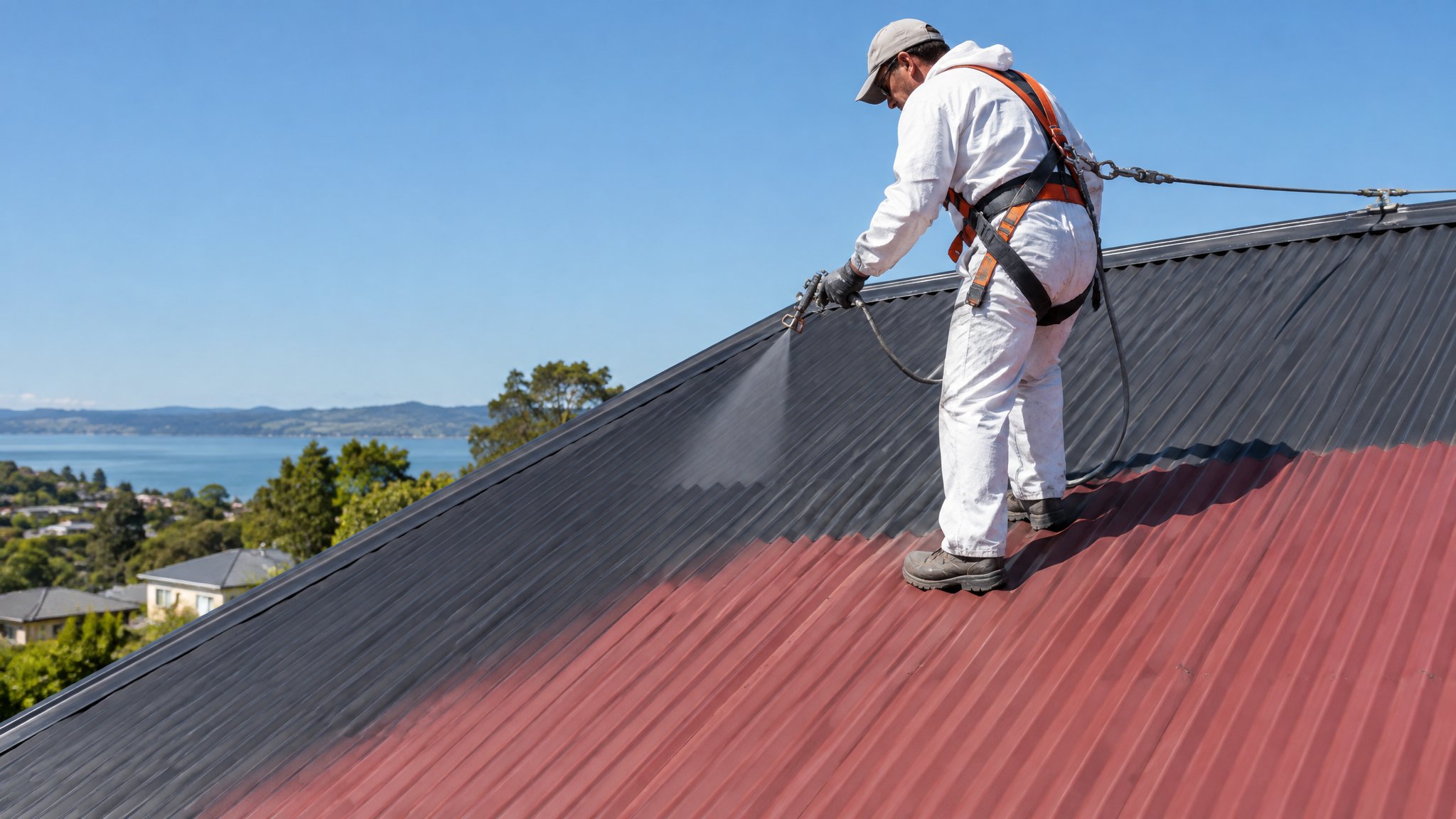
Short answer: no, you generally should not paint a roof during light drizzle, even if it looks dry enough at first glance. Roof coatings need a properly dry surface and the right weather window to bond and cure as intended.
In Auckland, weather can shift quickly, which makes roof painting a job where timing matters. A roof may look dry from the ground, but lingering moisture, fine drizzle, or high humidity can still cause adhesion problems and a poor finish.
Why light drizzle is still a problem
Even a misty drizzle can leave tiny beads of water on roofing material, flashings, ridge capping and hidden low points. If paint is applied over that moisture, it may not stick properly and can trap water underneath the coating.
That can lead to peeling, blistering, patchy coverage and a shorter coating life. On metal roofs, moisture can also affect surface preparation, especially if the roof has been cleaned recently and hasn’t fully dried.
The issue is not just the rain itself. Cool temperatures, cloudy conditions and rising humidity all slow drying and curing, so a roof can seem ready while still being unsafe to coat.
- Moisture reduces adhesion
- Paint can blister or peel later
- Finish may look uneven
- Coating life can be shortened
What to check before painting a roof
Before starting, the roof should be completely dry to the touch and dry in all seams, overlaps, fixings and joins. If there has been overnight rain, early morning dew or recent washing, the roof may need longer than it first appears.
Check the manufacturer’s product instructions as well. Many roof paints have a minimum surface temperature, humidity range and drying window before rain. Those instructions are there for a reason, and they matter just as much as how the roof looks.
As a practical rule, if the forecast shows possible drizzle, showers or heavy dew later in the day, it is usually better to delay the job. Roof painting is not forgiving when the weather turns.
- Inspect hidden spots, not just the open roof area
- Use product data sheets and weather windows
- Allow extra drying time after cleaning or rain
- Avoid painting if rain or dew is likely soon
What can go wrong if you paint anyway
Painting in light drizzle can create problems that are expensive to fix later. The coating may look acceptable at first, but failures often show up weeks or months down the track as the paint starts to lift or chalk prematurely.
If you are dealing with an older roof, coating failure can also expose existing corrosion or worn surfaces. That means you may end up paying for extra preparation, spot repairs and repainting much sooner than planned.
For premium homes in suburbs like Remuera, Parnell or Devonport, the visual result matters as much as the protection. An uneven roof finish is hard to hide and can affect the overall appearance of the property.
When to call Steve
If you are unsure whether your roof is dry enough, it is worth getting advice before you start. Steve is a Kiwi and a trade-qualified painter, and he can assess the roof, the product requirements and the weather conditions before recommending the safest time to paint.
That is especially useful if your roof has been recently washed, if there has been overnight moisture, or if Auckland’s forecast is changeable. Steve can help you avoid coating failure, protect the roof properly and achieve a clean, long-lasting finish.
Frequently Asked Questions
How dry does a roof need to be before painting?
It needs to be fully dry, including joints, overlaps, fixings and any shaded or hidden areas. A roof that looks dry from the ground may still hold moisture in small gaps or surface texture.
Can I paint after light rain if the roof has dried off?
Yes, but only if the roof is completely dry and the weather forecast gives enough time for the paint to cure. If there is any chance of drizzle, dew or further rain, it is safer to wait.
Does humidity matter when painting a roof?
Yes. High humidity slows drying and curing, which can affect adhesion and finish quality. In Auckland, this is one reason roof painting often needs careful timing rather than just a sunny-looking day.
Need a hand with your project?
Happy to tackle some of it yourself? Great — but for anything you’d rather leave to a professional, Steve Lunjevich is a Kiwi and a trade-qualified painter with 20+ years’ experience. Call or email for honest advice or a free, no-obligation quote.