
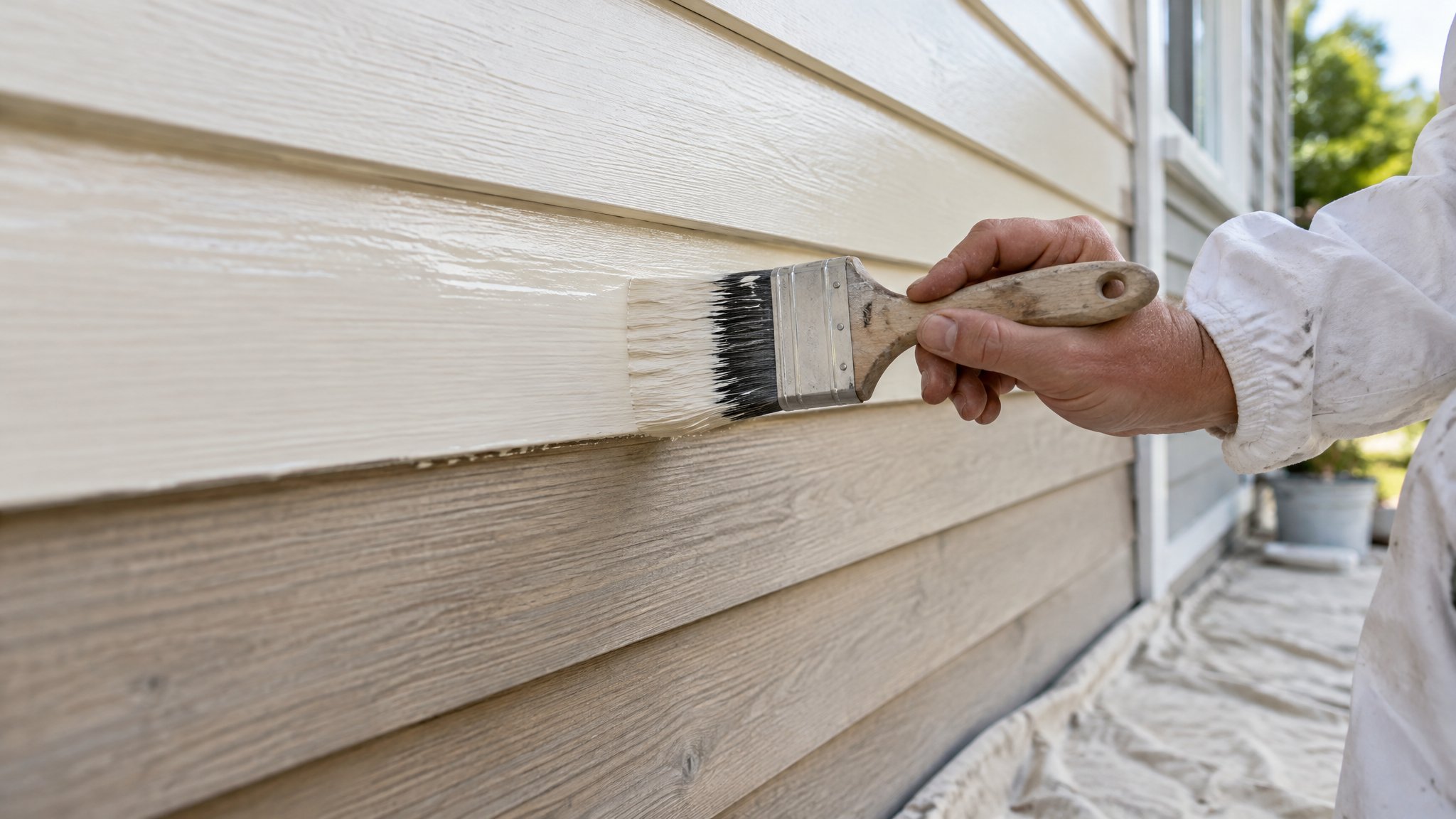
Yes, you can sometimes paint over tar paint on an old weatherboard house — but only if the surface is sound, well prepared, and the old coating is not actively failing. Tar-based finishes were used on some older NZ homes because they resisted weather and looked tidy for a time, but they can become brittle, chalky, or patchy with age.
The tricky part is that modern exterior paint systems do not always bond well to tar paint. If you rush the job, the new paint can peel, blister, or craze. On older Auckland villas and bungalows especially, the prep work matters as much as the topcoat.
What tar paint is and why it causes problems
Tar paint is an older-style coating that was sometimes used on exterior timber for weather protection. On a weatherboard house, you may find it on boards, trims, or in repaired areas where past owners have used whatever product was available at the time.
The main issue is compatibility. If the old tar coating is glossy, oily, brittle, or loose, new paint may not grip properly. Even if it looks fine from a distance, hidden movement in the timber, salt air near the coast, or years of sun exposure can make adhesion unreliable.
- It may stay soft or oily for longer than standard exterior paint
- It can react badly with some modern water-based coatings
- It often hides old repairs, cracks, or damp timber underneath
- It can make patch-painting difficult if the finish is uneven
How to tell if you can paint over it
Before painting, the coating needs a proper inspection. A good test is to check whether the surface is clean, dry, and firmly bonded. If you can scrape it off easily, or if it leaves a greasy residue on sandpaper or a cloth, it is not ready for overcoating.
You also need to look at the condition of the weatherboards themselves. If the boards are cupped, split, or holding moisture, no paint system will last well until those issues are sorted first.
- Do a small test patch before painting the whole wall
- Check for chalking, peeling, or a shiny oily finish
- Look for rot around corners, joins, and window trims
- Make sure the timber is completely dry before coating
Best prep before repainting old weatherboards
For a successful repaint, the surface usually needs a thorough clean, light abrasion, and the right primer or sealer. In some cases, a specialised adhesion primer is needed to help the new coating bond to the old tar paint. In others, the safest option is to remove the failing coating before starting again.
Preparation should also include spot repairs to gaps, nail holes, and any damaged timber. On older Auckland homes, it is common to find mixed substrates, previous patch jobs, and old filler that needs replacing. A tidy, well-prepared base gives you a much better chance of a durable finish.
- Wash off dirt, moss, salt, and surface grime
- Scrape back anything loose or flaking
- Sand to dull the surface and improve adhesion
- Use the correct primer for the existing coating
- Seal bare timber and repaired areas before topcoating
When to call Steve
If your old weatherboard house has tar paint, mixed old coatings, or you are not sure what is underneath, it is worth getting advice before you start. Steve is a Kiwi and a trade-qualified painter, and he can assess the surface properly, recommend the right prep, and tell you whether overcoating is suitable or whether removal is the better option.
That is especially important for premium Auckland homes where the finish needs to last and look sharp. A careful inspection can save you from costly peeling later and help protect the timber for years to come.
Frequently Asked Questions
Can I use water-based exterior paint over tar paint?
Sometimes, but only if the old coating is stable and properly prepared. If the tar paint is greasy, glossy, or failing, a water-based topcoat may not bond well without specialist prep or primer.
Do I need to remove tar paint before repainting weatherboards?
Not always. If it is firmly adhered and in good condition, it may be possible to overcoat it. If it is peeling, brittle, or causing adhesion problems, removal or more extensive prep may be needed.
How do I know if the old coating is tar paint?
It is often darker than standard paint, may feel slightly oily or sticky in warm weather, and can be difficult to sand cleanly. If you are unsure, Steve, a Kiwi and a trade-qualified painter, can identify it and advise on the safest approach.
Need a hand with your project?
Happy to tackle some of it yourself? Great — but for anything you’d rather leave to a professional, Steve Lunjevich is a Kiwi and a trade-qualified painter with 20+ years’ experience. Call or email for honest advice or a free, no-obligation quote.